Trump's Iran sanctions campaign faces major obstacle in China's economic ties
The Trump administration's newly announced campaign to isolate Iran economically confronts a significant challenge: China, which dominates Iranian oil trade and maintains deep strategic ties with Tehran.
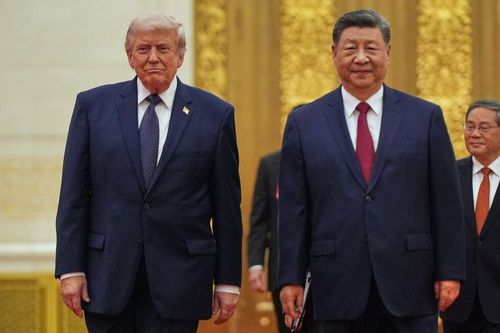
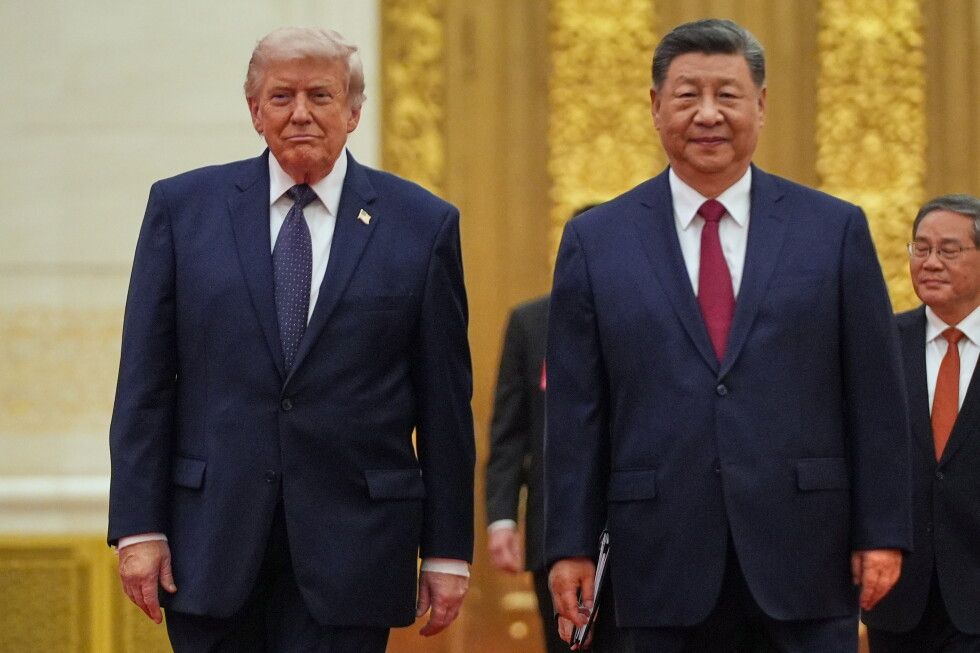
Treasury Secretary Scott Bessent this week declared an "economic onslaught" targeting Iran's financial networks globally, part of what officials call "Operation Economic Outcast." Yet the initiative's prospects remain unclear as President Donald Trump prepares to host Chinese leader Xi Jinping next month to preserve a fragile trade arrangement between Washington and Beijing.
China imported approximately 90% of Iran's crude oil exports in 2023, purchasing around 1.3 million barrels daily through direct and indirect channels, according to energy industry data. This economic interdependence makes Beijing central to any serious pressure campaign against Tehran.
Strategic calculations complicate enforcement
Bessent's announcement Monday carefully avoided specifics regarding China, raising questions about whether Washington will pursue aggressive measures against Chinese entities involved in Iranian oil trade.
"The announcement yesterday was very careful in my view to avoid specifics (against China), which could have led to a disruption in the summit," said Edgard Kagan, senior adviser at the Center for Strategic and International Studies. For both leaders, he noted, the upcoming state visit carries significant diplomatic weight.
The delicate balance requires both capitals to navigate competing interests carefully, Kagan observed. The key question centers on whether space exists to push China toward reducing Iranian engagement without provoking Beijing to reject cooperation outright.
During Trump's first term, maximum pressure sanctions dramatically reduced Iranian oil exports from about 2.5 million barrels daily to under 400,000 barrels at their lowest point in 2020. However, exports later recovered beyond 1 million barrels daily, demonstrating the limits of such campaigns.
Beijing signals minimal compliance approach
China responded to the new initiative by stating its Iran cooperation operates "within the framework of international law." Lin Jian, a Chinese foreign ministry spokesperson, emphasized that bilateral cooperation "should not be disrupted or undermined."
"China is closely monitoring relevant developments and will take all necessary measures to resolutely safeguard its own rights and interests," Lin stated, reiterating opposition to "illegal unilateral sanctions."
Analysts interpret Beijing's response as a holding position, suggesting Chinese officials will seek minimal compliance without openly confronting Washington. Historical patterns support this assessment: in 2012, U.S. sanctions on Chinese companies for Iran dealings led to temporary import reductions, but China maintained significant oil trade throughout international sanctions periods.
Sun Yun, director of the China program at the Stimson Center, said Beijing will resist if Washington's goal involves collapsing Iran's economy and government. However, if the objective focuses on extracting concessions regarding the Strait of Hormuz—through which approximately 21% of global petroleum consumption passed in 2022—and potentially ending regional conflict, China may demonstrate cooperation through measured steps like reducing Iranian oil imports.
Strategic partnership deepens Iran-China ties
China and Iran formalized their relationship through a 25-year strategic cooperation agreement signed in March 2021, reportedly valued up to $400 billion. The pact covers economic, political, and security cooperation, including Chinese investment in Iranian infrastructure, energy, and telecommunications in exchange for discounted oil.
"Neither side wishes to have a major escalation bilaterally at this point," Sun explained regarding the upcoming Trump-Xi summit. "China needs to give U.S. something, and U.S. needs to understand and accept that it is not going to be everything U.S. asks for."
Limited enforcement actions so far
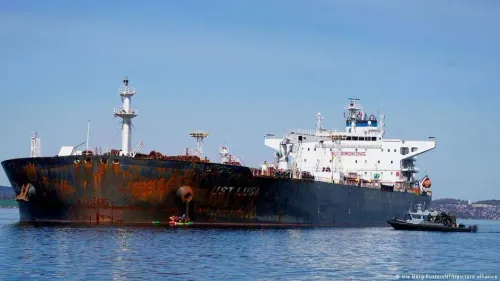
The Treasury Department announced Monday it was penalizing nearly 60 Iran-linked entities for involvement in nuclear programs, missile development, cyber activities, and oil shipments. Iran's shadow fleet—reportedly consisting of over 200 tankers that disable tracking systems, conduct ship-to-ship transfers, and falsify documents—facilitates continued oil exports despite sanctions.
The sanctions targeted several entities in mainland China and Hong Kong supporting Iranian missile and nuclear programs, along with a Chinese-owned crude tanker that transported millions of barrels of Iranian oil to China this year. A Hong Kong business involved in the shadow fleet operations also faced penalties.
However, the administration has refrained from sanctioning major Chinese businesses or banks connected to the U.S. financial system, which would represent far more significant enforcement. The Treasury's Office of Foreign Assets Control maintains the Specially Designated Nationals List, and designation can effectively sever entities from U.S. financial systems and international banking.
Trade considerations constrain options
Xi's visit could pave the way for Trump to attend the November leaders summit of the Asia-Pacific Economic Cooperation forum, which represents 21 Pacific Rim economies accounting for approximately 60% of global GDP and 50% of world trade.
In his second term, Trump has adopted a less confrontational approach toward China than during his first presidency, frequently highlighting his relationship with Xi following a trade war that saw tariffs reach 25% on $250 billion of Chinese goods and 7.5% on another $120 billion. The Phase One trade deal signed in January 2020 paused that escalation.
"Given how keen Trump has been to maintain both a trade truce between the United States and China and his personal rapport with Xi, he seems unlikely to do a volte-face just a month before Xi's state visit and adopt a highly confrontational posture," said Ali Wyne, senior research adviser at the International Crisis Group.
Craig Singleton, senior director for China at the Foundation for Defense of Democracies, said Beijing calculates that Washington will hesitate to jeopardize current leader-level dynamics by targeting major Chinese entities before the summit.
The U.S. business community welcomes Xi's visit as a positive signal for leader-level engagement, even as prospects for substantial agreements remain uncertain.