
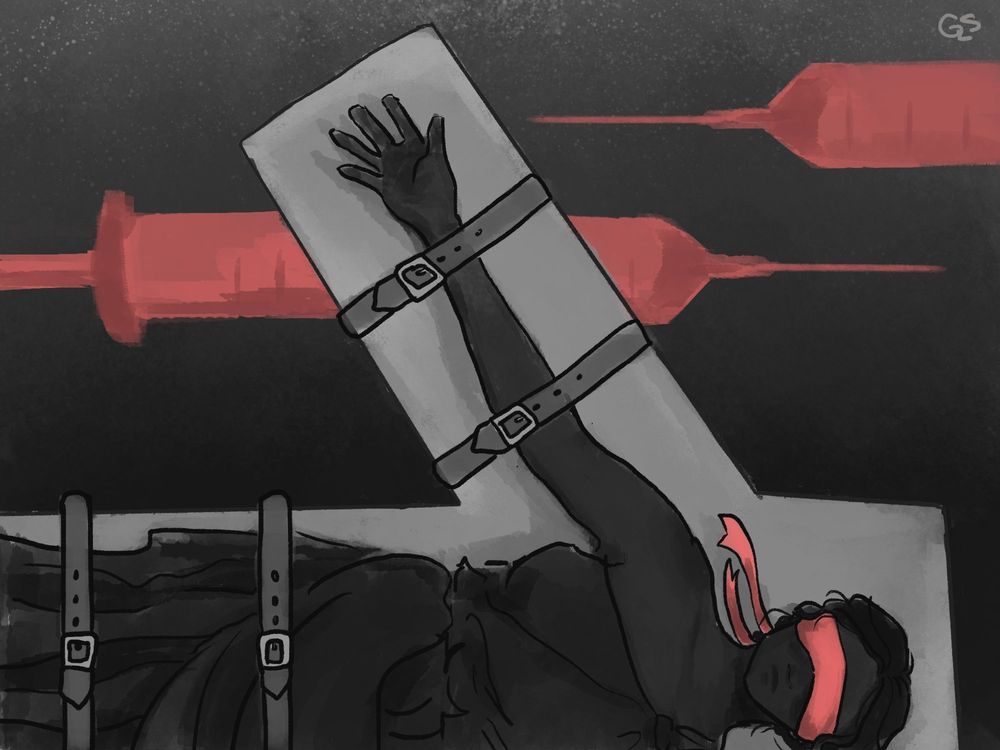
Why true justice demands the end of the death penalty
The pursuit of justice in cases of heinous crime often leads to demands for the ultimate punishment: death. Yet the irreversible nature of capital punishment, combined with its documented failures, raises a fundamental question about whether taking a life can ever constitute genuine justice.
Capital punishment, which has been practiced in the United States since the first recorded execution in 1608, continues to reveal profound flaws in both its application and execution. The system's vulnerability to error becomes starkly apparent when examining wrongful convictions. Since 1973, approximately 200 individuals have been exonerated from death row, with data suggesting that roughly 4% of those sentenced to death are innocent. More strikingly, for every 8 people executed in the United States, one person has been exonerated from death row.
A catastrophic failure in Tennessee
The September 30, 2026 attempted execution of Christa Pike in Tennessee exemplifies the system's catastrophic failures. Pike, who was 18 years old when she committed murder in 1995 and was convicted the following year, survived after being administered two lethal doses of injection. The case marked an unprecedented event in American execution history, as no person had previously survived the full administration of lethal injection drugs.
What makes Pike's case particularly disturbing is the apparent negligence involved. Her attorneys warned Tennessee officials that her medical condition would make execution through lethal injection into her vein particularly difficult, requesting an alternative method. State prosecutors dismissed these warnings and proceeded with the execution, ignoring what they later acknowledged as serious red flags. The failed procedure left Pike hospitalized for several days.
This wasn't an isolated incident for Tennessee. Pike's botched execution was the state's second failed execution in six months, prompting Governor Bill Lee to pause all executions for the remainder of 2026. The pattern reveals systemic dysfunction rather than mere procedural mishap.
The failure rates of execution methods
The methods themselves carry inherent risks. Between 1890 and 2010, approximately 3% of all executions in the United States failed. Lethal injection, the most commonly used method today, has the highest botched execution rate of all methods at 7.1-7.2%, compared to 3.12% for hanging, 1.92% for electrocution, and 5.4% for lethal gas. Ironically, the firing squad, often perceived as more brutal, has recorded a 0% failure rate across 34 executions.
Public execution as spectacle
The Department of War's announcement that it will livestream the upcoming execution of Nidal Malik Hasan introduces another ethical dimension to this debate. Hasan, convicted of killing 13 people at Fort Hood in 2009, would be the first individual executed by the U.S. military since John A. Bennett was hanged for rape and attempted murder in 1961, marking more than 65 years since the last military execution.
The decision to use a firing squad and broadcast the execution publicly raises profound concerns about human dignity. Hasan, who was paralyzed from the waist down during an exchange of gunfire with police during his 2009 attack, uses a wheelchair, adding complexity to how the execution would be carried out. Broadcasting such an execution transforms a grave procedure into public spectacle, potentially exposing viewers of all ages to graphic violence and reducing the event to entertainment rather than solemn justice.
Economic and international context
Beyond ethical concerns, the death penalty imposes significant financial burdens. Death penalty cases cost taxpayers between 2.5 to 5 times more than life imprisonment, with costs ranging from $1.5 to $3 million per case compared to $600,000 to $1.1 million for life imprisonment. These enormous expenditures occur despite oversight failures that lead to botched executions.
The United States increasingly stands isolated in its continued use of capital punishment. Three-quarters of the world's countries—145 nations—have abolished the death penalty in law or practice, leaving only 53 countries as fully retentionist. Yet rather than following this global trend, the United States carried out 47 executions in 2025, the highest number in over a decade, reversing a long national decline that had been underway since the 2000s.
A system incompatible with justice
The Eighth Amendment prohibits cruel and unusual punishment, yet the evidence suggests that capital punishment violates this constitutional protection. When the state cannot guarantee accurate execution, when innocent people face death, when procedures fail causing unnecessary suffering, the system reveals itself as fundamentally incompatible with the principles of justice it claims to uphold.
True justice requires more than retribution. It demands a system that protects the innocent, treats even the guilty with basic human dignity, and operates without the irreversible finality that makes every error a tragedy beyond remedy. Capital punishment fails these tests, making its abolition not a rejection of justice, but its fulfillment.