Ukrainian accused of Nord Stream blast plot goes on trial in Germany
A former Ukrainian army officer accused of orchestrating the 2022 sabotage of the Nord Stream gas pipelines appeared in court in Hamburg on Wednesday, marking the first criminal trial connected to the underwater explosions that damaged critical European energy infrastructure.
Serhiy K., identified under German privacy laws, faces charges of war crimes for allegedly attacking civilian targets while serving in the Ukrainian military. Prosecutors have also charged him with causing explosions, destroying infrastructure and disrupting public services.
The Higher Regional Court in Hamburg is overseeing the closely watched proceedings against the defendant, who was arrested in August 2025 while vacationing with his family on Italy's Adriatic coast. He was extradited to Germany three months later and has remained in pre-trial detention.
The alleged operation
According to the indictment, Serhiy K. developed a plan on behalf of Ukrainian state authorities to destroy the pipelines that transported Russian natural gas to Germany. The operation allegedly aimed to limit Russia's financial resources shortly after its full-scale invasion of Ukraine in February 2022.
Prosecutors allege that Serhiy K. led a specialized team including professional divers, a skipper and an explosives expert. The group reportedly chartered a sailing yacht in the northern German city of Rostock and transported large quantities of military-grade explosives to waters near the Danish island of Bornholm in the Baltic Sea.
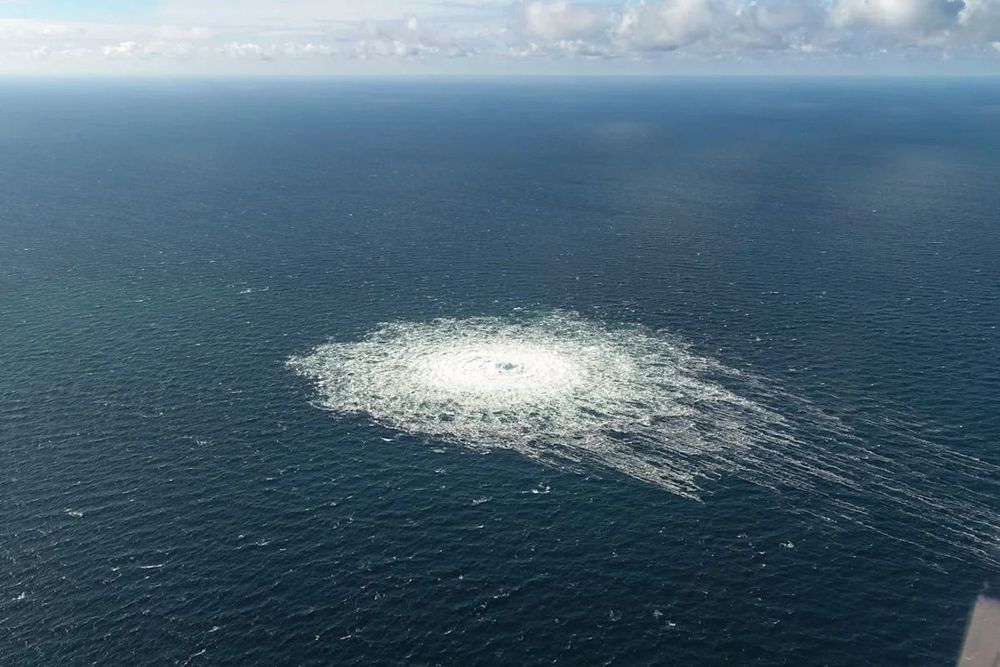
The team allegedly attached timed explosive devices to the pipelines, which lie on the seabed at depths between 70 and 80 meters along the approximately 1,200-kilometer route. Seismologists detected two underwater explosions on September 26, 2022. The first blast occurred at 02:03 AM near Nord Stream 2, followed by a stronger explosion at 19:03 PM near Nord Stream 1 that registered as equivalent to a magnitude-2.3 earthquake.
Extent of damage
The explosions ruptured three out of four Nord Stream pipeline lines. Both pipes of Nord Stream 1 were rendered inoperable, along with one pipe of Nord Stream 2, while the other Nord Stream 2 line remained intact. Four leaks were subsequently discovered in the damaged sections.
The targeted infrastructure represented a significant component of European energy supply. Nord Stream 1, which became operational in 2011, had supplied approximately 58% of Germany's annual gas needs before ceasing operations. Nord Stream 2, completed in September 2021, never entered service after Germany suspended its certification on February 22, 2022, following Russia's invasion of Ukraine. Together, the two systems had a combined capacity of 110 billion cubic meters of natural gas per year, with each capable of transporting 55 billion cubic meters annually.
International investigation
The trial proceeds after Denmark and Sweden closed their investigations into the sabotage in early 2024. Sweden cited lack of jurisdiction and transferred evidence to German investigators, while Denmark concluded there were insufficient grounds to pursue a criminal case in their jurisdiction.
German prosecutors have identified seven Ukrainian suspects in the investigation, but only Serhiy K. is in custody. Other suspects include a man named Volodymyr Z., who was the subject of a European arrest warrant but fled from Poland to Ukraine in July 2024.
Bornholm, the Danish island near where the attacks occurred, occupies a strategic position in the Baltic Sea east of Denmark, south of Sweden, northeast of Germany and north of Poland. The island has been strategically significant throughout history due to its location.
The trial represents a critical juncture in efforts to hold accountable those allegedly responsible for an attack that disrupted critical energy infrastructure during a period of heightened geopolitical tensions in Europe.