Nobel Peace Laureate Pillay Criticizes Trump's ICC Sanctions as 'Illegal Interference'
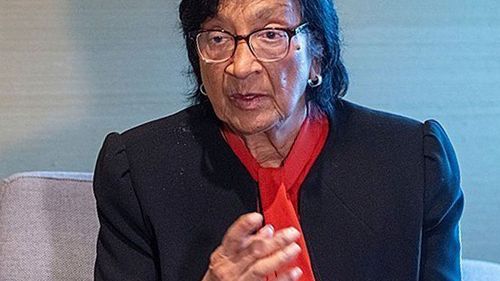
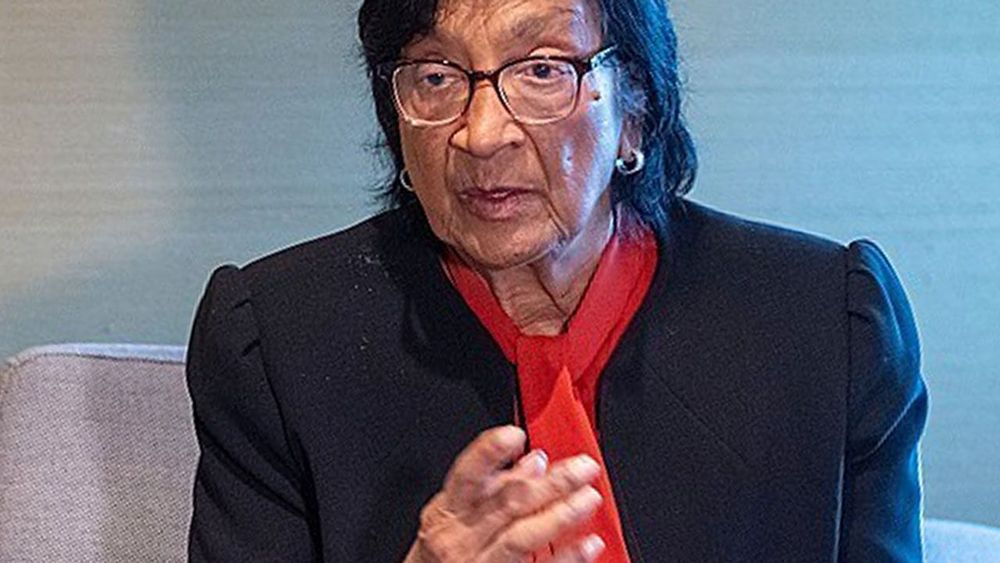
Navi Pillay, the 85-year-old recipient of the 2026 Nobel Peace Prize, has denounced U.S. President Donald Trump's sanctions against the International Criminal Court as illegal interference, stating that the president requires education on international law principles.
In an interview with AFP on October 14, Pillay suggested the timing of the U.S. sanctions announcement—made just hours after her Nobel Prize win on October 9—was no coincidence, interpreting it as a reaction to the award not going to President Trump.
"Tell him to call in his legal advisers and ask them to explain what international law is. He should have his advisers explain to him why his interference with an independent international court is what we call illegal."
The October sanctions, which are set to take effect in six months, target the ICC's operational capacity by banning the court from accessing Amazon web services and U.S.-aligned banks, while also removing healthcare benefits from ICC workers. The Trump administration has explicitly stated these measures could be reversed if the ICC makes decisions favorable to the United States.
These measures represent an escalation of U.S. pressure on the court. In February 2025, Trump signed Executive Order 14203, which imposed asset freezes and travel bans on ICC officials, employees, and their family members. The ICC had anticipated the financial assault, paying staff three months' salary in advance in January 2025.
A Distinguished Career in International Justice
Born in 1941 to an Indian family in apartheid South Africa, Pillay broke barriers early in her legal career. In 1967, she became the first woman to open a law practice in South Africa's Natal Province during the apartheid era, demonstrating her commitment to justice from the outset.
Her judicial expertise in international criminal law is formidable. From 1999 to 2003, Pillay served as President of the International Criminal Tribunal for Rwanda, where she gained distinction for establishing that sexual violence, rape, and the spreading of propaganda could lead to indictment for crimes against humanity and genocide.
Pillay served as an ICC judge from 2003 to 2008 before resigning to become United Nations High Commissioner for Human Rights, a position she held from 2008 to 2014. Currently, she serves as an ad hoc judge at the International Court of Justice in the case of The Gambia v. Myanmar, where Myanmar stands accused of genocide against the Rohingya people.
The Netanyahu Warrants and U.S. Response
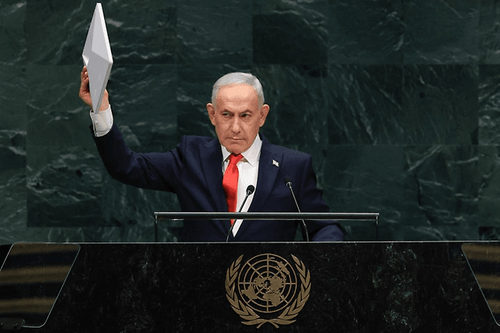
The Trump administration's fury centers on ICC arrest warrants issued on November 21, 2024, for Israeli Prime Minister Benjamin Netanyahu and former Israeli Defense Minister Yoav Gallant. The warrants cite war crimes including starvation as a method of warfare, and crimes against humanity including murder, persecution, and other inhumane acts.
Pillay criticized this selective approach to international justice.
"You cannot apply double standards. You cannot selectively investigate one group and not investigate another. That would set a very bad and dangerous precedent."
She pointed out the contradiction in U.S. policy, noting that previous administrations welcomed ICC arrest warrants for Russian President Vladimir Putin while now opposing action against Israeli officials.
Controversy Over Gaza Genocide Findings
The commission Pillay chaired until last year—the Independent International Commission of Inquiry on the Occupied Palestinian Territory—issued a report on September 16, 2025, concluding that Israel committed four of the five genocidal acts defined under the 1948 Genocide Convention:
- killing
- causing serious bodily or mental harm
- deliberately inflicting conditions of life calculated to destroy the group
- imposing measures to prevent births
This finding provoked outrage from Israeli officials. The Israeli Foreign Ministry criticized Pillay's Nobel win by claiming Nazi propagandist Joseph Goebbels would be "applauding from hell."
Pillay responded forcefully to the comparison.
"I think that is very hurtful and insulting. Goebbels had blood on his hands... He was responsible for the deaths of thousands of people, not only Jews, but people of color like me."
Looking Ahead
When asked whether Prime Minister Netanyahu might eventually stand trial at the ICC, Pillay expressed confidence.
"I have spent my life watching people overcome difficulties. So I am certain that such a day will come."
Dutch Prime Minister Dick Schoof has urged dialogue with the United States during the six-month period before sanctions take effect to discuss potential ICC reform. However, Pillay characterized "ICC reform" as a euphemism for what Trump actually wants: "a guarantee that investigations against U.S. citizens will not proceed."
Pillay initially found it difficult to believe the news of her award, noting the historical inequality in Nobel Prize selections.
"It is very rare for the award to be given to women."
The 2026 prize marks the 107th time the award has been presented since its inception in 1901, and Pillay becomes the fifth South African to receive the honor.
Regarding the 12 million Swedish kronor prize money (approximately 1.61 billion won), Pillay is consulting on how best to deploy the funds, with a portion potentially supporting her alma mater.
"Africa is suffering. South Africa is suffering. It is very difficult to raise funds there. I believe in the value of education for children and youth."
She added that the University of KwaZulu-Natal has established the Navi Pillay Research Group focusing on human rights, social justice, and policy studies.