
National inquiry examines criminal justice failures in gender-based violence cases
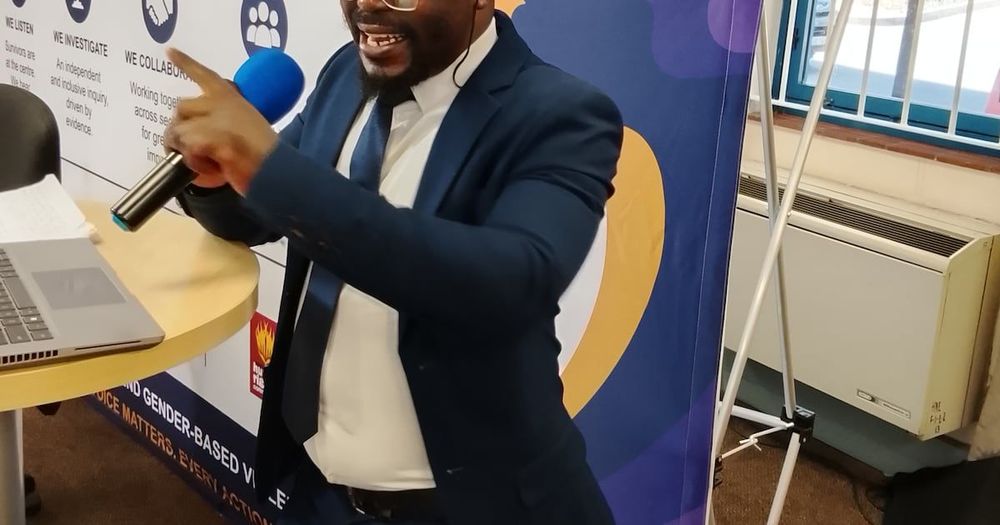
A five-day national inquiry launched in Braamfontein, Johannesburg, on Monday will scrutinise how South Africa's criminal justice system handles gender-based violence and femicide cases, from initial police reports through to offender parole.
The Commission for Gender Equality, South African Human Rights Commission and Commission for the Promotion and Protection of the Rights of Cultural, Religious and Linguistic Communities are jointly conducting the probe at the Braamfontein Office Park until Friday, 2 October.
The inquiry comes after government declared GBVF a national disaster in November 2025, enabling coordinated response and resource allocation to address the crisis. South African Police Service statistics show 50,511 GBVF cases were recorded during the 2025/26 financial year, resulting in 30,736 arrests or referrals to the National Prosecuting Authority.
Recent figures reveal the continuing severity of the problem. Between April and June 2026, police recorded 569 women murdered and 9,201 reported rapes, with more than 60 percent of sampled rape cases occurring at a residence.
CRL Rights Commission chairwoman Thoko Mkhwanazi-Xaluva said the inquiry aims to identify weaknesses throughout the criminal justice chain and improve victim experiences.
We want to understand how victims and survivors experience the whole system, from the time they first go to a police station until the offender gets parole.
The inquiry will examine why complainants withdraw cases after opening them, an issue Mkhwanazi-Xaluva said does not happen without reason. The commission will engage various departments and institutions, including the NPA, to address shortcomings in GBVF case handling.
We need to interrogate the system so that when victims come to it, they can have confidence in it and trust the system.
The probe forms part of the National Strategic Plan on Gender-Based Violence and Femicide, adopted in 2020 as a ten-year society-wide programme. The inquiry specifically addresses Pillar 3 of the plan, which seeks to strengthen criminal justice system response.
Omotoso case highlights system trauma
Mkhwanazi-Xaluva cited the Timothy Omotoso trial as an example of trauma victims endure during lengthy criminal proceedings. The televangelist and co-accused Lusanda Sulani and Zukiswa Sitho faced 32 charges including rape, human trafficking and racketeering after their 2017 arrest.
The trial ran for over eight years, with complainants including Cheryl Zondi, whose 2018 testimony drew widespread public attention. In April 2025, the Gqeberha High Court found all three not guilty, with Judge Irma Schoeman ruling the state had failed to prove guilt beyond reasonable doubt.
In July 2026, the Supreme Court of Appeal granted the NPA leave to appeal the acquittal, effectively reopening the case. The NPA had announced its appeal intention following judgment review and legal advice from senior counsel, acknowledging the impact on complainants and confidence in the justice system's ability to handle sexual and gender-based violence matters.
Scale of crisis revealed
A November 2024 Human Sciences Research Council study found approximately 7.3 million South African women aged 18 and older had experienced physical violence in their lifetime, while more than 2.15 million had experienced sexual violence.
South Africa's intimate partner femicide rate is almost five times the world average, according to research cited in 2026. The National Council on Gender-Based Violence and Femicide, established as a permanent statutory mechanism to coordinate the country's response, began work in 2026.
SAHRC spokesman Wisani Baloyi said the commission had received complaints from the public about difficulties experienced when reporting GBVF crimes and during case processing.
Many victims have indicated that they find challenges with the justice system, whether it is the reporting of the crime, the actual cases themselves or how cases are handled.
The commission called for public submissions to better understand victim experiences and obtain recommendations on protecting human rights.
Victims provide detailed evidence
Commission for Gender Equality Mpumalanga legal officer Thokozani Dladla said some victims provided case numbers and police station details where they had opened cases.
They said, 'I'm not making up a story. I will give you the case number and the police station where I opened the case and tell you exactly what happened.' Some could not afford to sit at an internet café, so they wrote their statements by hand. Their concerns still need to be heard.
The inquiry operates under the constitutional mandate of Chapter 9 institutions to promote, protect, monitor and assess observance of constitutional rights, and make recommendations aimed at strengthening accountability, equality, dignity and access to justice.
Government departments and other institutions are expected to respond throughout the week to concerns raised about victim support, reporting, investigations and prosecutions.