Seoul High Court Admits Recorded Myung Tae-kyun Call as Evidence in Mayor Oh Se-hoon's Political Funds Appeal
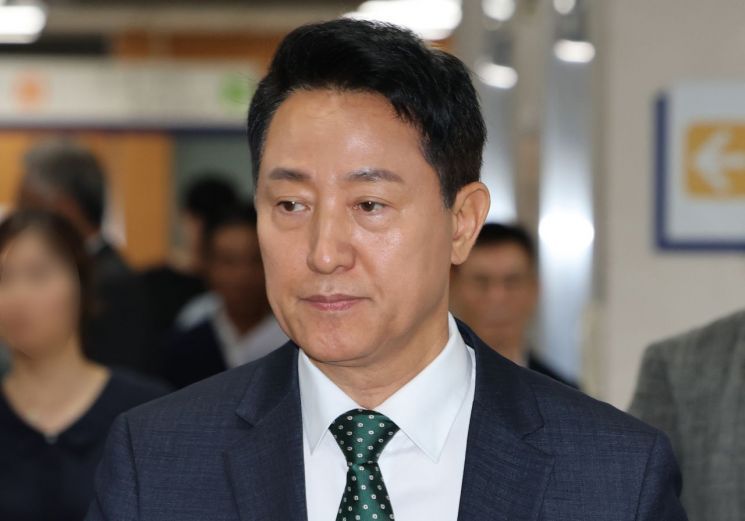
The Seoul High Court has admitted controversial recorded phone conversations as evidence in the appellate trial of Seoul Mayor Oh Se-hoon, who faces charges of violating the Political Funds Act by allegedly having a supporter pay for opinion poll expenses during his 2021 mayoral campaign.
During a hearing held on September 16, 2026, the court's 7th Criminal Division, presided over by Chief Judge Koo Hoe-geun, accepted three audio files submitted by businessman Kim Han-jung as impeaching evidence. The recordings capture conversations between Kim and political broker Myung Tae-kyun from March 2021, shortly before the April 7 by-election that returned Oh to the mayor's office with 57.5 percent of the vote.
The by-election had been triggered by the death of former mayor Park Won-soon in July 2020. Oh, who previously served as Seoul mayor from July 2006 to August 2011 before resigning over a failed referendum on free school lunches, secured a decisive victory over Democratic Party candidate Park Young-sun.
Key Recorded Statements Support Defense
In the recordings played during the court session, Kim can be heard telling Myung: I worked because I wanted to help this person
and They didn't even want it there; it wasn't something they requested; I just did it on my own.
Myung responded: Anyway, Oh Se-hoon doesn't know anything about this, so don't worry. I'll take care of it myself.
Myung, a self-proclaimed political broker and pollster who founded the Future Korea Research Institute, further stated in the recording: Have I ever received even a single ten-won coin from Oh Se-hoon?
He also said he "didn't really know" Kim's relationship with Mayor Oh and that "Mayor Oh didn't directly introduce me to you."
Oh's legal team emphasized that these statements contradict the prosecution's central claim that the mayor commissioned opinion polls through Myung and arranged for Kim to pay the fees on his behalf. According to the defense, the recordings demonstrate that Kim acted independently without Oh's knowledge or direction.
The recordings were not presented during the first trial. Kim explained that he had forgotten about their existence after switching mobile phones following his March 2021 conversation with Myung. He said he remembered the files only after witnessing what he characterized as false testimony by Myung during the appeal proceedings, prompting him to retrieve his old phone from storage at his villa in Jeju Island. Of 35 recorded calls stored on the device, Kim submitted the three he deemed most significant to the court.
Prosecution Challenges Evidence Authenticity
The special prosecutor's team mounted strong objections to the evidence admission. Prosecutors argued that some files were not original recordings and pointed to evidence suggesting certain files had been modified around November 18, 2024, coinciding with the emergence of news reports about the case. They also contended that Kim had always possessed the recordings but selectively submitted only those favorable to his position while withholding others.
There is a significant risk of fabrication or tampering,
prosecutors argued, asserting that accepting only selected files without the complete set would be inappropriate. They maintained that the selective submission raised serious questions about the evidence's reliability.
However, the court sided with the defense on the admissibility question. Under South Korea's Criminal Procedure Act, impeaching evidence—used to challenge the credibility of witness statements—should be admitted broadly. The court stated: Since there is no indication yet of unlawful acquisition or fabrication, the evidence will be accepted as impeaching evidence despite the special prosecutor's objection.
Background of Key Figures
The case involves complex relationships among the principal figures. Myung Tae-kyun has a criminal history, having been convicted in 2019 of fraud and violating the Attorney-at-Law Act for accepting bribes to lobby for a civil servant's promotion, receiving a 10-month prison sentence with two-year probation. He was also convicted of violating the Public Official Election Act for conducting illegal polls before the 2018 local elections.
More recently, in February 2026, Myung and former lawmaker Kim Young-sun were acquitted by Changwon District Court of charges involving the exchange of 80.7 million won in parliamentary salary for assistance securing Kim's nomination in a June 2022 by-election, though Myung was convicted of evidence concealment in that case.
The relationship between Oh and Myung has been adversarial. In December 2024, Oh filed defamation complaints against Myung, accusing him of falsely claiming ties to the mayor and damaging his reputation by alleging support for his 2021 campaign.
Original Charges and First Trial Outcome
Mayor Oh was indicted without detention in December 2025 on charges of receiving results from 10 opinion polls conducted by Myung ahead of the 2021 election and having Kim pay 33 million won in polling fees on his behalf. The first trial court found Oh guilty of a narrower set of violations, determining that he had commissioned five opinion polls and caused Kim to pay 21 million won in fees. The court imposed a fine of 10 million won and ordered forfeiture of 21 million won.
The stakes extend far beyond the financial penalties. Under South Korea's Political Funds Act, a conviction for unlawful receipt of political funds carrying a fine of 1 million won or more bars the convicted person from holding or being appointed to public office for five years. Current officeholders must step down if such a conviction is finalized.
The Seoul mayoral position is one of the most powerful in South Korea, with the officeholder managing an annual budget of 51 trillion won. Two former Seoul mayors—Yun Bo-seon and Lee Myung-bak—later served as President of South Korea, underscoring the political significance of the office.
The court scheduled the final hearing for October 2, 2026. During that session, the special prosecutor will make sentencing recommendations, the defendant will deliver a final statement, and the court will announce the date for its ruling.