Government response and recent allegations
Religious Affairs Minister Kazi Shah Mofazzal Hossain Kaikobad made the pledge on October 24, 2026, and said imams had been instructed to raise awareness through Friday sermons. Daily New Nation reported that he did not explain how authorities would monitor the proposed safeguards. Earlier, on September 14, Supreme Court lawyer Muhammad Nurul Huda served the government with a legal notice seeking immediate action against sexual abuse, rape and cruel treatment of children in madrasas.
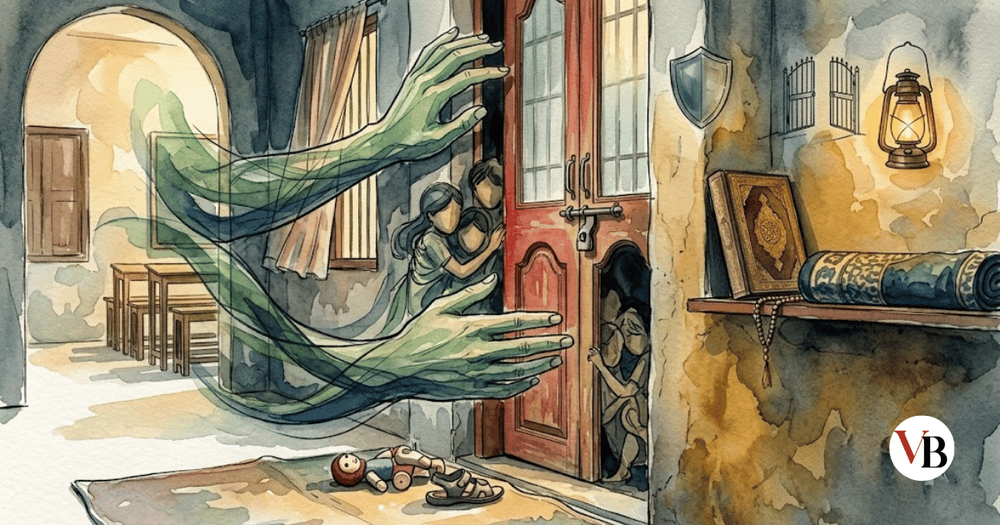
One recent case concerns a seven-year-old first-grade girl in Tongi, Gazipur. A national English-language daily reported on October 23 that a madrasa's deputy principal was accused of sexually abusing her and threatening to beat her if she disclosed it. The child stayed away from the madrasa for three days before telling her family. Police subsequently arrested the teacher following a complaint, and a court sent him to jail.
In an October 25 column for Views Bangladesh, Prodeepto Mobarook also described allegations that the madrasa's authorities backed the accused and brought a false case against the girl's father. Mobarook characterized the claim that Tk 1.7 million had been snatched as fabricated; that assessment is the columnist's.
Elsewhere in Gazipur, police arrested a teacher and a person associated with the management of a residential Qawmi madrasa in Gacha in October. The case alleges that an eight-year-old student was raped on three successive nights. According to the case details, the teacher woke the child, took the child to a secluded location and threatened violence if the abuse was disclosed. The allegations include an attempted cover-up.
September brought allegations that a group at a Savar madrasa had repeatedly sexually abused a seven-year-old over six months. The case named 10 accused people, including teachers and students; police arrested five. Some teachers were also accused of mistreating the child and protecting those implicated rather than intervening.
A teacher at a residential madrasa in Fatullah, Narayanganj, was arrested in September over allegations of repeatedly sexually abusing a 17-year-old student. Earlier reports covered arrests of teachers accused of sexually abusing students in Kumarkhali, Kushtia, and Banshkhali, Chattogram. Daily New Nation reported on October 25 that a teacher in Noakhali had also been arrested after a 10-year-old girl's family reported sexual abuse lasting several months.
Reported cases and limits of the data
JusticeMakers Bangladesh in France published media-based monitoring on October 1 covering January through September 2026. It documented 72 incidents involving the alleged rape or attempted rape of boys at madrasas, with 109 victims. Within that monitoring, 81 madrasa teachers faced allegations of rape or attempted rape across 65 incidents. These are allegations drawn from news reports, not findings of guilt in court.
A September 16 opinion piece in The Daily Star cited additional figures from rights organizations. Ain o Salish Kendra recorded 38 incidents of teachers sexually harassing children up to age 18, along with 52 male children being raped, between January and August 2026. For the period from January 2025 through April 2026, the Human Rights Support Society recorded 1,890 child abuse cases, including 580 rape cases.
The Daily Star piece also reported that madrasas accounted for 59 percent of reported abuse cases in educational institutions in 2024-25, while enrolling about one in six students. It noted, however, that Bangladesh had no separate dataset tracking abuse within residential madrasas, leaving the extent of abuse in those institutions difficult to establish.
Existing requirements and gaps in protection
The September 16 Daily Star opinion piece outlined court decisions relevant to child safety: the High Court directed educational institutions to create sexual-harassment complaint mechanisms in 2009, then ruled corporal punishment unlawful and unconstitutional in 2011.
According to that piece, mandatory screening did not apply to madrasa staff. It described an absence of routine background checks, a public registry and a system for cross-checking teachers who move from one institution to another.
Mobarook's Views Bangladesh column focused on allegations that some institutions prioritize their reputations over children's safety. He described families allegedly facing intimidation or pressure to remain silent, as well as attempts to resolve serious criminal allegations through informal mediation. He argued that child rape must be treated as a criminal offense, not a private dispute.
Proposals for oversight and institutional accountability
Mobarook called for a state-led overhaul of child protection in madrasas, particularly residential institutions. His proposals include compulsory registration, independent inspections at regular intervals and background checks for teachers. Children should have confidential, safe reporting channels and be able to communicate freely with their guardians, he argued.
The column also urged impartial investigations into every sexual abuse allegation, judicial procedures sensitive to children's needs, and rehabilitation and support for victims. It distinguished scrutiny of alleged offenses from opposition to madrasa education, arguing that religious standing should not shield an accused person from investigation or justice.
Mobarook proposed legal accountability for madrasa authorities found to have knowingly concealed allegations or helped an accused person evade justice. If institutional complicity in serious crimes is established, he argued, authorities should revoke the madrasa's registration and suspend its operations while arranging alternative education for its students.