Larger tires take a bigger share
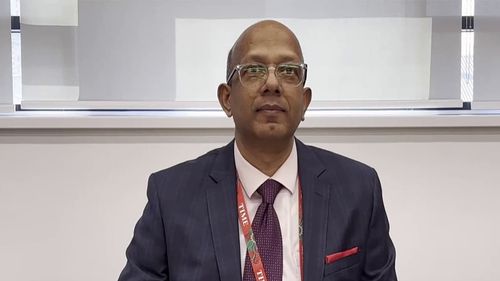
Singhania told businessline that tires measuring at least 16 inches currently represent roughly 27–30% of JK Tyre's passenger-tire business. He expects a shift toward higher-value products to improve profitability. "I think that will change the dimension of the company," he said.
Recent sales and automaker approvals point to growing demand for larger sizes. During the September quarter, premium-tire sales increased about 10% year over year in the replacement market and 20% in sales to automakers, with demand for 16-inch and 18-inch fitments supporting growth. Larger-rim tires accounted for eight of the company's 10 recent automaker approvals.
The share is already higher in the passenger-car original-equipment business. According to the company's Q2 FY27 post-earnings disclosures, tires of 16 inches and above represented about 40% of that business in the first half of FY27, compared with about 35% in FY26. SUV demand and new models with larger wheels drove the increase. CFO Sanjeev Aggarwal said SUVs account for around 65% of passenger-vehicle volumes.
Growth extended beyond premium products. In Q2 FY27, domestic sales rose 32% year over year, including a 65% increase in sales to automakers and 20% growth in replacement sales. Truck and bus radial tire volumes increased 76%, while passenger car radial volumes rose 35%.
Higher sales have not protected earnings
For July–September 2026, consolidated revenue increased 20.7% to ₹4,840.73 crore from ₹4,011.31 crore a year earlier. EBITDA moved in the opposite direction, falling 35.9% to ₹343.14 crore from ₹535.68 crore.
The Q2 FY27 results, reported October 23, also showed a 71.5% year-over-year decline in consolidated profit after tax to ₹65.11 crore. The EBITDA margin narrowed to 7.1%, compared with 13.3% a year earlier.
Raw materials make up approximately 65–67% of manufacturing costs. Singhania said those costs increased around 9% from the first to the second quarter of FY27, taking the cumulative increase over the first half to roughly 30%. Management expects the full raw-material basket to rise another 4–5% in Q3 FY27.
JK Tyre plans a further 4–5% price increase in October–December 2026, following increases of about 5% in the first quarter and 7% in the second, Singhania said.
The quarterly squeeze contrasts with the company's record FY26 results. On its May 27, 2026, earnings call, management reported annual consolidated revenue of ₹16,384 crore, up 11%, and EBITDA of ₹2,089 crore, up 25%. Annual profit before tax exceeded ₹1,000 crore for the first time.
Capacity expansion and financing
The ₹6,110 crore investment program combines ₹1,130 crore of work already underway with ₹4,980 crore of additional projects planned over the next three to four years. The additional investment is a board-approved brownfield expansion for passenger car radial (PCR) and truck and bus radial (TBR) tires.
On the May 27 earnings call, management said the combined projects were intended to increase TBR and PCR capacity by 24%, with completion targeted for FY29. Aggarwal put the expected completion of the ongoing ₹1,130 crore expansion at the third quarter of FY28, rather than the current fiscal year.
Aggarwal said annual capital-expenditure cash outlays would be roughly ₹1,200 crore, financed with internal accruals and bank debt. The announced debt-to-equity ratio for the ₹6,110 crore program is about 2:1.
The company is taking a different approach to two- and three-wheeler tires, favoring outsourced production over substantial additional manufacturing investment. "Capital allocation is most important," Aggarwal said.
JK Tyre's spending is part of a broader expansion drive across India's tire industry. A June 2026 CarDekho Tyres report identified major FY27 expansion plans from Apollo Tyres, CEAT, JK Tyre and Balkrishna Industries. Citing government data, it also reported record Indian tire exports of ₹27,312 crore in FY26, an increase of 9%.
Sensors and EV applications
Alongside larger tires, JK Tyre is developing products with more built-in technology. Singhania said the company has moved from retrofit tire-pressure monitoring kits to sensors installed inside tires, allowing conditions to be monitored in real time.
Its latest investor presentation lists the launch of an embedded smart tire for passenger cars that monitors pressure, temperature and possible air leaks. Integration with vehicle systems remains under discussion and testing with passenger-car manufacturers, management said.
For electric vehicles, JK Tyre has developed JETWAY JUXe for commercial applications and Ranger HPe for passenger EVs. The company also supplies tires for electric buses and is participating in the emerging electric-truck market.
More than 250 scientists and engineers support its research center, where work includes advanced materials, sensors and products designed for changing vehicle requirements.
Fleet services beyond tire sales
Singhania has set a three-year goal for JK Tyre to become India's largest commercial truck-tire service provider. The planned expansion of services covers fleet management, retreading and usage-based contracts.
Some commercial customers already use a pay-per-kilometer arrangement, paying for tire use and related services instead of purchasing tires outright. JK Tyre's network includes more than 1,500 fleet operators, over 70 mobility customers and 95 retreading centers.