Congress stages protest in Lucknow demanding Chief Election Commissioner's resignation
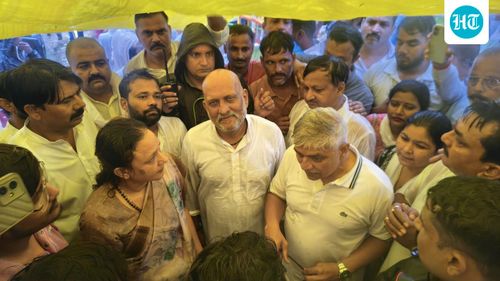
Congress workers and senior leaders staged a protest in Lucknow on Friday demanding the resignation of Chief Election Commissioner Gyanesh Kumar, alleging irregularities in the electoral process. The demonstration was part of a nationwide campaign by the Congress-led INDIA bloc against the functioning of the Election Commission.
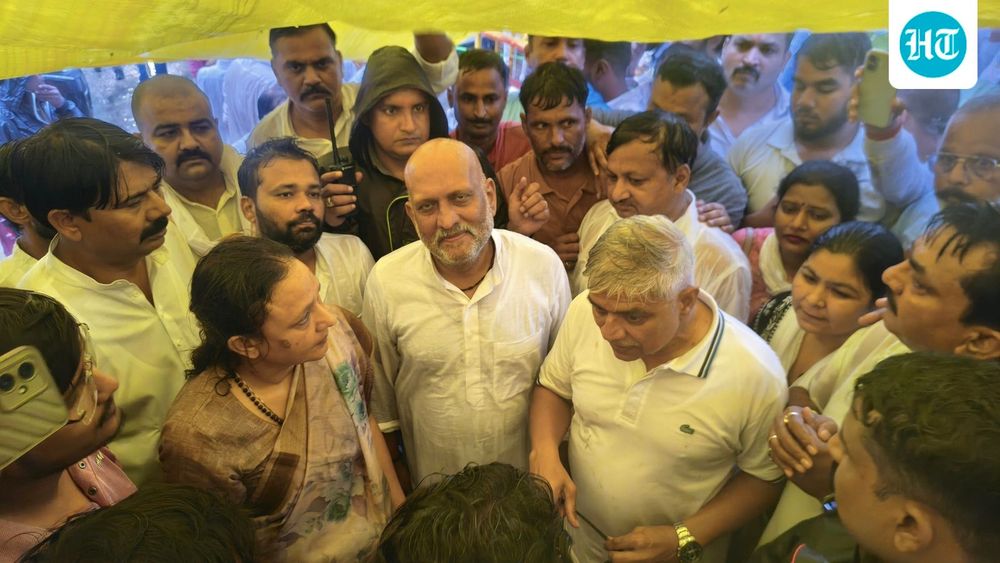
Despite heavy rainfall, protesters marched from the party headquarters toward the Chief Electoral Officer's office. Police attempted to detain the demonstrators, leading to a standoff near the Sunni Waqf Board office that lasted approximately 30 minutes as party workers surrounded state Congress president Ajai Rai to prevent his detention.
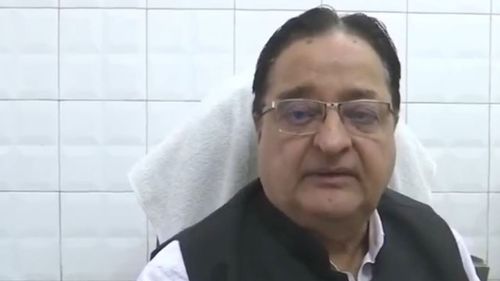
Rai accused the Election Commission of failing in its constitutional responsibility. "Election Commission has failed in its constitutional responsibility of conducting free, fair and transparent elections,"
he stated at the protest.
Congress Uttar Pradesh in-charge Rajendra Pal Gautam characterized the allegations as serious. "The crime has been proven. They have committed treason against the country when the Constitution had given them a responsibility to conduct free, fair, and transparent elections,"
he said.
Controversy over Special Intensive Revision
The protests center on the Special Intensive Revision (SIR), a comprehensive electoral roll update exercise involving house-to-house enumeration to verify voter details. CEC Kumar announced the nationwide SIR process on October 27, 2025, to be implemented in phases across all Indian states and union territories.
According to an investigation by The Indian Express, Election Commissioners Sukhbir Singh Sandhu and Vivek Joshi raised objections or questions regarding the SIR process on at least 14 occasions over a 10-month period. The Election Commission responded by stating that the characterization of these internal communications as institutional dissent was incorrect, describing them instead as operational queries, internal feedback and administrative suggestions typical of a multi-member constitutional body. The Commission maintained that all final decisions, including those on SIR, were unanimous.
Background on Chief Election Commissioner Gyanesh Kumar
Gyanesh Kumar, a 1988-batch IAS officer from the Kerala cadre, was appointed as India's 26th Chief Election Commissioner on February 18, 2025. He is the first CEC to be appointed under the Chief Election Commissioner and Other Election Commissioners (Appointment, Conditions of Service and Term of Office) Act, 2023, which came into force in December 2023. Prior to his appointment as CEC, Kumar served as Secretary in the Ministry of Parliamentary Affairs and Ministry of Cooperation before becoming an Election Commissioner on March 15, 2024.
Kumar's term will run until January 26, 2029, during which he will oversee multiple state assembly elections including those in Uttar Pradesh scheduled for February-March 2027. The Uttar Pradesh elections will contest all 403 seats, with 202 required for a majority to form government.
Political implications and protest coordination
The timing of the protests reflects the sensitivity of electoral roll revisions ahead of these crucial state elections. Rai expressed confidence about the electoral outcome, stating, "People are now well informed how BJP has ruined their lives. This election in 2027 will see BJP being ousted from power in Uttar Pradesh."
Congress legislature party leader Aradhna Mishra emphasized the party's determination despite police action. "Barricades were erected, roads were blocked, the police used full force, but the voice raised for democracy could not be stopped. Under the leadership of Rahul Gandhi, the workers have given a clear message regarding the questions being raised that the struggle for the protection of every single vote and the demand for fair elections will continue."
Several Congress workers were detained and taken to Eco Garden before being released later in the evening. Among those detained were state in-charge Rajendra Pal Gautam, UP Congress Committee president Ajay Rai, Congress Legislature Party leader Aradhana Mishra, national secretaries Abdul Hannan, Sanjeev Arya, Abhishek Dutt, Jagdish Chandra Jangid, Kunal Chaudhary, and Varun Chaudhary, along with former state president Brijlal Khabri, Shahla Ahrari, and Anamika Yadav.
The Lucknow demonstration is part of a coordinated multi-day protest strategy. Congress directed Pradesh Congress Committees to organize protest marches to State Election Commission offices on September 25, 2026, with another round of protests by District Congress Committees at district collectorates planned for September 28.
Parliamentary efforts and international role
Opposition parties have pursued parliamentary procedures to remove Kumar. Under the Constitution, a Chief Election Commissioner can be removed only through impeachment by Parliament. In April 2026, opposition notices seeking Kumar's removal were rejected by both the Rajya Sabha Chairman and the Lok Sabha Speaker. No Chief Election Commissioner has been removed through this parliamentary process in India's history. Opposition parties are preparing a fresh removal motion.
Despite the domestic controversy, Kumar assumed the chairship of the International Institute for Democracy and Electoral Assistance (International IDEA) Council for 2026 in December 2025 in Stockholm, Sweden. India is one of the 14 founding member states of International IDEA, a global intergovernmental organization supporting democratic institutions.