Political debate intensifies over UCC implementation
Political debate over the Uniform Civil Code has intensified following Union Home Minister Amit Shah's announcement on September 13, 2026, in Mumbai that the legislation would be implemented across all 21 NDA-governed states before 2029. The declaration has sparked sharp divisions between opposition parties and the ruling coalition over the implications for India's diverse religious traditions.
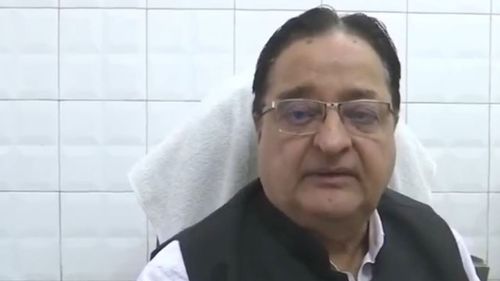
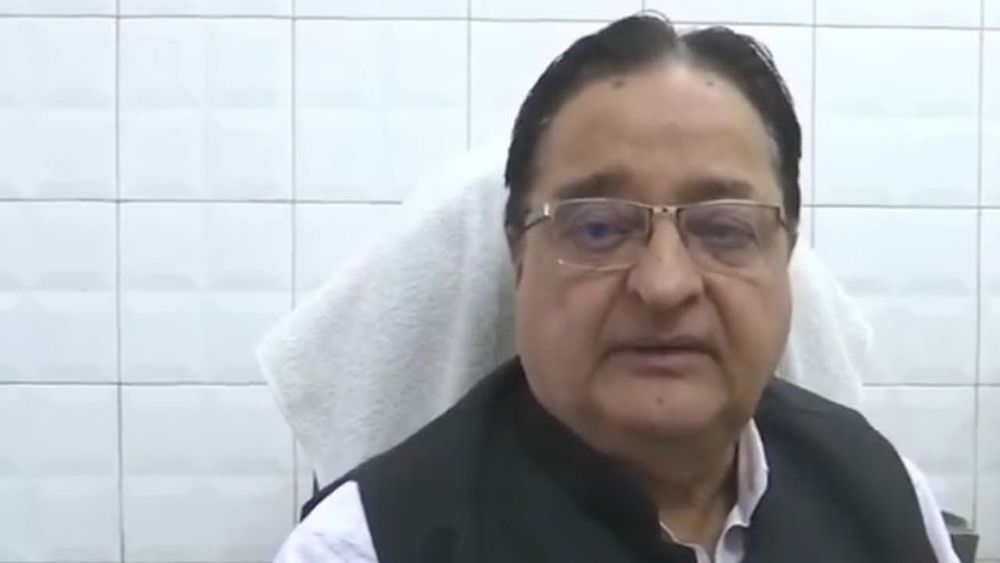
Samajwadi Party leader ST Hasan issued a strong warning on Wednesday in Moradabad, stating that contentious issues like the UCC emerge near election periods and could undermine communal harmony. The former MP argued that India's religious diversity makes a single unified code impractical for the country's varied communities.
Who knows how many more may come up by the time elections arrive that could affect Hindu-Muslim unity and harm communal harmony. Many laws are different for different religions. Therefore, a uniform code of conduct or a uniform civil code cannot simply be implemented. Whether they bring the UCC or anything else, we will continue to follow our own religious practices.
Constitutional basis and implementation timeline
The UCC finds its constitutional foundation in Article 44 of the Indian Constitution, which directs the State to endeavour to secure a uniform civil code for all citizens under the Directive Principles of State Policy, though this provision is not legally enforceable by courts. The implementation strategy has shifted since 2022-23 from a single national code enacted by Parliament to state-by-state legislation.
Uttarakhand became the first state to implement the Uniform Civil Code on January 27, 2025, establishing operational precedent for other states. The legislation has been functional for over one and a half years, with more than 474,000 marriage registrations processed under the new framework. Gujarat followed in March 2026, becoming the second state to enact UCC legislation, while Assam became the third state to pass such a bill.
Justice Ranjana Prakash Desai chaired the drafting committees for both Uttarakhand and Gujarat, providing continuity in the legal framework across states. However, all state UCC laws exclude Scheduled Tribes from their application, safeguarding their customary rights under the Constitution, which raises questions about the uniformity of the code.
Goa has maintained a unique position, retaining the Portuguese Civil Code of 1867 after its integration into India in 1961, making it the only state with a pre-existing common civil code framework that has operated for decades.
Political positions on social justice and gender rights
Uttar Pradesh cabinet minister Sanjay Nishad mounted a defence of the prospective code, arguing that standardised legislation is vital for achieving social justice, gender parity, and equal constitutional rights. Nishad invoked the historical legacy of B.R. Ambedkar, who resigned from Nehru's Cabinet on September 27, 1951, primarily due to the failure to pass the Hindu Code Bill, which aimed to reform Hindu personal laws and promote gender equality.
The Constitution always talks about social justice, which will only happen when there are equal citizenship and equal rights, coming from laws, acts, and notifications. That is exactly why Ambedkar opposed the Hindu Code Bill and resigned because there was discrimination based on religion and caste.
Following Ambedkar's resignation, the Hindu Code Bill was eventually passed in four separate acts between 1952 and 1956: the Hindu Marriage Act, Hindu Succession Act, Hindu Minority and Guardianship Act, and Hindu Adoptions and Maintenance Act, demonstrating that comprehensive personal law reform ultimately succeeded though in modified form.
Nishad focused particularly on gender justice under personal laws, questioning existing discriminatory practices. He pointed to the framework adopted in Gujarat as a benchmark for public welfare, suggesting uniform statutes should be expanded nationwide to eliminate remaining legal discrepancies.
Religion is a way of life, but the right to equality, respect, safety, prosperity, and self-reliance is in the Constitution. The vote should be equal for whoever casts it. There shouldn't be any discrimination based on caste or gender.
Congress accuses BJP of polarisation tactics
Uttar Pradesh Congress Committee president Ajay Rai launched a sharp attack on the Bharatiya Janata Party, alleging the ruling party orchestrated infrastructure failures in Varanasi to deflect civic accountability while pursuing divisive communal politics through the UCC initiative.
Rai accused the BJP of relying on religious tensions to polarise society ahead of elections, citing recent incidents in Saharanpur and notices served to Mustafa Masjid in Moradabad as attempts to provoke communal discord.
They only know how to engage in Hindu-Muslim politics. Whether they bring UCC or UGC, their only intention is to make communities fight each other.
Responding to a recent meeting between UP Cabinet Minister Sanjay Nishad and Samajwadi Party leader Mata Prasad Pandey, Rai challenged the NDA ally to demonstrate genuine commitment to his community by resigning from the government, asserting that Congress remains the true advocate for Nishad community rights.
UP BJP leader Bhupendra Singh Chaudhary confirmed on Tuesday that the UCC issue was prominently featured in the party's 2024 election manifesto, emphasising the government's commitment to implementing what he termed an important law for protecting women's rights across the country.