Conditions for US production
Wolff's October 2026 proposal would replace the blanket ban on Chinese EVs with a phased system that permits domestic production within defined limits. Automakers would have to use substantial US local content, employ American workers and transfer Chinese technology, delivering measurable economic benefits to the United States.
China Trade Monitor reported the publication of the paper, PIIE Policy Brief 26-18, titled "The US should consider allowing Chinese production of electric vehicles in America under certain conditions."
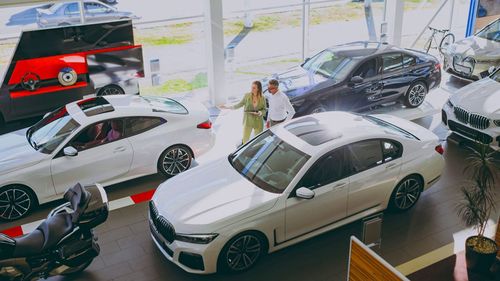
The brief also examines the established role of international automakers in US manufacturing. Their American factories built 4.9 million vehicles in 13 states in 2025, representing 49 percent of US vehicle output. International brands' cumulative capital investment reached $125 billion and was reported to support 2.9 million American jobs, directly or indirectly.
Tariffs and production restrictions remain
As of the October brief, Chinese EVs faced two barriers: tariffs excluding them from the US market and a federal rule effectively prohibiting Chinese EV manufacturing in the country. The latter is the Bureau of Industry and Security's Connected Vehicles Final Rule.
The brief puts the combined tariff at 127.5 percent: a 2.5 percent most-favored-nation rate, a 100 percent EV tariff under Section 301 and a 25 percent national security tariff under Section 232.
The Office of the United States Trade Representative confirmed in an October 7, 2026 notice that its China tariff measures would remain in effect in their modified form during a second four-year statutory review. According to EconoTimes, that continuation includes the 100 percent additional duty on covered Chinese EVs. The notice gave no date for a decision.
Different positions within the administration
The brief cites President Donald Trump's September 2026 remarks expressing openness to Chinese-owned car factories in the United States. On a Fox News program, he said: "If China wanted to come in and open a plant to build their cars here, I'd be OK with that." He added: "Japan does it, but they hire our people."
Other senior officials have opposed such investment, according to the paper. Secretary of State Marco Rubio and Treasury Secretary Scott Bessent have described Chinese EV investment as a potential threat to national security and US auto-sector jobs. Commerce Secretary Howard Lutnick said: "We're not going to have them here."
China's scale, costs and government support
The paper places China's share of worldwide EV production at 70–75 percent and its share of EV battery manufacturing above 80 percent. China supplies 40 percent of global EV exports, while its domestic EV market represents at least 60 percent of the world market.
Rhodium Group data cited by the brief put the cost advantage of China's vertically integrated EV industry at $2,000–$4,700 per vehicle relative to Teslas made in China. Batteries represent about 30–40 percent of a car's production cost.
Government support is another factor examined in the paper. It cites a June 2026 OECD report concluding that "Chinese carmakers received twice as much support in absolute terms and four times more support in relative terms compared with OECD based firms."
The European Union's approach
The brief contrasts US restrictions with the European Union's use of countervailing duties and negotiated import limits. EU duties ranged from 7.8 percent for Tesla Shanghai to 35.3 percent for SAIC Group.
Under quantitative limits negotiated by the EU, annual imports of conventional and plug-in hybrids were set at 350,000 units over a rolling four-year period, with 6 percent growth after the first year.