
A warning against disengagement
Bertrand frames participation as a defense of democracy, urging readers to remember a wide range of grievances against the government. "We cannot become complacent. We cannot rest. We cannot forget," he writes.
His criticism spans immigration enforcement, military action and the conduct of public institutions. He points to troops in the streets and masked federal agents in neighborhoods, invokes the names of Renee Good and Alex Pretti, and condemns what he describes as the terrorizing, separation and deportation of law-abiding immigrants. He also denounces attacks on small boats that he says kill people without due process, and accusations of seditious behavior punishable by death directed at lawmakers.
Bertrand argues that members of Congress and the judiciary answer to one person rather than the public, and that corruption and dishonesty have displaced integrity. He also calls attention to Epstein victims' long-delayed pursuit of justice.
Abroad, he criticizes threats against Greenland, the invasion of Venezuela, consideration of action against Cuba and the war with Iran. He urges readers to remember dead and wounded soldiers, as well as schoolchildren and civilians killed. His other concerns include the treatment of Canada and other countries, threats to freedoms, neglect of the climate, diminished international respect, racism and sexism.
The column praises Americans who demonstrate peacefully, contact lawmakers and news organizations, and volunteer for campaigns. Bertrand also thanks former Trump supporters who now oppose the president and his loyalists, describing a change in conviction and vote as requiring "character and courage."
New Hampshire's open Senate seat
In Bertrand's home state, voters will choose a successor to Democratic Sen. Jeanne Shaheen, who is retiring after three terms. Democratic Rep. Chris Pappas and Republican former Sen. John Sununu secured their parties' nominations on Sept. 8 and will compete on Nov. 3 in a race both parties regard as important to Senate control, according to CNBC and Reuters.
New Hampshire currently sends Democrats to all four of its congressional seats, while Republicans hold the governorship and control the state legislature, Reuters reports. In the 2024 presidential election, Kamala Harris carried the state with 50.9% of the vote to Trump's 48.1%.
Nationally, Republicans enter the midterms with a 53-47 Senate majority, according to a European Parliamentary Research Service briefing updated Oct. 9, 2026. Democrats need a net gain of four seats to reach 51 and take control. The Republican-aligned House majority stands at 219-214, including one independent who caucuses with Republicans, with two seats vacant.
The Nov. 3 elections will fill all 435 voting seats in the House and 35 of the Senate's 100 seats, determining the membership of the 120th Congress. Voters will also decide 39 gubernatorial elections, the briefing says.
Household costs and government services
Affordability is central to Bertrand's criticism. He says people cannot afford food, housing, health care, gasoline, diesel and heating oil, and highlights hardships facing farmers and truckers. He also condemns tariffs he describes as illegal and their effects on businesses and the economy.
The EPRS briefing identifies living costs as a persistent leading concern for Americans heading into the midterms. Since early 2020, it says, the median U.S. home price has climbed 28%, from $317,000 to $405,000, while 30-year mortgage rates have nearly doubled, from 3.45% to 6.11%.
Bertrand also objects to actions against government agencies and their effects on services for older adults, veterans, people with disabilities and low-income Americans. His concerns extend to food safety, health, education, science, international assistance, cooperation and intelligence. He separately names Jackie Kennedy's Rose Garden, the East Wing, the Lincoln Memorial Reflecting Pool and the John F. Kennedy Center for the Performing Arts as places readers should not forget.
Voting access and campaign spending
Bertrand accuses the government of spreading election falsehoods, interfering through the Justice Department and trying to suppress or restrict voting. He reserves particular criticism for congressional lawmakers who enable Trump, saying he can neither forget nor forgive their role.
One pending dispute over registration concerns the Trump-backed Safeguard American Voter Eligibility, or SAVE, Act. As of the October EPRS briefing, the bill had cleared the House but not the Senate. It would require in-person registration and specified documents proving citizenship. Supporters say it would prevent noncitizen voting; critics warn that it could disenfranchise millions.
Campaign-finance rules have also changed. In National Republican Senatorial Committee v. Federal Election Commission on June 30, 2026, the Supreme Court voted 6-3 to remove federal limits on spending coordinated between political parties and candidates. The ruling allows parties to spend unlimited amounts in coordination with candidates, according to EPRS.
Approval ratings and the midterm record
The EPRS briefing places Trump's job approval at 39% in mid-September 2026. It also cites a September Gallup poll showing 16% approval and 79% disapproval of Congress's job performance.
Historically, the president's party has lost House ground in 20 of the past 22 midterm elections dating to 1938, the briefing says. The exceptions were 1998, during President Bill Clinton's impeachment, and 2002, following the Sept. 11 attacks.
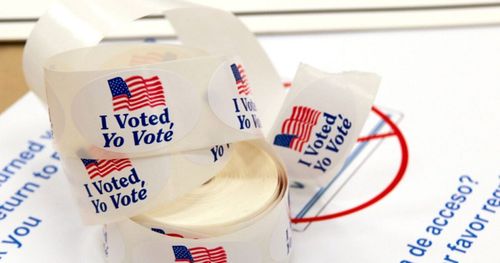
Bertrand's appeal is for participation rather than reliance on that history. After urging more former Trump supporters to reconsider their allegiance, he closes with a direct instruction: "Everyone must vote."