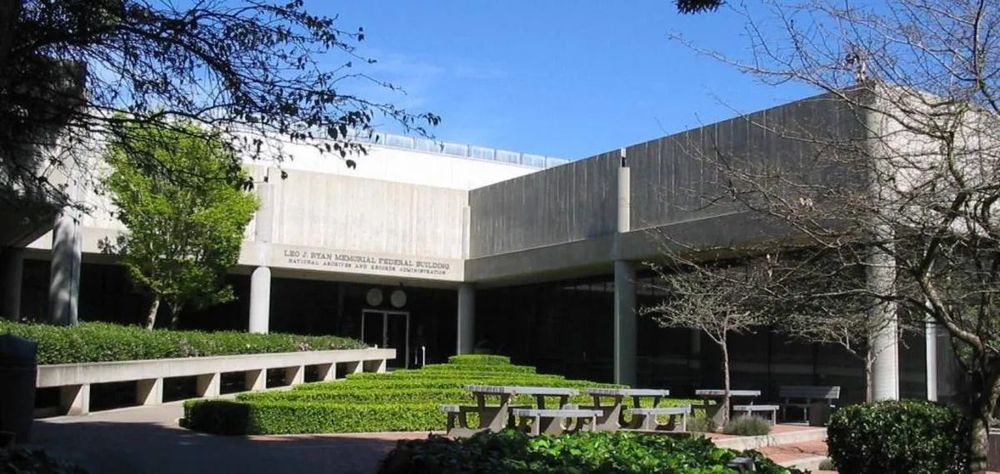
Records central to Tribal legal work
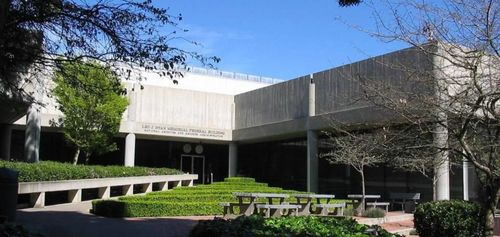
The federal lawsuit by California Indian Legal Services (CILS) follows a separate case brought by California Attorney General Rob Bonta on Oct. 14. NARA announced plans in June 2026 to close its San Bruno and Chicago archival facilities.
CILS argues that many documents in San Bruno must be reviewed in person and are not readily accessible to the public elsewhere. Its attorneys rely on those materials to represent Tribes and Native Americans in matters involving sovereignty, federal recognition, ancestral land claims, sacred sites and family histories.
At least 59 of California's 109 federally recognized Tribes use the San Bruno facility, along with Tribes that lack federal recognition. Among its holdings are California census rolls compiled under the California Indians' Jurisdictional Act of 1928. Tribal governments, lawyers, researchers and families use those rolls and other historical documents held there.
The collection contains more than 75,000 cubic feet of records, some dating to 1850. According to the California attorney general's office, fewer than 4% of records across National Archives facilities nationwide have been digitized. The office says some documents cannot be digitized because their age or composition makes them too fragile.
CILS cited the Tillie Hardwick litigation as an example of the records' role in its work. Its attorneys devoted extensive time to examining documents in San Bruno for that case, which helped 17 California Tribes regain federal recognition after years of wrongful termination.
"These records are not relics of the past. They are the foundation for decisions being made today and opportunities that will shape Tribal communities for generations to come," said CILS Executive Director Heather Hostler.
Two lawsuits challenge the closure
CILS is contesting both the San Bruno closure and the relocation of records out of state. Its complaint centers on the practical barriers that would arise if materials needed to establish legal claims and document ancestral connections were moved away from the communities and advocates who use them.
Bonta's case, filed in the U.S. District Court for the Northern District of California, alleges that the closure and transfer decision violates the Administrative Procedure Act because it is "arbitrary and capricious." He is asking the court to set aside the closure decision and bar the records from being transferred.
NARA's reasons and relocation plans
NARA attributes the planned San Bruno and Chicago closures to unused space as the federal government shifts to electronic recordkeeping. Under OMB Memorandum M-23-07, the agency stopped accepting analog record transfers into its Federal Records Centers program on June 30, 2024.
The agency projects annual savings of more than $4.7 million after leaving San Bruno. It also says the affected buildings are more than 50 years old and need infrastructure upgrades that it considers financially unviable.
An August 2026 plan divides the San Bruno archival holdings among five NARA locations: Riverside, California; Denver; College Park, Maryland; Fort Worth, Texas; and Kansas City, Missouri. The broader plan also calls for relocating all temporary records from the Seattle Federal Records Center. Seattle's archival and permanent records will stay where they are until a suitable replacement facility is identified in the area.
Relocation work has already begun in San Bruno. All NASA records there, designated Record Group 255, became unavailable to researchers on Oct. 13 as NARA prepared them for transfer to Fort Worth. The agency estimates researchers will be able to access them at the new location on Nov. 16, 2026.
In an Oct. 5 response to a congressional inquiry about San Bruno and Chicago, NARA Chief Operating Officer Jay Trainer said the agency had closed five other locations since 2022 "without incident." He said a two-to-three-year timetable would allow the records to be moved safely.
Consultation and legislative efforts
National American Indian organizations oppose the proposed closures. Other archival organizations have focused their response on continued access and consultation rather than demanding that NARA reverse its plans.
A joint statement by the National Association of Government Archives and Records Administrators (NAGARA), the Society of American Archivists and the Council of State Archivists urged NARA to explain how public access would continue and to consult Tribal Nations and other stakeholders about the Chicago and San Francisco facilities. NAGARA's board approved the statement on July 20, 2026; it did not call for reversing the closures.
NARA invited Tribal Nations in September to two virtual listening sessions concerning the facilities. Held Oct. 13 and Oct. 15, 2026, the sessions were open to any Tribal Nation with an interest in either location.
Congressional proposals would give lawmakers a role in future closure decisions. On Sept. 30, Sens. Adam Schiff and Alex Padilla, both California Democrats, and Dick Durbin and Tammy Duckworth, both Illinois Democrats, introduced the National Archives Protection Act. The bill would require congressional approval before NARA could close an existing regional facility or significantly restrict access to it.
Reps. Kevin Mullin of California's 15th District, Judy Chu of California's 28th District and Jesús "Chuy" García of Illinois' 4th District, all Democrats, introduced companion legislation in the House earlier in 2026.