Kamloops Christmas Market warns vendors of fraudulent application emails
Organizers of the Kamloops Christmas Market are warning prospective vendors about fraudulent emails designed to steal money from small businesses hoping to participate in the November event.
The Kamloops Sports Council has identified convincing scam messages inviting local business owners to apply for vendor spots at this year's market, scheduled to run from Nov. 27 to Dec. 6. Recipients who respond are then asked to send money to reserve their booth space.
Duncan Olthuis, executive director of the Kamloops Sports Council, said the organization has been tracking the problem since spring. The scam initially targeted Kamloops Ribfest, which the council organized for the first time in August, before intensifying over the summer and fall as attention shifted to the Christmas Market.
"I don't know who they are and if they're local or from somewhere else. This is new to us but it's not new to festivals and markets all across the country and the world," Olthuis said.
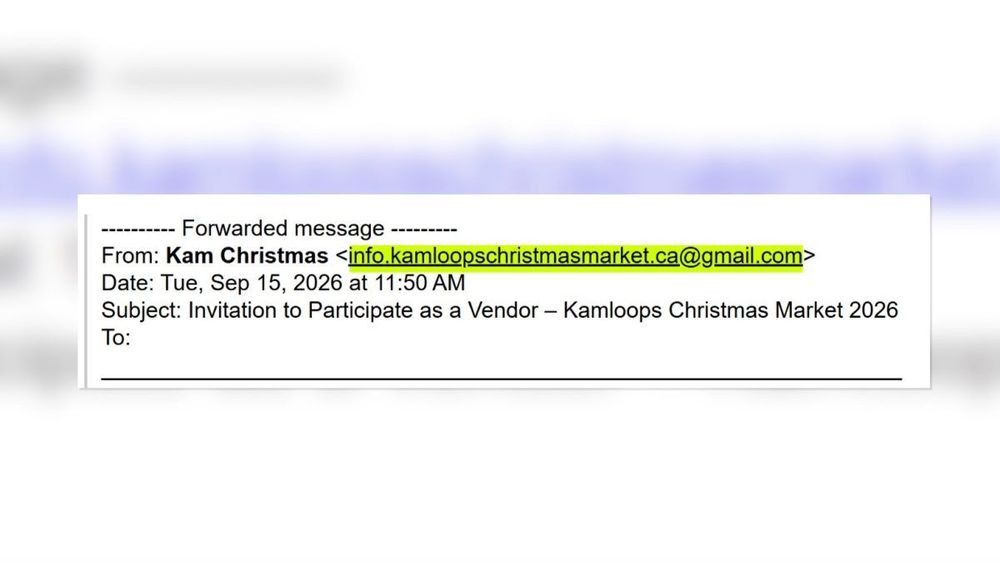
The fraudulent emails closely mimic legitimate communications but can be identified by examining the sender's address. Official vendor correspondence from the Kamloops Christmas Market originates exclusively from [email protected], while the scam messages use similar-looking addresses that end with Gmail or other free email services.
The Kamloops situation is part of a broader trend affecting festivals across Canada in 2026. Similar vendor scams have targeted the Distillery Winter Village in Toronto, Mistletoe Market in Windsor, Brandon Night Market in Manitoba, and Penticton Peach Fest in British Columbia.
The Kamloops Christmas Market, modeled after German Christmas markets and the Vancouver Christmas Market, represents the first event of its kind in the BC Interior. The inaugural market in 2025 attracted more than 23,000 attendees and generated an estimated economic impact of $2.6 million for the local community, making it an attractive target for fraudsters.
Warning signs and protective measures
Olthuis emphasized that legitimate payment requests from the Kamloops Sports Council are only sent through official invoices directly from the organization. The council never requests payment through social media comments or direct messages.
Fraudulent vendor emails typically display several common characteristics:
- They use free email services instead of official business domains
- Create artificial urgency by claiming limited vendor spaces remain
- Request payment through unofficial methods such as peer-to-peer payment apps or wire transfers
"What I've been told by the RCMP is the only way we can catch the criminals is tracing where that money is going to, but I don't know how easy that is," Olthuis said. The matter has been reported to both local RCMP and the federal anti-fraud department.
The number of businesses that have fallen victim to the scam remains unclear, though the prevalence of vendor fraud underscores a larger national problem. In 2024, the Canadian Anti-Fraud Centre recorded $643.7 million in reported fraud losses across Canada. However, experts estimate that only 5 to 10 percent of fraud incidents are actually reported, suggesting actual annual losses likely exceed $6 billion.
Reporting and prevention
Olthuis urged anyone who receives suspicious correspondence to contact the Kamloops Sports Council directly to verify its legitimacy before taking any action or providing payment information.
"We feel for the small businesses this has happened to. It's very easy to fall into that scam when you look at those emails and I think the best thing now is educating the people that there is this scam out there, please do not fall for it," he said.
Vendors or business owners who believe they have been victimized can report incidents online through the National Cybercrime and Fraud Reporting System at reportcyberandfraud.canada.ca or by calling the Canadian Anti-Fraud Centre at 1-888-495-8501.
The Kamloops Sports Council continues to accept legitimate vendor applications for the Christmas Market through its official channels and encourages anyone uncertain about a communication's authenticity to reach out for verification before proceeding.