Ivey Extends Hurricane State of Emergency Through Oct. 28
Governor Kay Ivey signed a proclamation Wednesday extending Alabama's state of emergency for another 14 days through October 28 as recovery efforts and damage assessments continue following Hurricane Isaias, which struck the state last week.
The extension comes as state emergency management officials remain deployed in Coffee, Houston, Monroe, Escambia and Conecuh counties in southeastern Alabama near the Florida border. These officials are assisting with recovery operations and conducting damage assessments that will determine whether Alabama qualifies for federal disaster assistance.
Hurricane Isaias Impact
Hurricane Isaias made landfall near Destin, Florida at approximately 8:30 p.m. on October 9 as a Category 3 hurricane with maximum sustained winds of 120 mph before weakening as it moved through Alabama. The storm, which became the first hurricane of the 2026 Atlantic hurricane season on October 8, tied the 1905 season for the latest date a season's first hurricane has formed.
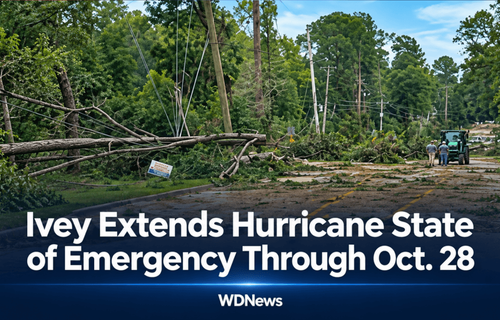
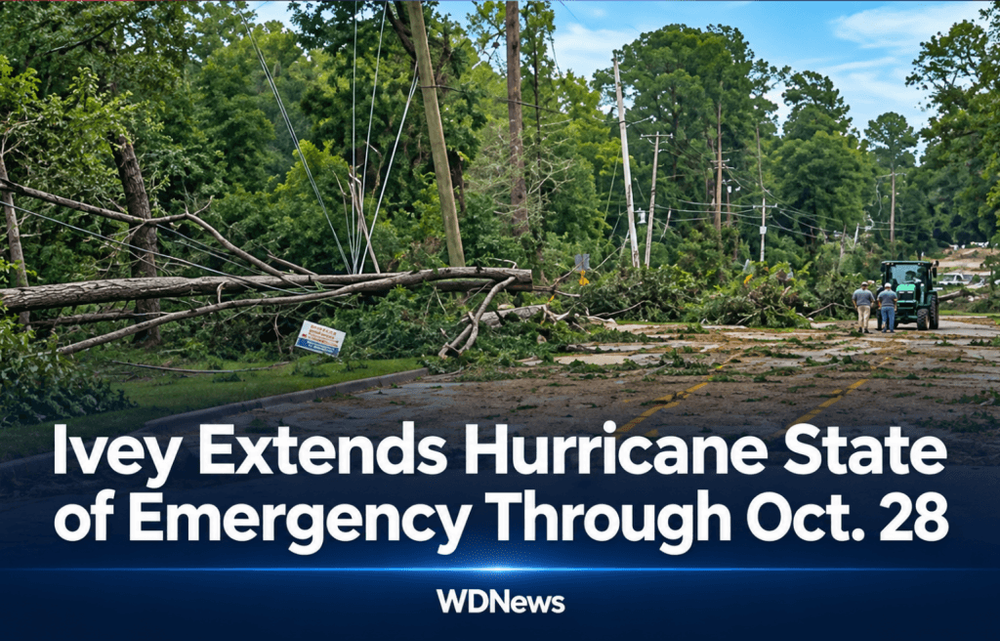
The hurricane's impact on Alabama was severe, claiming two lives in the state and causing widespread infrastructure damage. One fatality occurred in Jefferson County when a tree fell onto a house in east Birmingham on October 10. The storm caused extensive destruction to power infrastructure, with many inland counties experiencing complete power loss. Insured losses from the hurricane are expected to surpass $2 billion across the United States.
Emergency Declarations and Federal Response
Governor Ivey originally declared a state of emergency on October 7 for 40 Alabama counties under the Alabama Emergency Management Act of 1955, which was set to expire on October 14. The act provides the governor with emergency powers to coordinate disaster response and suspend conflicting state law provisions during emergencies.
President Donald Trump issued a federal emergency declaration for Alabama on October 9, and the U.S. Department of Health and Human Services declared a public health emergency for the state on October 12, demonstrating the multi-level government coordination in response to the disaster.
Damage Assessments and Federal Assistance
State and federal officials are conducting joint preliminary damage assessments through FEMA's standard process to determine the impact and magnitude of damage. These assessments validate local damage data and provide the information necessary for the governor to formally request federal disaster assistance. No federal assistance announcement has been made yet.
The Governor's Office is also working with the IRS to seek filing and payment postponements for federal tax returns for affected taxpayers. Under the Filing Relief for Natural Disasters Act, the IRS can postpone federal tax deadlines for taxpayers affected by qualified state-declared disasters upon written request by a state governor, with automatic extensions now lasting 120 days for disasters declared after July 24, 2025. No postponement has been announced, though Ivey said she hopes to have an update soon.
Recovery Efforts Continue
Power restoration efforts are ongoing throughout the affected areas. Officials indicated that full power restoration should be achieved within the next few days.
This hurricane took a toll on parts of Alabama. As the storm recovery and damage assessment continue, I am extending the state of emergency to allow our emergency management officials to better assist our fellow Alabamians. As power restoration continues, I am told it should be fully back on throughout these next few days. I am truly grateful to the emergency management officials at all levels, as well as first responders, law enforcement, power crews and all involved in storm cleanup. Alabama is a state where neighbors help neighbors, and that no doubt also includes our outstanding private sector partners and volunteer organizations who are doing good work to help our people. We will continue doing all we can from a state level to support Alabamians affected by this hurricane.
The extended emergency declaration allows state officials to maintain coordinated response efforts and provides flexibility in resource allocation as communities work toward recovery.