Ship operators face mounting risks
Bulgarian shipbroker Yordan Petrov has stopped sending his vessels into the Black Sea. He describes those who still make the journey as "kamikazes."
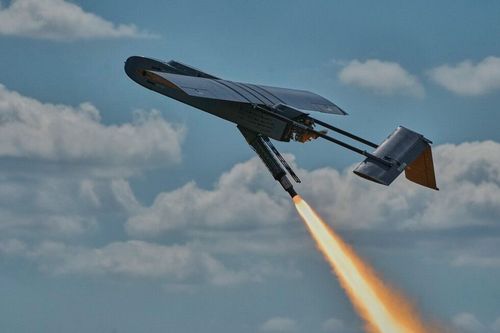
The attacks come amid a broader pattern of incidents. EU foreign policy chief Kaja Kallas told the European Parliament of six attacks in 10 days involving suspected Russian drones. Romanian MEP Siegfried Mureșan said more than 40 commercial vessels had been attacked across the Black Sea region and more than 30 drones had entered Romanian airspace in 2026, according to EUalive.
Earlier in the month, Bulgarian investigators had not established responsibility for the strikes off their coast. Prime Minister Rumen Radev said on October 14 that Russian involvement had not yet been proven. POLITICO also noted Ukraine's use of naval drones: in June 2026, one exploded in Romania's Constanța port after Kyiv said Russian electronic interference had caused it to stray off course.
Insurance premiums and coastal detours
Maritime brokers described sharply higher costs even before the latest reported death toll. By mid-October, Black Sea war-risk insurance costs had quadrupled over three months, according to Türkiye Today, reporting on October 14. Transit premiums had risen from about 0.2%–0.5% of a vessel's value to 0.6%–1%, while freight rates had climbed from roughly $30 to $100 per ton, more than tripling.
Insurance rules have also changed the routes ships take. In September, London's Joint War Committee extended its high-risk designation across the Black Sea, leaving out only the territorial waters of Bulgaria, Romania, Türkiye and Georgia. About 90% of the transit fleet subsequently shifted to coastal routes inside those 12-nautical-mile territorial waters to avoid additional war-risk insurance, according to an estimate cited by Türkiye Today. The longer route adds approximately 180–200 nautical miles to a round trip and about $20,000 in charter and fuel expenses.
NATO adds surveillance as EU leaders demand safe passage
Following a North Atlantic Council meeting in Brussels on Black Sea security, NATO began deploying more surveillance and intelligence resources on October 20–21 in response to the attacks. The deployment includes maritime patrol aircraft, radar systems, drones, and intelligence and forensic teams, according to Reuters and EUalive.
A U.S. P-8 Poseidon has started surveillance flights over the Black Sea and has landed in Varna, Bulgaria. The aircraft is not equipped to strike targets.
Aircraft remain an option where naval deployments face treaty restrictions. Under the 1936 Montreux Convention, wartime limits on warships from non-littoral and belligerent states passing through the Turkish Straits prevent NATO from freely sending warships into the Black Sea. The convention primarily governs naval vessels rather than air operations.
EU leaders had already demanded action at their October 15–16 meeting in Brussels. The European Council called for safe passage to be restored immediately for all civilian shipping, including merchant and commercial vessels, and characterized attacks on civilian ships as a serious breach of international and maritime law, according to Interfax-Ukraine.
Ukraine's exports and port investment under pressure
The disruption affects Ukraine's principal export route. Black Sea ports handle about 95% of its grain exports and substantial iron ore shipments, POLITICO reported on October 14. Security risks have reduced shipping traffic, while drought and record-low water levels limit efforts to divert cargo to the Danube River. Ukraine's agriculture minister warned that millions of tons of grain remained unsold and were piling up.
Kallas said grain exports through the Black Sea had "effectively ground to a halt" since August 2026 because attacks had made commercial shipping unviable, according to The Brussels Times. She also cited estimates putting Ukraine's lost export revenue at about €60 million a day.
Ukraine accounts for about 15% of global corn exports, 10% of wheat exports, 15–20% of barley exports and 50% of sunflower oil exports. Around 90% of those goods normally travel through the Black Sea corridor.
Continued attacks also threaten recent and prospective investment in Ukraine's ports. MSC, the world's largest container line, reportedly bought a majority stake in a container terminal near Odesa in May 2026. Ukraine has also been offering a long-term concession at the Chornomorsk terminal. Port workers told POLITICO that the continuing risk of strikes was undermining the case for investing in reconstruction.