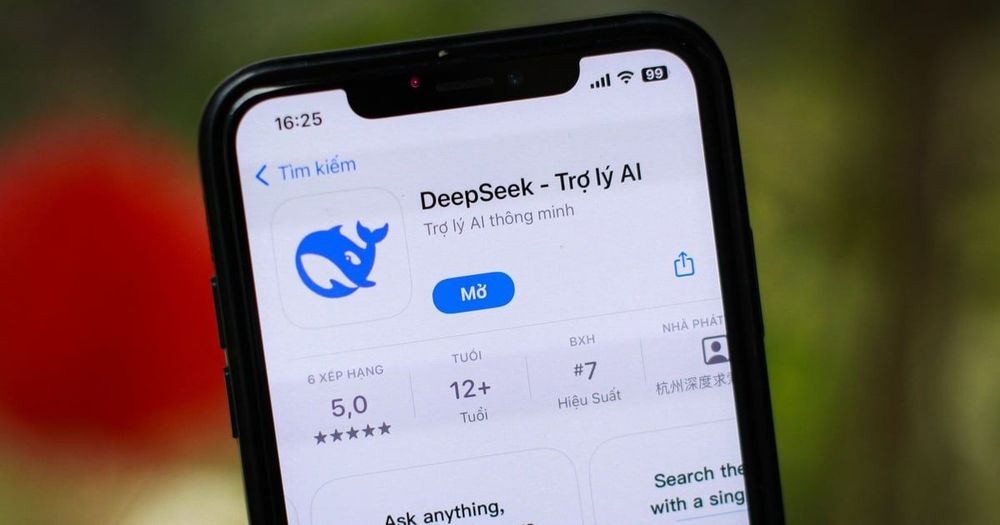
China's DeepSeek has been experiencing recurring problems after partnering with Huawei.
DeepSeek, one of China's leading artificial intelligence platforms, experienced a major service outage on October 15th that left users worldwide unable to access the chatbot and API services for nearly five hours. The incident, which affected the company's V4 Pro and V4.1 Flash models, is the latest in a series of disruptions that have raised questions about the platform's reliability as it transitions away from Nvidia technology.
The company apologized to users and announced it would reimburse service usage costs for the affected week. In its statement, DeepSeek indicated it was reviewing and removing dependencies to prevent similar incidents from recurring.
Frequency of Disruptions Raises Concerns
The October 15th outage was part of a troubling pattern for the AI startup founded in May 2023 by hedge fund billionaire Liang Wenfeng, who also established the quantitative hedge fund High-Flyer in 2016. During the first half of October alone, DeepSeek experienced five service interruptions, averaging one outage every three days. The previous month saw eight separate failures, bringing the total number of service disruptions to 44 since the beginning of the year.
Huang Lichong, chairman of Huisheng Global Capital, suggested that service disruptions can occur when user traffic concentrates at certain times. He noted that even with sufficient computing resources, service disruptions can still happen if user requests are not properly distributed.
Industry analysts point to a lack of computing resources as a common cause of outages at large-scale AI companies. This challenge has become particularly acute for DeepSeek as it navigates the complex landscape of U.S.-China technology restrictions.
Strategic Pivot to Domestic Chips
DeepSeek's current infrastructure challenges stem partly from its efforts to reduce dependence on American technology. U.S. export controls on AI chips to China have intensified, with Nvidia's H20 chip requiring export licenses as of April 2025. These restrictions resulted in a $5.5 billion charge for Nvidia related to inventory and purchase commitments.
Adding to the pressure, China's Cyberspace Administration banned the country's largest technology companies from buying Nvidia's AI chips in September 2025. Two months later, regulators required state-funded data center projects to use only domestically manufactured AI chips.
In response, DeepSeek has accelerated its partnership with Huawei. On September 30th, the company released open-source code for software components optimized for Huawei's Ascend platform. The two companies are developing an integrated system featuring 128 next-generation Ascend 950 AI chips. Huawei's Ascend 950 chip family, announced in September 2025, features 1 petaflop of FP8 compute performance and self-developed HBM memory, with the Ascend 950PR launched in the first quarter of 2026.
The transition represents a significant technical undertaking. DeepSeek's flagship V3 model, released in December 2024, was trained using 2,048 Nvidia H800 GPUs at a cost of approximately $5.6 million. The model features 671 billion total parameters with 37 billion activated per token, and was trained on 14.8 trillion tokens, demonstrating the company's cost-efficient approach to AI development.
Major Infrastructure Expansion in Inner Mongolia
DeepSeek is investing heavily to expand its computing infrastructure, with plans to build a data center in Ulanqab, Inner Mongolia. The facility would add 1 gigawatt of computing capacity, part of a broader industry trend in the region.
Ulanqab was designated in 2021 as one of the main hubs of China's national 'Eastern Data, Western Compute' program and has since attracted nearly 100 data center facilities with a total planned capacity of 12.5 gigawatts, according to Goldman Sachs research. Major Chinese technology companies including ByteDance, Alibaba, Kuaishou, Xiaohongshu, and Huawei are operating or expanding facilities in the area alongside DeepSeek.
The scale of operations in Ulanqab is substantial. Data center electricity consumption in the municipality reached 4 billion kilowatt-hours in the first six months of 2026, representing an 85.2% year-over-year increase and accounting for 7.3% of the municipality's total power usage.
Financial Implications and IPO Concerns
The recurring service disruptions come at a critical time for DeepSeek's finances. In July 2026, the company raised its first external funding round at a valuation of $52 billion, with investors including Tencent, CATL, NetEase, and JD.com. The company has reportedly doubled its projected funding needs as it scales its operations.
However, experts warn that ongoing stability issues could affect DeepSeek's planned initial public offering and future valuation. Yang Xin, head of the Industrial Research Institute of the Shenzhen Qianhai Hong Kong Chamber of Commerce, noted that while the current incidents may not impact ongoing fundraising, they could become a focal point during IPO review processes. Analysts emphasize that if server stability does not improve in the long term, DeepSeek's valuation in the capital market will likely decline.
As DeepSeek works to resolve its infrastructure challenges, the company faces the dual challenge of maintaining service reliability while completing its transition to domestic chip technology amid intense competitive pressure in China's rapidly evolving AI sector.