South Korea to Introduce Medication Abortion Pills as Early as First Quarter 2025
The South Korean government has announced plans to introduce mifepristone, a medication abortion pill, marking a significant shift seven years after the Constitutional Court declared the country's abortion ban unconstitutional. The Ministry of Food and Drug Safety is reviewing an application from Hyundai Pharmaceutical, with approval expected as early as the first quarter of 2025.
The medication will be available for pregnancies up to nine weeks of gestation. For the first two years following introduction, doctors will be required to prescribe and dispense the drug directly at medical institutions, with potential expansion to pharmacies pending safety reviews and legal reforms.
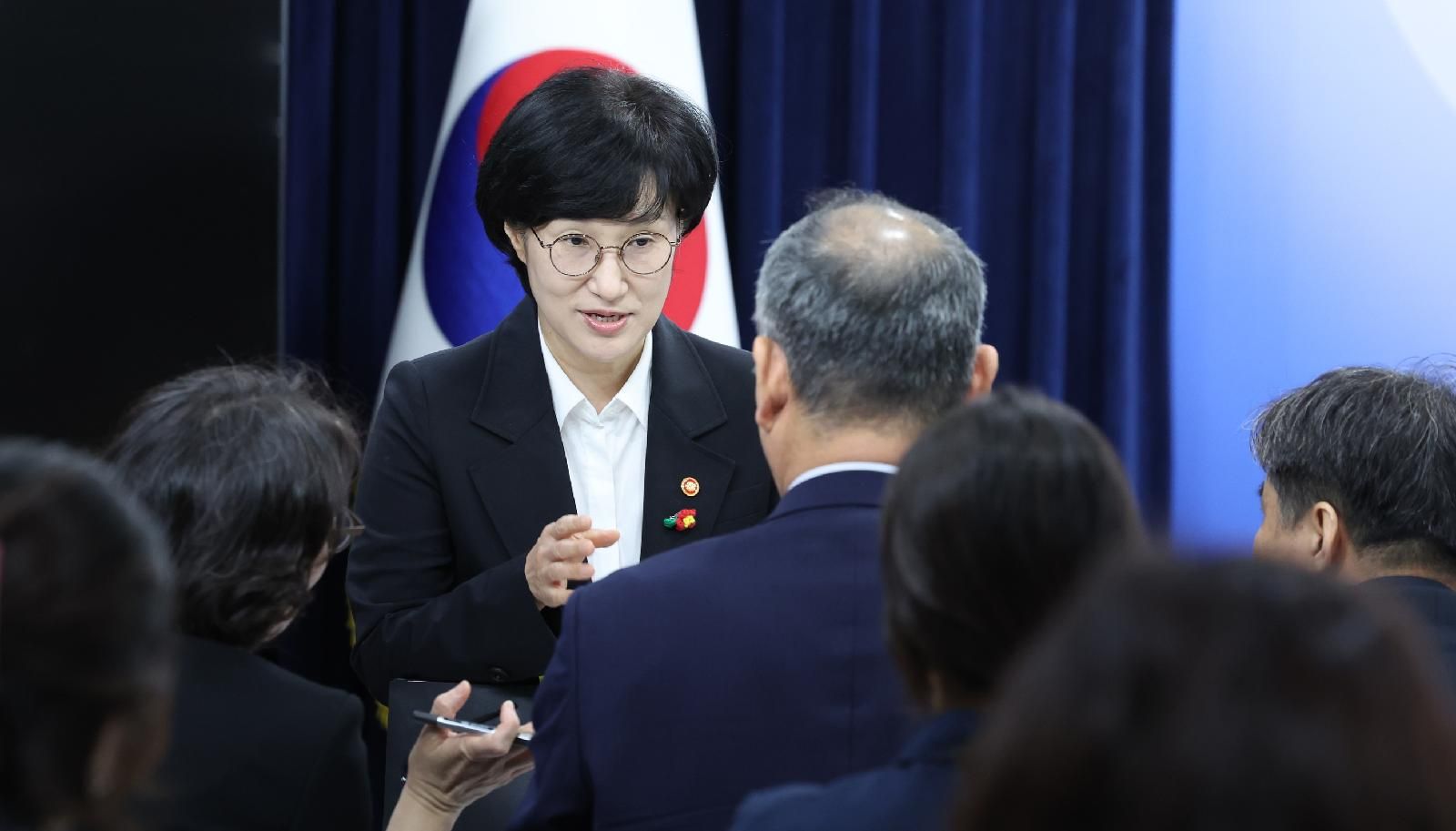
Gender Equality and Family Minister Won Min-kyung, along with officials from the Ministry of Health and Welfare and the Ministry of Food and Drug Safety, presented the introduction plan at a National Policy Coordination Meeting on January 16. The suspension drug was included in the national task to guarantee women's right to sexual and reproductive health.
Accelerated Timeline Following Presidential Directive
The policy announcement follows President Lee Jae-myung's directive in July calling for safe access to abortion medication. At a Cabinet meeting, President Lee cited the reality that South Korean women were seeking drugs abroad due to the absence of officially approved options domestically.
The Ministry of Food and Drug Safety is currently reviewing Hyundai Pharmaceutical's application, submitted in December 2024. This marks the company's third attempt after two previous applications were voluntarily withdrawn. Hyundai Pharmaceutical signed a supply agreement in 2021 with Linepharma International Limited, a UK-based pharmaceutical company specializing in sexual and reproductive health products.
Shin Jun-su, director of the Ministry of Food and Drug Safety's drug safety bureau, said the review includes risk management plans and other safety considerations. We will cooperate with the company so that it can be introduced as soon as the first quarter of next year.
The government's ability to proceed stems from an authoritative interpretation issued by the Ministry of Legislation last month, which determined that medication abortion could be approved under current law without revising the Mother and Child Health Act.
Legal Framework Concerns
Despite the approval process moving forward, significant questions remain about the legal and institutional mechanisms surrounding the drug's use. The current Mother and Child Health Act, enacted in 1973, only stipulates doctor's surgery as a means of terminating pregnancy. The Act historically allowed abortion only under five specific circumstances within 24 weeks: cases of rape or incest, hereditary or communicable diseases in the woman or spouse, or when pregnancy endangers the woman's health.
In April 2019, South Korea's Constitutional Court ruled the country's 66-year abortion ban unconstitutional and ordered the National Assembly to revise the law by December 31, 2020. The court suggested women should have up to 22 weeks of pregnancy to allow sufficient time to make and carry out a holistic decision.
When the National Assembly failed to enact replacement legislation by the deadline, the criminal provisions automatically lapsed on January 1, 2021, effectively decriminalizing abortion but leaving a regulatory vacuum.
In October 2020, the government proposed a bill to allow abortion until the 14th week of pregnancy and conditionally permit it until the 24th week based on social, economic, and health concerns, but the legislation was never voted on.
Professor A of obstetrics and gynecology at a senior hospital in the Seoul metropolitan area noted the current legal gap: Article 14 of the current Mother and Child Health Act still only stipulates 'doctor's surgery' as a means of terminating pregnancy. If permission is granted without the legal definition of drug pregnancy suspension, the number of weeks allowed, prescription requirements, and follow-up standards, the confusion and legal burden will be passed on to women and medical staff.
The government plans to require doctors to dispense the medication directly at medical institutions for two years, with potential expansion to pharmacies contingent on criminal law and Mother and Child Health Act revisions and demonstrated safety outcomes.
Medical Community Raises Safety Questions
Medical professionals have emphasized the need for comprehensive safety protocols before the drug's introduction. The medication regimen involves taking one 200mg mifepristone tablet orally to block pregnancy maintenance hormones, followed 24 to 48 hours later by four 200mcg misoprostol tablets placed between the gums and cheeks to induce uterine contraction. Patients must return to the hospital after 7 to 14 days to confirm complete discharge.
Kim Jae-yeon, chairman of the Korean Obstetrics and Gynecology Association, highlighted several concerns: In case of incomplete miscarriage or excessive bleeding, appropriate fees should be compensated to medical institutions that will cover subsequent surgery and emergency transfer. It is also urgent to protect doctors who prescribed drugs for social and economic reasons from the risk of criminal punishment.
Kim also called for legal protections for doctors who refuse to prescribe the medication based on personal beliefs: The conscientious objection of obstetricians who refuse to prescribe drugs according to their personal beliefs needs to be stipulated by law.
Several implementation details remain undecided, including whether prescriptions will be limited to obstetricians and gynecologists or extended to other physicians capable of determining pregnancy status and weeks of gestation. Standards for minors' access, including potential guardian consent requirements, are still under discussion.
Mifepristone was first approved in France and China in 1988, and as of May 2023, 96 countries have approved its use for medical abortion. The World Health Organization recommends the combined use of mifepristone and misoprostol, with authorization for use up to 12 weeks of pregnancy. The U.S. Food and Drug Administration approved mifepristone in 2000 for use up to 10 weeks of gestation. In high-income countries, medication abortion accounts for at least half of all abortions, with rates reaching 87-98% in Nordic countries and 87% in England and Wales by 2021.
Religious Opposition
Religious groups have voiced strong opposition to the government's plan. The Korean Federation of Churches stated: The legislative overhaul of the number, reasons, and procedures allowed for abortion is also necessary. The government should clarify its position on whether it is appropriate to approve abortion drugs first before legal standards for life protection are established.
Protestant groups launched the National Union for the Protection of Infants and Women a year ago, led by Pastor Lee Jae-hoon of Onnuri Church, to oppose abortion legalization policies. More than 70 civic groups participate in the coalition.
The Korean Catholic Bishops' Association issued a statement titled "We urge step-by-step support to protect life, not an orderly packaged abortion." The statement expressed concern that the government's plan only institutionalizes abortion in an 'orderly' manner, does not change its essence at all, but rather makes the neglect of life more ingrained in our society.
The bishops' conference disputed the nine-week boundary: The 'nine weeks of pregnancy' boundary is not a line that protects the fetus, but a line that determines the object that can be killed. Human life begins from the moment of fertilization, and the fetus at nine weeks of pregnancy is already a complete human life.
Jeong Jae-woo, president of Catholic University's Graduate School of Life, added: The name 'Stop Pregnancy' obscures the essential reality of the death and discharge of the fetus, making the matter less important. If it is considered like a simple pill, consideration of fetal life will disappear and the trend of neglect of life will become stronger in society as a whole.
Director Chung also raised concerns about physical and psychological impacts: The extreme bleeding, physical side effects, and mental pain of women in the process of stopping drugs should not be overlooked. There is no case for women to become healthy through abortion. The real alternative needed for women in difficult situations is not to open the way for them to give up their lives, but rather to support policies that help both women and fetuses to give birth with healthy protection.
As South Korea moves toward introducing medication abortion, the debate over legal frameworks, safety protocols, and ethical considerations continues, with stakeholders calling for comprehensive legislation before implementation proceeds.