What households will pay
The Board of Water Commissioners approved the changes to keep essential uses such as drinking, cooking and bathing affordable while encouraging customers to use less water on lawns, according to Denver Water. The utility serves 1.5 million people and is Colorado's largest water provider.
For single-family customers within Denver, the new price is $2.33 for every 1,000 gallons used indoors and $5.83 for every 1,000 gallons used outdoors. Suburban customers pay somewhat higher rates.
The Colorado Sun reported that the average single-family monthly bill for Denver customers will increase 5.7% to $60.21. For suburban customers served by Denver Water resources, the average will rise 7.9% to $61.57.
Annual increases will vary with consumption. Denver Water figures reported by Colorado Politics put the additional yearly cost at about $35 for a typical Denver household and about $98 for a city household in the top 5% of water users. Some of the heaviest suburban users could pay about $150 more per year.
The board also approved additional outdoor charges that would apply if drought restrictions remain in place next spring. Under restrictions allowing lawn watering two days a week, Denver single-family customers would pay $7.23 per 1,000 gallons outdoors, rather than the $5.83 base price.
The previous rate increase took effect in January 2026 and added an average of about $2.45 to $3.30 to Denver consumers' monthly bills, according to Colorado Politics.
Conservation and system costs
Revenue from the higher outdoor rates will also support maintenance and infrastructure work, including the Gross Reservoir expansion and lead-pipe replacement. Denver Water receives no tax revenue and does not earn a profit.
"We are experiencing a historic drought, which has stressed our system and our communities," CEO Alan Salazar said in a statement. "And we are asking our customers to conserve water and stretch the supplies we have."
Salazar described the drought as one of the utility's worst in the past century. He said a warming climate means Denver Water must prepare for further droughts while maintaining access to safe, affordable, clean water for the people it serves.
Drought pricing is already part of the utility's response. Denver7 reported that temporary charges introduced in spring 2026 took effect with May water use. Salazar said Denver Water had not used that tool since the 2002-04 drought, more than two decades earlier.
Reservoirs depleted after a dry, hot year
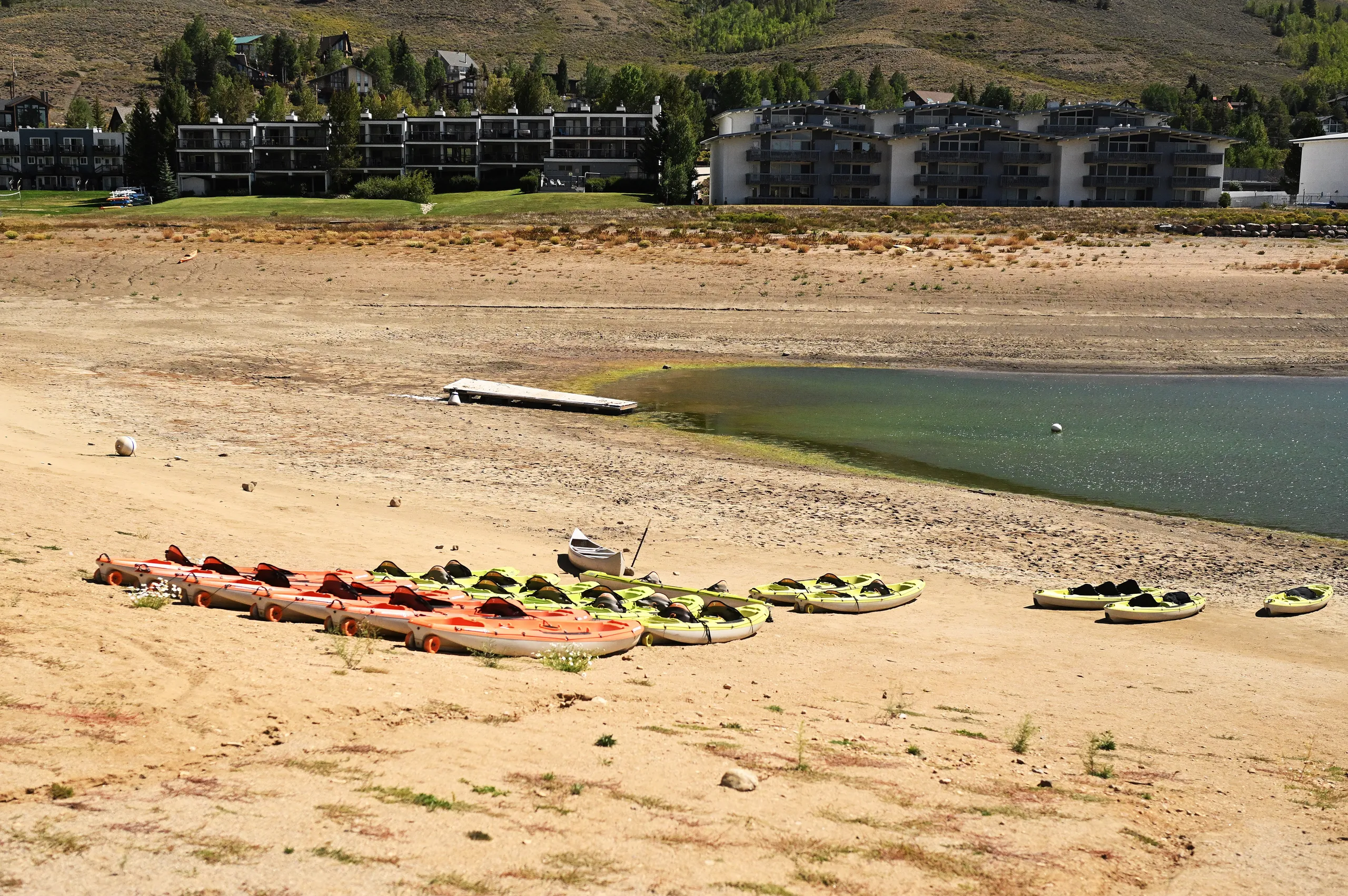
Denver Water's reservoirs held a combined 66% of capacity on Monday, well below the typical 89% for this time of year. A winter short on snow and Denver's hottest summer on record depleted supplies.
The utility declared a Stage 1 drought in March 2026 after Colorado's snowpack reached an early peak at about 58% of normal, according to Colorado Politics.
A separate assessment, the Colorado Climate Center's 2026 water-year report released Oct. 20, put the snowpack peak at 51% of average in early March, roughly a month earlier than usual. Rocky Mountain PBS reported that the assessment also identified October 2025 through September 2026 as Colorado's hottest 12-month period on record, with statewide temperatures 4.5 degrees above the 1991-2020 average.
In May, Denver Water began transferring water from Antero Reservoir to the deeper Cheesman Reservoir to limit evaporation, Colorado Politics reported. The transfer was expected to save roughly 5,000 acre-feet, equivalent to about a quarter of Antero's capacity.
Dillon Reservoir in Summit County stood at 75% of capacity on Aug. 20, with the surface 20 feet below its full level, and has continued to fall. In September, water supply manager Nathan Elder said forecasts showed Dillon reaching roughly 45% to 50% of capacity by spring 2027, before runoff begins, according to Summit Daily.
Elder also reported record-low inflow to Dillon for April through July 2026: 47,559 acre-feet, compared with about 160,000 acre-feet in an average year.
Watering fines and a proposed summer patrol
Under the lawn-watering ban in effect since Oct. 1, residential customers face a $500 fine for a first violation and $1,000 for subsequent violations. A Denver Water spokesperson told The Colorado Sun that the utility issued 448 fines totaling $265,000 from Oct. 1 through Oct. 18.
For summer 2027, utility staff have proposed hiring 15 temporary lawn-patrol workers at $25 an hour, The Colorado Sun reported. The staff recommendation estimates that the patrol would conduct 2,500 to 3,500 stops or violations each month and produce about 2,000 acre-feet of direct water savings.