Polls leave both blocs short of a majority
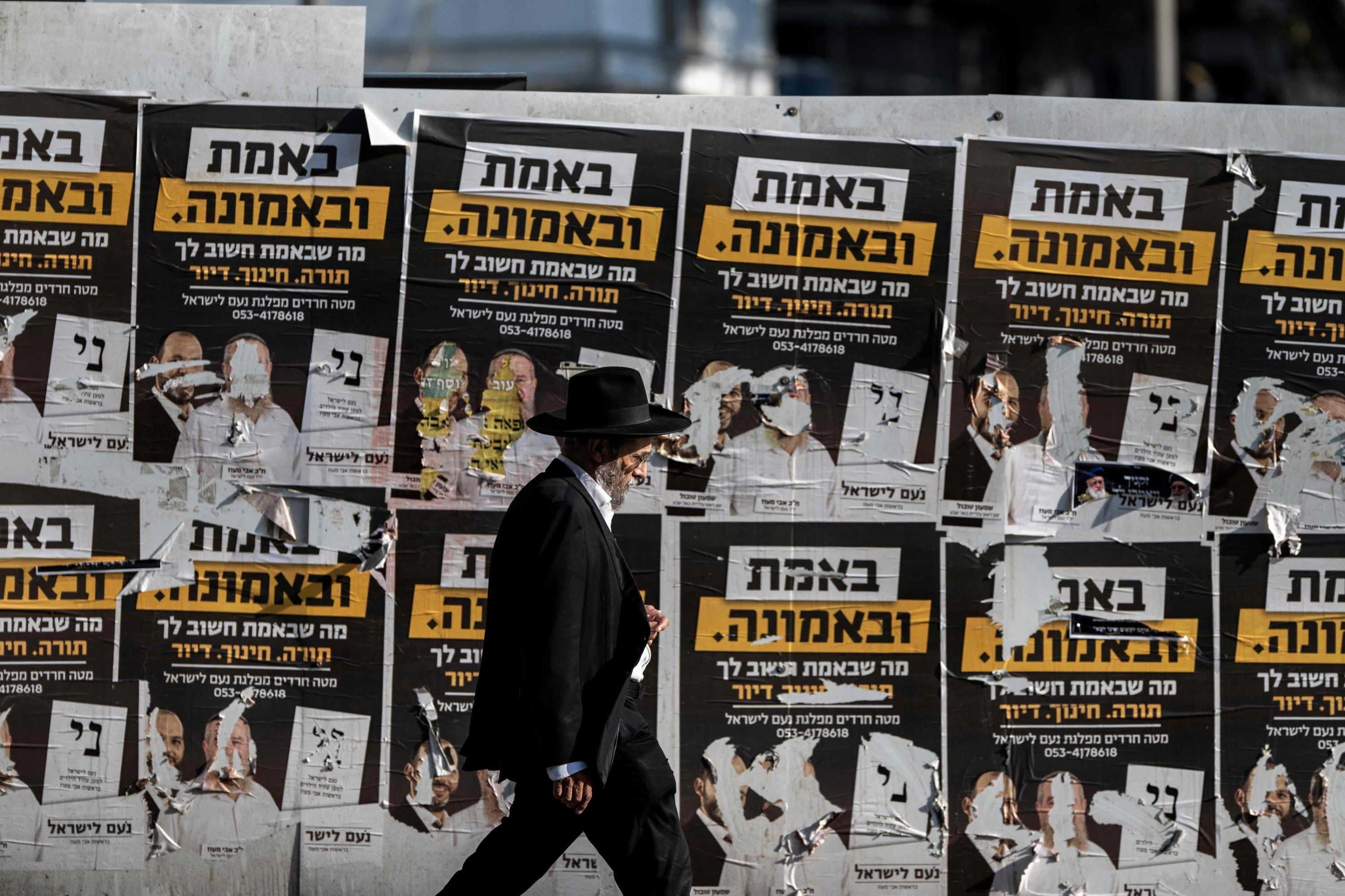
The Oct. 27, 2026, vote will elect Israel's 26th Knesset. NBC News reports that 7,331,981 citizens are eligible to vote, with at least 35 parties competing. A party must receive 3.25% of the vote to win seats; official results are due within eight days.
The final Times of Israel/Zman Yisrael poll projects 51 seats apiece for the two Jewish-led blocs, leaving both below the 61 needed to control the 120-seat parliament. It gives Arab-led parties a combined 14 seats and the nonaligned Reservists party four.
Behind the leading parties, Eisenkot's Yashar and Netanyahu's Likud, polls put B'Yachad, or Together, at about 14 seats, according to NBC News. That party brings together two center-right former prime ministers, Naftali Bennett and Yair Lapid. U.S. President Donald Trump endorsed Netanyahu days before the election, the Times of Israel reported.
The candidates' records and domestic differences
Eisenkot, a former military chief who leads the centrist Yashar party, has made military service and accountability for the Oct. 7, 2023, attack central to his platform. According to RTÉ News, he wants a larger army, conscription across all sectors of society, including the ultra-Orthodox, and a state commission of inquiry into the attack. Netanyahu has long resisted such an inquiry.
After the attack, Eisenkot entered Netanyahu's emergency government and war cabinet. He left in 2024, accusing the prime minister of failing to plan for the postwar period. His son Gal was killed while fighting in Gaza in December 2023, and two of his nephews were also killed in the war.
Netanyahu is campaigning while facing an International Criminal Court arrest warrant on charges of war crimes and crimes against humanity, NBC News reported. He also faces longstanding domestic cases involving charges of fraud, breach of trust and bribery, which he dismisses as politically motivated.
Shared opposition to Palestinian statehood
On Palestinian statehood, the two rivals occupy much the same ground: both reject an independent state, as do nearly all major Jewish-led parties. Palestinian analyst Ghassan al-Khatib described the consensus this way: "The substance of the policy remains the same: No to a Palestinian state and yes to further settlement expansion. On this, they are all in agreement."
Their differences concern how settlement policy is carried out. Eisenkot supports settlements in principle but says they must comply with Israeli law and that unauthorized settlements should be removed. He also opposes construction in the contested E1 area. Development there would split the West Bank in two and separate East Jerusalem from the rest of the territory, an outcome widely seen as undermining the prospect of Palestinian statehood.
Eisenkot has promised to restrain settler violence, including by restoring administrative detention for violent settlers. The practice allows suspects to be held without charge or trial. RTÉ reported that Israel's defense minister ended its use for settlers in 2024, while more than 3,000 Palestinians remain subject to it.
Those differences do not extend to relinquishing overall security control: Eisenkot supports maintaining it "from the Jordan River to the Mediterranean Sea." Both candidates have also rejected a governing partnership with Palestinian-led Israeli parties, which represent roughly one-fifth of the population.
No agreement on a Gaza handover
A U.S.-brokered cease-fire has been in place for a year, but Israeli troops still control about two-thirds of Gaza. An estimated 2 million Palestinians are confined to the remaining third. Figures from the Palestinian Ministry of Health cited by NBC News put the number killed in Gaza since Oct. 7, 2023, at about 74,500.
Neither candidate supports a troop withdrawal while Hamas retains its weapons and political power. A Reuters analysis says both are prepared to resume fighting to secure its disarmament. Eisenkot has set an 18-month goal for replacing Hamas' rule, through either an international agreement or military force. Efforts to arrange a transfer of authority to the Palestinian Authority or another party have not succeeded.
Continuity on Iran, concern across the region
Netanyahu has presented regime change in Iran as the answer to the threat he says it poses. At a recent military officers' graduation, he declared: "There is only one way to remove this threat once and for all: overthrow the regime in Iran." Eisenkot uses less confrontational language but has offered no major break with that approach.
Washington also continues to pressure Tehran. A State Department spokesperson said the United States would use all available tools to hold Iran accountable while it directs energy revenues toward attacks on U.S. allies, support for terrorism and other destabilizing activities. Separately, the Trump administration reaffirmed its opposition to West Bank annexation.
Many Arab leaders fear Netanyahu's expansionist agenda even as they share concerns about Iran. Abdulaziz Sager, chairman of the Gulf Research Center, described Netanyahu's policies in Gaza, the West Bank, Syria and Lebanon as damaging, while calling for a settlement with Iran before the conflict escalates further.
Michael Young of the Carnegie Middle East Center said the consensus within Israel "reduces the scope for big policy shifts." His assessment points to a prolonged confrontation rather than a resolution of the region's underlying conflicts.
Coalition constraints could force another vote
Netanyahu currently depends on far-right parties headed by Itamar Ben-Gvir and Bezalel Smotrich, both advocates of annexation, as well as ultra-Orthodox parties seeking broad military-service exemptions. Eisenkot would have to assemble support from less radical right-wing parties and perhaps the small center-left Democrats faction. His insistence on ending military exemptions adds another obstacle to coalition negotiations.
With neither candidate willing to seek support from Arab-led parties, the polling deadlock may persist beyond election day. The Times of Israel reports that if neither bloc can form a government, another election would be called for early 2027, with Netanyahu continuing as caretaker prime minister.