Complaints without an answer
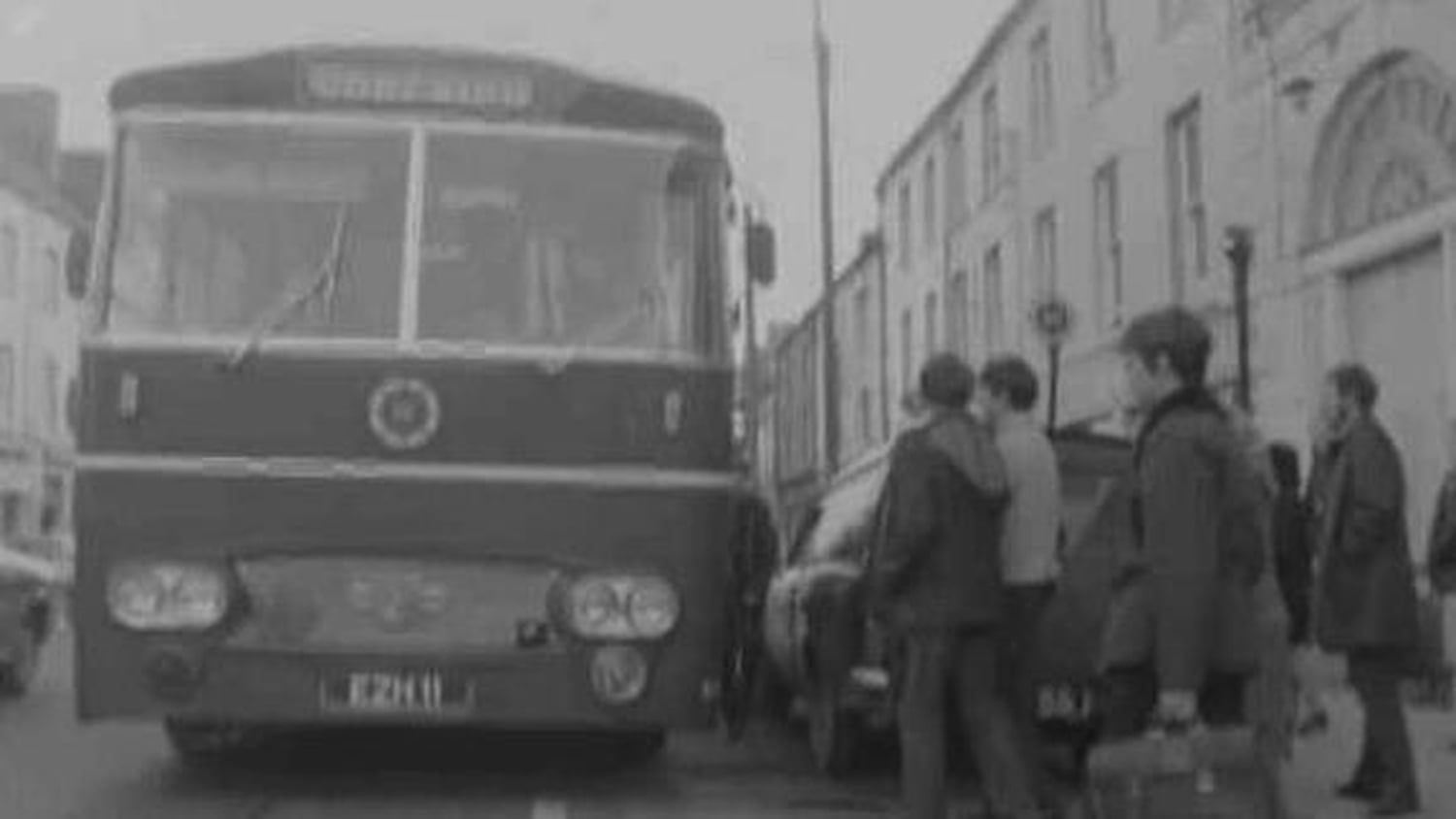
The dispute began when Butler reached his shop at 78 Main Street one afternoon and discovered the newly installed stop outside. It remained there for about a month. He described the damage to his trade as disastrous.
Butler sought its relocation in a letter to the town clerk, warning that he would take legal action otherwise. The council denied responsibility, as did council members he approached directly. By his account, almost everyone he asked disclaimed responsibility; just one councilor showed interest in helping resolve the problem.
"As far as I was concerned, democracy was dead on the Main Street of Midleton," he said.
Weeks into the dispute, Butler came to work one morning to discover tar and gravel covering the stop's white road markings. For roughly two weeks, the stop was gone. Then, one afternoon, workers put it back in precisely the same place.
After five weeks of inquiries, Butler still had no answer about who controlled the stop or who had authorized its removal and return. Asked who was in charge, he said: "As far as I'm concerned, it could be Mr Magoo."
A shop on the town's commercial street
Main Street has long been Midleton's commercial and retail center. The town received its market-town charter from Charles II in 1670, and the Midleton Market House on Main Street was completed in 1789. That building is now Midleton Library.
Midleton lies in southeastern County Cork, about 16 km east of Cork City, on the Owenacurra River and the N25 road. The market town recorded a population of 13,906 in the 2022 census.
Local stories in the show's first series
The bus-stop report aired during the first series of Frank Hall's RTÉ satirical comedy program. Launched on September 29, 1971, as "Hall's Pictorial Weekly Incorporating the Provincial Vindicator," the show became known as "Hall's Pictorial Weekly" and continued for nine series, ending in 1980.
RTÉ Archives describes a weekly filming routine from June through September: the crew visited an Irish town or village, recorded its residents and surroundings, and took the footage back to be edited into the latest edition's opening sequence. Across the country, viewers watched to find out whether their town would appear.
Hall had set out that local focus in the RTÉ Guide in September 1971. He wrote that he had "an inexhaustible interest in the lives and times of the people who live in our country towns and villages," adding that "no event is too small to capture my attention, no community too out of the way". He described the program as being about viewers' own towns, friends and local interests.