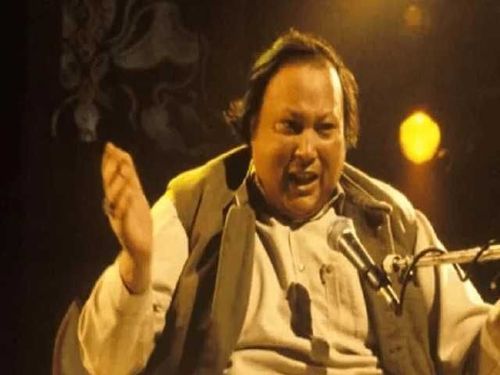
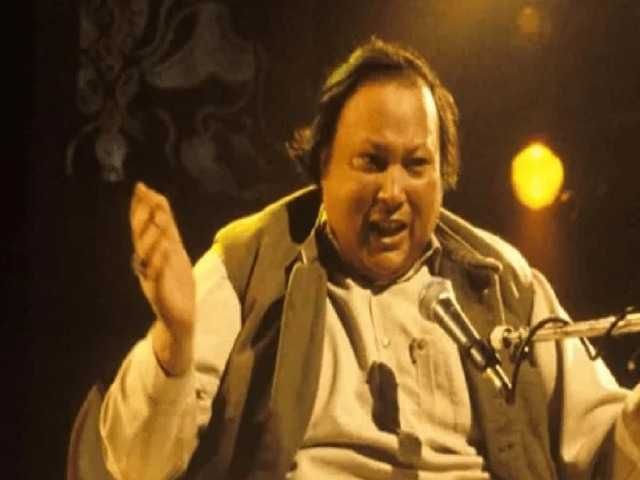
The Mystical Renaming: From Parvez to Nusrat
The musical icon who would captivate audiences worldwide was not originally known by the name that became synonymous with transcendent qawwali. At birth, his family christened him Parvez, a traditional name he carried through his earliest years.
According to Pierre-Alain Baud's biographical work "Nusrat: The Voice of Faith" and accounts by author Ahmed Aqeel Ruby, the turning point came during a household visit by Pir Ghulam Ghaus Samdani, a revered Sufi saint. Upon learning the child's name, the mystic expressed immediate concern, explaining the troubling historical association it carried.
The saint recounted that King Khosrow Parvez of Persia had infamously torn apart the sacred diplomatic letter sent to him by Prophet Muhammad. Viewing this historical connection as an ominous burden for a child born into a spiritually devoted family, the Pir recommended an urgent change.
He proposed the name "Nusrat," an Arabic term embodying divine assistance, triumph, and the path to ultimate victory. From that decisive spiritual counsel, Parvez became Nusrat—a transformation that would eventually symbolize devotional excellence across continents.
A Father's Dream: Medicine Over Melody
Despite the family's profound musical heritage rooted in qawwali—a form of Sufi devotional music originating in the 13th century through the Chishti order, with the legendary Amir Khusrau credited as a pioneering architect who synthesized Persian and Indian traditions—young Nusrat faced deliberate exclusion from his ancestral art.
Ustad Fateh Ali Khan understood intimately the precarious economics, social uncertainties, and physical demands inherent in a professional qawwali career. Determined to secure a stable, respectable future for his son, he resolved that Nusrat should pursue medical education and establish himself as a practicing physician.
To protect this vision, the family patriarch intentionally distanced Nusrat from vocal training and the rigorous riyaz sessions that defined their household's daily rhythm.
The Secret Sessions That Changed Everything
Destiny, however, had different designs. Driven by innate curiosity and rhythmic instinct, Nusrat began covert musical experiments within the family compound.
BBC archival records document the pivotal moment when his father discovered him secretly experimenting with the harmonium. Bracing for stern reprimand, the young boy was astonished when his father responded with a warm smile, granting permission to practice provided his conventional studies remained uncompromised.
Emboldened, Nusrat expanded his clandestine exploration to the tabla. His natural command of laya—the intricate mathematics of tempo and rhythm—flourished rapidly into breathtaking technical mastery.
The decisive transformation occurred during an impromptu private demonstration. Nusrat performed on the tabla with such dazzling virtuosity, nuanced expression, and profound understanding of rhythmic complexity that his father underwent an immediate reversal. Recognizing that music was not merely a pastime but an undeniable divine calling coursing through his son's being, Ustad Fateh Ali Khan abandoned his medical ambitions for the boy and formally accepted him as a dedicated disciple.
From Pakistan to Global Stages
Under rigorous formal mentorship, Nusrat absorbed classical ragas, perfected vocal projection techniques, and internalized the complex rhythmic dynamics of qawwali. Following his father's untimely passing, he assumed leadership of the family ensemble and began a journey that would redefine devotional music's global reach.
His breakthrough to Western audiences came at the 1985 WOMAD (World of Music, Arts and Dance) festival in the United Kingdom, held on Mersea Island in Essex. This landmark performance, regarded as one of the most important concerts in world music history, introduced his transcendent artistry to predominantly Western listeners and led to his association with Peter Gabriel's Real World Records label.
The international collaborations that followed demonstrated his remarkable versatility and cultural bridge-building. His 1989 work with Peter Gabriel on the soundtrack to Martin Scorsese's "The Last Temptation of Christ" significantly elevated his international profile. He later collaborated with Michael Brook on the fusion albums "Mustt Mustt" (1990) and "Night Song" (1996), and worked alongside Eddie Vedder of Pearl Jam on the 1995 "Dead Man Walking" film soundtrack.
Recognition and Legacy
The accolades that accumulated throughout his career reflected both institutional and critical recognition of his extraordinary contributions. In 1987, the Government of Pakistan conferred upon him the Pride of Performance award for his remarkable impact on Pakistani music. International validation followed with the prestigious UNESCO Music Prize in 1995.
In 1997, he received two Grammy Award nominations: "Night Song" for Best World Music Album and "Intoxicated Spirit" for Best Traditional Folk Album. His vocal prowess earned him recognition by NPR as one of the 50 Great Voices and by Rolling Stone as one of the 200 Greatest Singers of All Time, cementing his status among the most influential South Asian singers in history.
His prolific output entered the Guinness Book of World Records for releasing the highest number of qawwali albums, with 125 recordings to his credit—a testament to his relentless creative energy and devotion to his art.
Tragically, his life concluded on August 16, 1997, in London, England, at the age of 48. Suffering from kidney and liver failure, he succumbed to cardiac arrest while en route to Los Angeles for a kidney transplant. His untimely death shocked the global music community and left an irreplaceable void in devotional music.
Following his passing, the family's musical legacy continued through his nephew Rahat Fateh Ali Khan, son of his younger brother Farrukh Fateh Ali Khan, who inherited leadership of the family qawwali party in 1997.
The journey from a boy named Parvez, forbidden from touching instruments, to Nusrat, the Shahenshah-e-Qawwali who mesmerized millions worldwide, stands as a testament to the power of artistic calling. That secret tabla session, performed with such conviction that it moved a protective father to tears, set in motion a transformation that would forever alter the landscape of Sufi devotional expression and world music.