
Placements and support
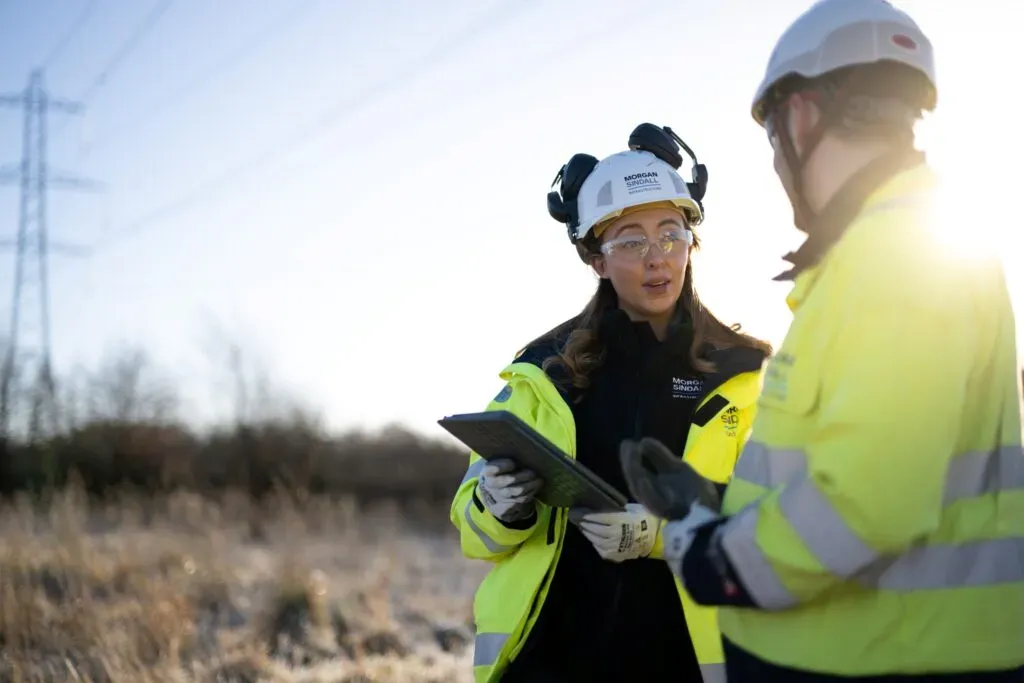
Applicants can take part regardless of how long they have been away from work. The paid placements span commercial, project delivery and functional support roles, with projects including Scottish Power Transmission (SPT), Scottish and Southern Electricity Networks (SSEN), and National Grid and the Great Grid Partnership (GGP).
STEM Returners will recruit candidates and support them with career coaching and mentoring during their placements. Participants may receive an offer of permanent employment with Morgan Sindall Infrastructure when the program ends.
The partnership's first program launched on March 17, 2026, according to Morgan Sindall Infrastructure. That cohort joined the energy commercial team in Motherwell and other UK locations, working on strategic frameworks for customers including Scottish Power and Scottish and Southern Energy Networks.
Peter Kirk, the company's managing director for energy, said the pilot surpassed expectations as participants regained confidence, updated their expertise and secured roles in the industry. Women accounted for 75% of the cohort. He said the new colleagues were already contributing through their experience and fresh perspectives.
The recruitment barriers behind the program
Natalie Desty, director of STEM Returners, said the pilot demonstrated the contribution people returning from career breaks could make when given a fair opportunity. Construction and infrastructure need more workers, she said, yet a gap in an applicant's work history remains a disadvantage. "A career break shouldn't mean a career end."
STEM Returners' latest research describes an increasingly difficult route back into science, technology, engineering and mathematics (STEM). It identifies bias related to recent experience, gender, age and race as major obstacles.
The STEM Returners Index 2025 surveyed more than 1,000 STEM professionals who were either taking a career break or had recently returned. Three-quarters rated the process of returning as difficult: 39% chose difficult and 36% very difficult.
A lack of recent experience was a reported source of bias for 53% of respondents, compared with 51% in 2024. Reports of age bias rose from 36% to 41%. Among women, 28% reported gender bias, up from 26% in 2024, compared with 4% of men.
The difficulties extended beyond recruitment outcomes. In the survey, 85% said the challenges had led them to question whether to keep pursuing a STEM career, while 65% reported a negative effect on their self-confidence. Yet 64% felt fully capable within three months of returning to employment.
More than 70 job applications had been submitted by 26% of respondents, up from 21% in 2024. Asked how often they received feedback on applications, 58% answered "never" or "hardly at all." Finances were a key reason for returning for 55%, compared with 49% the previous year.
Energy workforce needs
Kirk said the second cohort would broaden access to infrastructure careers while helping address the UK's growing skills challenge. Morgan Sindall Infrastructure works across energy, defense, water, nuclear, highways and aviation.
The UK government's Skills England Sector Skills Needs Assessment for clean energy, updated October 6, 2026, sets out the scale of the sector's workforce needs. It says direct clean energy jobs need to rise by 230,000 between 2023 and 2030, alongside 190,000 additional indirect jobs.
For the sector's 31 priority occupations, the assessment projects employment growth of 63,000, or 71%, between 2025 and 2030. Including replacement demand, it puts total worker demand through 2035 at 99,000.
Return-to-work programs have been shown to help people outside the labor market regain employment, increase workforce participation and preserve experience in sectors that need it. By removing barriers to skilled jobs, they can also improve social mobility.
Nearly 700 candidates have joined STEM Returners programs across the UK since the organization launched in 2017, according to figures reported by Project Scotland in its October 2026 coverage of the Morgan Sindall Infrastructure partnership.