Higher targets for sterile medicine operations
Aspen forecasts that manufacturing earnings before interest, taxes, depreciation and amortization (EBITDA) will more than double in fiscal 2027. Its group target for normalized EBITDA is at least R9 billion, up from R7.7 billion in fiscal 2026.
The company also increased its two-year earnings improvement target for sterile finished-dose-form operations to R2.2 billion from R1.7 billion. It expects those operations to achieve positive EBITDA this fiscal year. The business makes medicines ready for patient use, including injectable drugs packaged in vials or cartridges.
The outlook follows a year in which manufacturing EBITDA increased despite lower sales. Aspen's 2026 integrated report showed a 21% rise in manufacturing EBITDA to R828 million on a constant-currency basis for the year ended June, while manufacturing revenue declined 10% to R9.5 billion.
Replacing the lost mRNA business
An agreement to make mRNA products for an unnamed customer at Aspen's sterile facility in France ended after a dispute. According to Aspen's disclosures, the dispute was settled in October 2025 for €25 million, worth about R500 million at the time.
That contract had supplied about R1 billion of manufacturing EBITDA in fiscal 2025. The dispute over the mRNA manufacturing and technology agreement was also linked to an R800 million mRNA asset impairment in Aspen's fiscal 2025 results, which recorded total intangible asset impairments of R4.1 billion.
Aspen said operational changes at its French and South African sterile finished-dose-form facilities delivered roughly R1.2 billion in EBITDA improvement in fiscal 2026, exceeding the earnings lost with the contract.
Discussing the annual results with analysts in September, CEO Stephen Saad said: "We might have lost the milk, but we didn't lose the cow, and we're in a good neighbourhood."
Insulin production begins in Gqeberha
Aspen began commercial production of insulin vials in South Africa in May 2026 after obtaining local regulatory approval. Engineering News reported that approval from the South African Health Products Regulatory Authority allowed Aspen to begin releasing its first commercial batches of human insulin for sale in South Africa under its contract with Novo Nordisk.
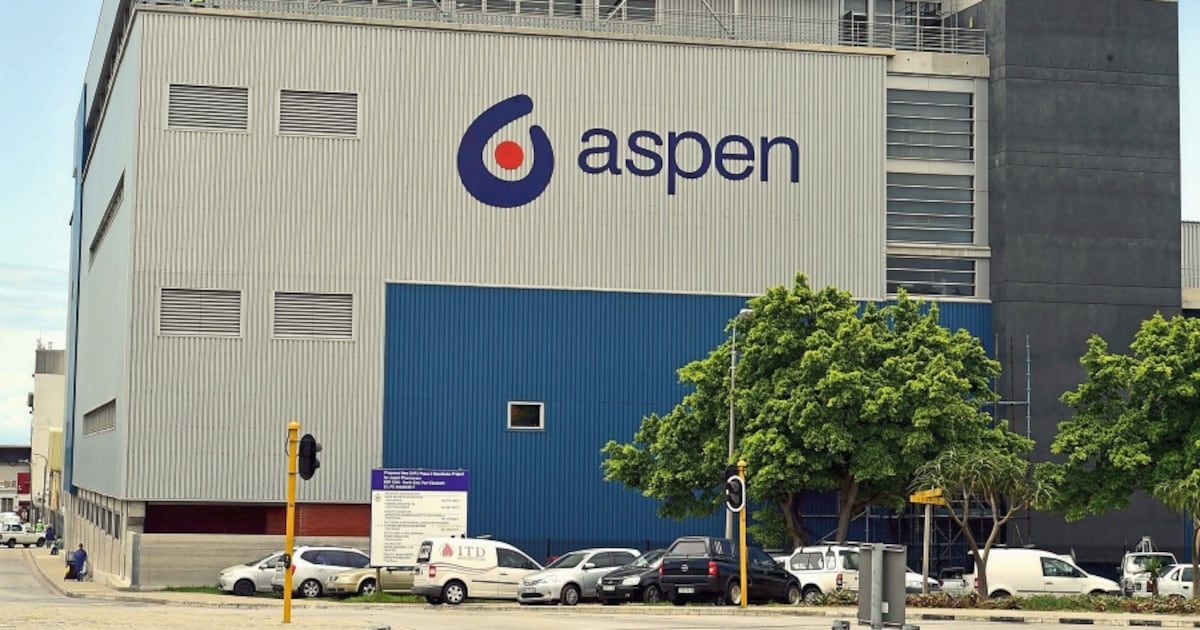
Production is based at Aspen's sterile finished-dose-form facility in Gqeberha, Eastern Cape. When the agreement was announced in 2023, Aspen outlined plans to invest R6 billion in facilities and related technologies, with initial production and supply of up to 16 million insulin vials annually.
In its fiscal 2025 results announcement, Aspen projected R300 million in revenue from commercializing the insulin contract in fiscal 2026, rising to more than R1 billion in fiscal 2027.
Aspen has also installed new production lines for vials and cartridges. Testing is underway on the vial line, while the cartridge line is scheduled for testing during the current fiscal year.
Vaccine agreements and other manufacturing plans
Aspen expects insulin production and progress on pediatric vaccine opportunities to support manufacturing earnings over the medium term. Its vaccine plans include a 10-year agreement signed in 2022 with Serum Institute of India for Aspen SA Operations to manufacture, market and distribute four Aspen-branded routine vaccines across Africa: pneumococcal, rotavirus, polyvalent meningococcal and hexavalent.
The agreement covers technology transfer, formulation, filling and finishing at Gqeberha, using bulk drug substance supplied by Serum Institute.
When it announced the agreement, Aspen also said it anticipated grants from the Bill & Melinda Gates Foundation and the Coalition for Epidemic Preparedness Innovations (CEPI) to support regional vaccine manufacturing in Africa. The arrangements included rights to a portion of Aspen's vaccine manufacturing capacity over 10 years for pandemic preparedness.
Financing support includes a €100 million long-term loan committed by Germany's DEG in 2024 to facilitate African production of essential medicines, insulin and pediatric vaccines. The commitment formed part of a €500 million package mobilized by the International Finance Corporation, with participation from France's Proparco and the US development bank DFC.
Aspen's fiscal 2025 results also identified GLP-1 injectable production as a potential source of higher manufacturing profitability. The company planned to bring production volumes into both its French and South African sterile facilities after putting its generic semaglutide strategy into operation.
Separately, Aspen expects its active pharmaceutical ingredients business, which produces ingredients used to make medicines, to resume growth through new and increased sales.
Group earnings and balance sheet
Manufacturing generated about 27% of Aspen's fiscal 2026 revenue. Its network comprises 22 manufacturing facilities across 13 sites, making active pharmaceutical ingredients as well as finished medicines such as injectables, tablets and liquids.
The larger commercial pharmaceuticals division reported revenue of R25.4 billion, a 5% increase on a constant-currency basis, and a 13% gain in normalized EBITDA. Across the group, normalized EBITDA increased 14%. Normalized headline earnings per share rose 28% for the full year after falling 24% in the first half, and the dividend increased to 232 cents per share from 211 cents.
After repurchasing R500 million of its shares, Aspen closed the year with approximately R800 million in net cash. The disposal of its Asia Pacific business brought in gross proceeds of R28 billion and strengthened the balance sheet.
Aspen expects about R1.2 billion in net interest savings during the current fiscal year. Saad said the group anticipated "substantial double-digit growth in normalised earnings" in fiscal 2027.