Empty warehouses despite improved access
In their joint statement, the UN refugee agency, UNHCR, and the International Organization for Migration, IOM, said funding constraints meant humanitarian agencies could assist only about one in 10 people in need.
Speaking from Khartoum at a Geneva briefing, IOM Sudan chief Mohamed Refaat said 16 trucks had reached Darfur the previous day, carrying the last supplies available in stock. "Our supplies are running out," he said. IOM had distributed more than 40,000 tonnes of relief assistance during 2026, he said, but its warehouses were now empty.
The shortage comes as aid workers are gaining better access to displaced people and those returning home. Refaat said reaching more communities also meant hearing directly about their suffering. "We cannot say that we don't know," he said.
The funding gap extends across Sudan's humanitarian response. The 2026 Humanitarian Needs and Response Plan had received just 47% of the $2.9 billion requested, forcing agencies to cut essential services further. Even the original plan aimed to assist only 20.4 million of the 33.7 million people needing help.
UNHCR Deputy Representative Abubakarr Jalloh said the agency's collective shelter response required $179 million for 2026, of which only 35% had been funded. The two agencies called for urgent, flexible funding, warning that otherwise more families would enter winter exposed to severe weather, insecurity, violence and exploitation.
New displacement and inadequate shelter
Sudan's war began in April 2023 between military forces that had previously been allies. The country now faces the world's largest displacement crisis: the November 6 joint statement put the number still displaced inside Sudan at around 8.6 million, while more than 4.6 million had fled abroad. Refaat said about 3.5 million people in Sudan had been displaced for over a decade.
Women and children account for three-quarters of those internally displaced, Jalloh said. As front lines move, more families are being driven from their homes, often without a safe sleeping place or a blanket. He said fighting had opened a new front in Blue Nile State in 2026, displacing nearly 120,000 people since January.
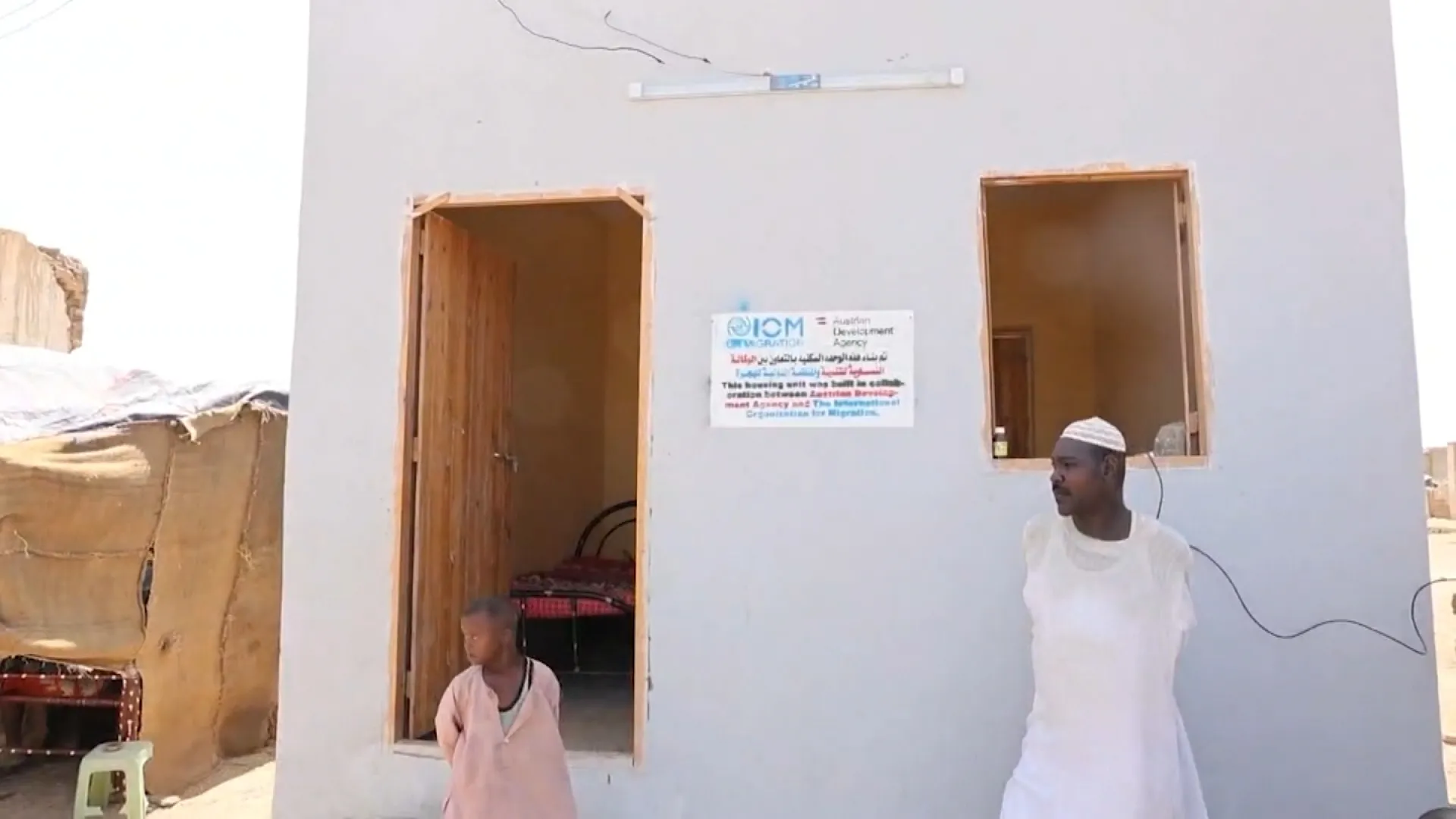
Jalloh described fragile conditions at displacement sites, where two in five displaced families were living beneath plastic sheets. In Tawila, which was sheltering about 900,000 people, heavy summer rainfall destroyed hundreds of tents.
Shelter provides privacy and protection as well as cover from the weather, the officials emphasized. "For a woman who has lost everything, a tent is more than just a shelter," Jalloh said. "It means dignity. It is privacy. And it is safety for that woman and family."
Jalloh said a solar lamp allows a woman to reach a latrine at night without walking through darkness, while a kitchen set lets a mother prepare food for her children without exposing herself to unnecessary risk. Refaat likewise described shelter as protection, giving families a safe place for their children while parents look for food or work.
Food costs compete with shelter needs
Jalloh said El Niño-related conditions had brought rainfall well below average across Sudan in 2026, increasing people's vulnerability and affecting harvests in Darfur, Kordofan and other conflict-hit areas.
Instead of the usual seasonal easing around the harvest, food prices remained "painfully high," he said. Staple grain prices rose by as much as 40% in September alone. "For a family that has lost everything, every Sudanese pound spent on food is money that cannot be spent on a blanket or on materials needed for safe shelter," he said.
Attacks destroy relief supplies
Aid deliveries also face growing danger. Jalloh said drones hit UNHCR trucks in White Nile State twice during 2026, in April and July. The drivers survived, but the attacks destroyed emergency shelter supplies intended for more than 1,300 families, including about 50 tonnes of blankets, sleeping mats and solar lamps.
Returns do not always mean a home
More than 5.2 million people have returned to their areas of origin, yet many have found their homes destroyed or looted. Widespread gaps in healthcare, electricity and water services could force people to leave again, with no prospect of returning.
Refaat warned that a failure to deliver aid at scale in Sudan would also affect neighboring countries and countries farther away. Sudanese nationals now constitute the largest nationality arriving in Europe through the Eastern Mediterranean route, he said.
"We cannot undo what they have endured, but we can make sure that they have a safe place to sleep tonight," Refaat said.