Voter discontent despite economic growth
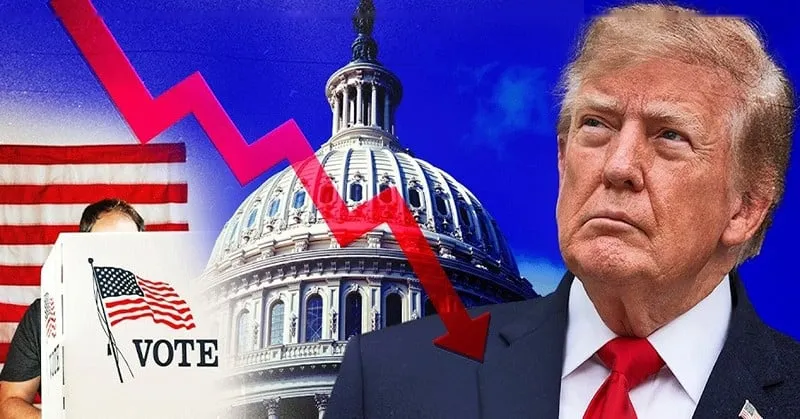
The CNBC All-America Economic Survey released October 22 put disapproval of Trump's economic management at 65%, the highest of either of his terms. His net economic approval stood at minus 31 points, also a personal low. The disapproval figure exceeded Biden's worst result by one percentage point and was the highest recorded for any president in the survey's history, which extends back to Barack Obama.
Eight in ten Americans described the economy as fair or poor, a share last reached in December 2023. Respondents favored Democratic control of Congress over Republican control by 52% to 45%. That seven-point Democratic advantage had widened by three points since July.
Those views contrast with several broad economic indicators. VietNamNet reports unemployment at 4.2% and stocks near record highs. Government figures released October 29 showed that output expanded at a 3.4% annual rate in the July-September quarter, following 2.2% growth in April-June. Consumer spending grew at a 3.8% annual rate, while business investment also increased, supported in part by spending on artificial intelligence infrastructure.
Trump says he inherited economic disorder from Biden and presents growth, investment and stock market gains as evidence that his policies are succeeding. After the latest inflation report, White House spokesman Matthew Middleton said the administration's "aggressive, growth-oriented economic agenda" had eased "the Biden inflation crisis." Trump ally and economic commentator Larry Kudlow described the expansion as "the greatest story ever told" because "no one has been laid off."
Household costs outpace pay
The final inflation report before the election offered little relief for households. On October 29, the Commerce Department reported that the personal consumption expenditures price index, the Federal Reserve's preferred inflation measure, was 3.6% higher in September than a year earlier. That was an acceleration from August's 3.4% rate. Prices increased 0.5% during September alone, the largest monthly rise since May.
Excluding food and energy, annual core PCE inflation rose to 3.1% from 3.0% in August. Separately, VietNamNet reports that consumer prices increased 3.7% over the past year while average hourly earnings rose 3%, leaving pay growth behind price increases.
The October 29 government report also showed that after-tax incomes, adjusted for inflation, fell 0.3% in September from the previous month. Consumers appeared to be drawing on savings or borrowing to maintain their spending.
Fuel costs remain far above Trump's campaign pledge. Renewed violence in the Middle East kept oil above $100 a barrel in late October, compared with less than $70 before the Iran war. Gasoline averaged about $4.25 a gallon nationally. During the 2024 campaign, Trump had promised to lower living costs, including bringing gasoline below $2 a gallon.
A familiar political problem, with different causes
Biden spent much of 2024 pointing to low unemployment, steady growth and easing inflation, but many voters continued to judge the economy through grocery bills, gasoline purchases and other daily expenses. Democratic pollster Celinda Lake, an adviser to Biden's 2020 campaign, says the disconnect partly reflects different understandings of inflation.
Economists use falling inflation to describe a slower pace of price increases, Lake explained, while voters take it to mean a return to earlier prices, something she said does not happen. "You can't argue with people about the realities of life they're experiencing," she said.
The sources of price pressure differ between the two administrations, according to VietNamNet. Biden contended with the pandemic's aftermath, including lasting supply-chain disruptions. Trump faces energy costs driven largely by the Russia-Ukraine conflict and the U.S.-Israel confrontation with Iran, along with the effects of his trade and immigration policies.
University of Maryland economist Peter Morici attributes part of the current price pressure to Trump's tariffs and the economic consequences of his campaign against Iran. A Federal Reserve Bank of New York study found that tariffs introduced under the "Liberation Day" program, effective April 2025, raised consumer prices by approximately 2.9%.
VietNamNet reports that the tariff impact likely would have been larger without temporary suspensions, new trade agreements and a Supreme Court ruling blocking Trump from using emergency powers to impose additional tariffs. The conflict with Iran added another source of pressure by raising the cost of oil, gasoline and other petrochemical products.
The CNBC survey also found declining support for the military action against Iran. Just 46% considered it worthwhile to disrupt Iran's nuclear development, down from 53% in April. When respondents weighed the action against the resulting increase in gasoline prices, only 35% said it was worth it.
Relief proposals and a possible rate increase
The White House points to tax cuts, employment growth and lower prescription drug costs as benefits its policies have delivered to families. Trump has also called for a cap on credit card interest rates and floated a $5,000 payment to every U.S. adult if Republicans keep control of Congress.
The Federal Reserve, meanwhile, held its key interest rate steady at its late-October meeting. With inflation still above its 2% target and economic growth strong, the central bank was seen as much more likely to raise rates at its December meeting, a move that could increase borrowing costs throughout the economy.