
Growth targets and pressure on prices
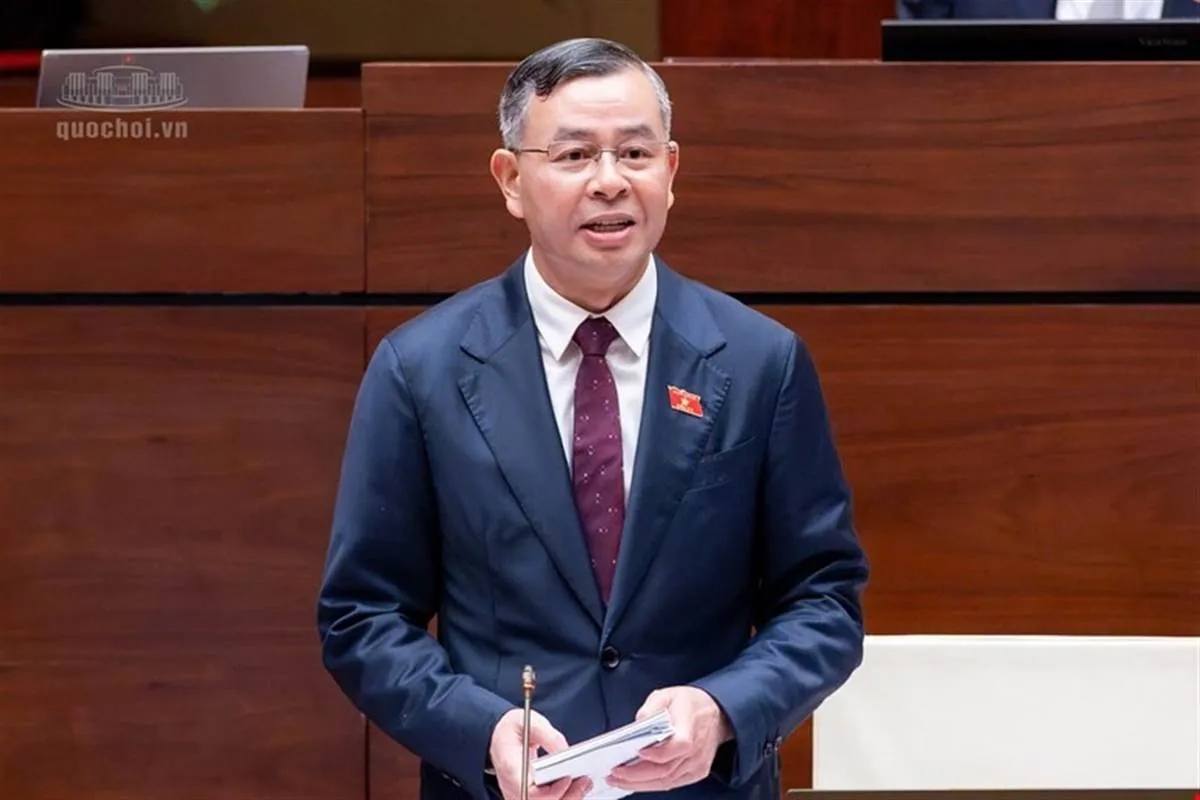
Addressing the second session of the 16th National Assembly, Tuấn reported economic growth of 9.01% for the first nine months of 2026 and inflation of 4.52%. He described the results as notable given the effects of geopolitical conflicts on oil prices, supplies and refinery operations.
The minister said monetary policy had sought to stabilize exchange rates and interest rates through flexible, prudent management, while fiscal measures provided relief to businesses and households. Tax exemptions and reductions amounted to about VND 240 trillion during the year, with another VND 120 trillion in deferrals, bringing the combined support to roughly VND 360 trillion.
Further measures remain under consideration. The Finance Ministry will submit electricity-pricing options and has reported to the government on continuing to defer collection of the special consumption tax on gasoline. The option Tuấn described would reduce all gasoline and oil taxes to 0%, adding about VND 4 trillion in support.
Tuấn said the goal of growth above 10% must be accompanied by inflation of around 4.5% to limit pressure on living costs. The Ministry of Finance's Statistics Bureau, also known as the General Statistics Office, estimates that meeting the full-year 2026 growth target of 10% would require an approximately 12.5% expansion in the fourth quarter. It reported third-quarter growth of 9.95%, following the 9.01% gain over the first nine months.
United Overseas Bank offered a more cautious outlook in its October 13 report. The Singapore bank increased its Vietnam growth forecast for 2026 from 8.5% to 9.2% and for 2027 from 8.4% to 8.8%, but said the official 10% target likely remained out of reach because it would require fourth-quarter growth of roughly 12.5% to 13%. UOB also lifted its forecast for average 2026 inflation from 4.1% to 4.7% and said it expected the State Bank of Vietnam to keep the refinancing rate at 4.5% through 2027.
Expanding financing beyond bank credit
Meeting the growth ambition will require much more capital under the 2026-2030 financial plan, Tuấn said. The plan calls for total social investment of about 40% of GDP and resource mobilization for growth at 2.21 times the level of 2021-2025. It also seeks to lower the incremental capital-output ratio, or ICOR, to about 4.5 to 4.8. The ratio measures the investment needed to produce an additional unit of growth; a lower figure indicates more efficient capital use.
Responding to lawmakers' concerns about dependence on bank lending, Tuấn said the government had recognized the problem early and was pursuing a stock market development strategy to broaden financing. He reported that capital raised through the stock market increased 15% year over year in the first nine months of 2026. Ten companies that held initial public offerings since the end of 2025 raised more than VND 60 trillion.
The strategy's 2030 goals include stock market capitalization equal to 120% of GDP, up from about 90% currently. It also targets a bond market equivalent to about 50% of GDP and a derivatives market of around 20% to 30% of GDP.
Tuấn outlined changes to support those goals: clearer legal rules and greater market transparency; faster equitization of state-owned enterprises; less concentration of shares among a few holders; and wider access for investors, particularly those from abroad. He also called for professional investment institutions that would give retail investors more ways to invest. Market upgrades and further changes to the Securities Law are among the steps underway, he said.
Vietnam's transition into FTSE Russell's emerging-market indexes began on September 21, 2026, when its reclassification from Frontier to Secondary Emerging Market status took effect. Reuters reported that FTSE Russell estimates the inclusion could direct up to US$6 billion into Vietnam. The process has four tranches: 10% in September 2026, 20% in March 2027, and 35% each in June and September 2027. Vanguard plans to increase its investment in Vietnam to about US$2.5 billion over the next few years.
Revenue gains outpaced budget forecasts
Tuấn acknowledged weaknesses in the analysis and forecasting used to draw up budget estimates. He said the finance sector would make further use of information technology and improve data analysis and revenue projections, while noting that some of the gap between forecasts and receipts reflected developments that were difficult to anticipate.
For 2025, economic growth had been forecast at around 5.5% to 6.5%, but reached 8.02%. That stronger performance helped lift revenue. The implementation of the 2024 Land Law also substantially affected land-related receipts, while other revenue came from banks' income-expenditure differences, sales of state capital and dividends.
The minister's figures put 2025 budget revenue 36% above the estimate and 34% higher than the previous year. Land-use fees alone generated more than VND 700 trillion, an increase of about 98%.
Carryovers and the handling of advances
The 2025 final accounts showed about VND 1.8 quadrillion carried into the following year to continue spending tasks, an amount equivalent to more than 40% of the budget estimate. Tuấn attributed the carryover to three main factors: a late-year surge in revenue that could not be spent until the next year, infrastructure projects whose spending extends over several years, and funding reserved for salary reform.
Salary reform alone represented nearly 30% of the total carryover. For long-running infrastructure projects, unused annual allocations were carried forward so investment could continue according to schedule, the minister said.
Tuấn also reported a public investment disbursement rate of 62.9% in the first nine months of 2026, while advances accounted for as much as 37%, mainly for major infrastructure projects. On October 8, the government issued Resolution 312 to strengthen financial discipline, including faster settlement of advances and prompt repayment of advanced funds.
He said the handling of advances must follow project progress, completion and commissioning so that the capital is used effectively.
Project preparation remains a spending bottleneck
Tuấn identified preparation and implementation as the two most important stages for speeding up projects, reducing carryovers and advances, and improving capital efficiency. Getting works into operation promptly is necessary to lower the ICOR, he said, with attention to efficiency required from initial preparation through settlement and operation.
Preparation is particularly problematic for projects financed through official development assistance, or ODA. A Group B project currently requires at least 18 months to two years to prepare. Later revisions to investment content, cost estimates or designs add procedures and extend implementation. ODA-funded projects face the additional need to secure agreement from foreign partners; in some cases, agreements must be signed again.
Earlier Finance Ministry figures illustrate the delays in foreign-funded spending. By June 15, 2026, public investment financed by ODA and concessional loans under the revenue-and-expenditure recording mechanism had disbursed only 9.99% of its assigned annual plan, well below the rate for domestically financed investment. Local governments' on-lending programs had disbursed 8.98%.
Prime Minister Le Minh Hung subsequently issued Directive No. 27/CT-TTg on June 25, ordering faster disbursement of ODA and concessional loans.
Climate adaptation funding for the Mekong Delta
Responding to requests for funding to address flooding, land subsidence, inundation, saltwater intrusion and sea-level rise, Tuấn cited allocations in the 2026-2030 medium-term public investment plan. The plan provides VND 214,000 billion in targeted central-budget support across six regions, alongside about VND 56,600 billion in ODA financing.
Climate adaptation funding for the Mekong Delta represents around 18% of the central budget's total targeted support for that period. Tuấn said the Finance Ministry would continue negotiating with international organizations to secure additional resources for these tasks.