
A stronger start, with more markets to come
Directed by Laika president and CEO Travis Knight, Wildwood earned an estimated $7.5 million over Halloween weekend, a 39% decline from its roughly $12.3 million debut on Oct. 23, 2026. Associated Press figures put it in third place for a second weekend, behind A24's Elizabeth Holmes documentary You Can See Everything and DC Studios' Clayface.
The opening exceeded projections of $6 million to $8 million, according to Comic Basics, which also reported a 100% Rotten Tomatoes approval rating and an A from CinemaScore. Interest had emerged months earlier: The A.V. Club reported in June that the trailer drew almost 90 million YouTube views within a month.
Those ticket sales remain modest alongside billion-dollar animated sequels such as Toy Story 5 and The Super Mario Galaxy Movie. But Wildwood has already outgrossed the entire worldwide run of Laika's previous feature, Missing Link. That 2019 film opened to $5.9 million and ended its domestic run at $16.6 million; Deadline put Wildwood's worldwide total at nearly $36 million.
The international release is still expanding. During the Oct. 30-Nov. 1 weekend, Wildwood entered 36 additional territories, reaching 47 countries, Comic Basics reported. More than two dozen markets remained ahead. Sweden delivered a No. 1 opening, while the UK total stood at $3.7 million.
The family financing behind Laika
Wildwood is the Oregon company's sixth feature, all of them made entirely in stop-motion. Its financial foundation is not a commercial production business: Laika separated that division in 2014 to concentrate on features. Phil Knight's backing instead gives the studio room to pursue films whose costs are difficult to recover at the box office.
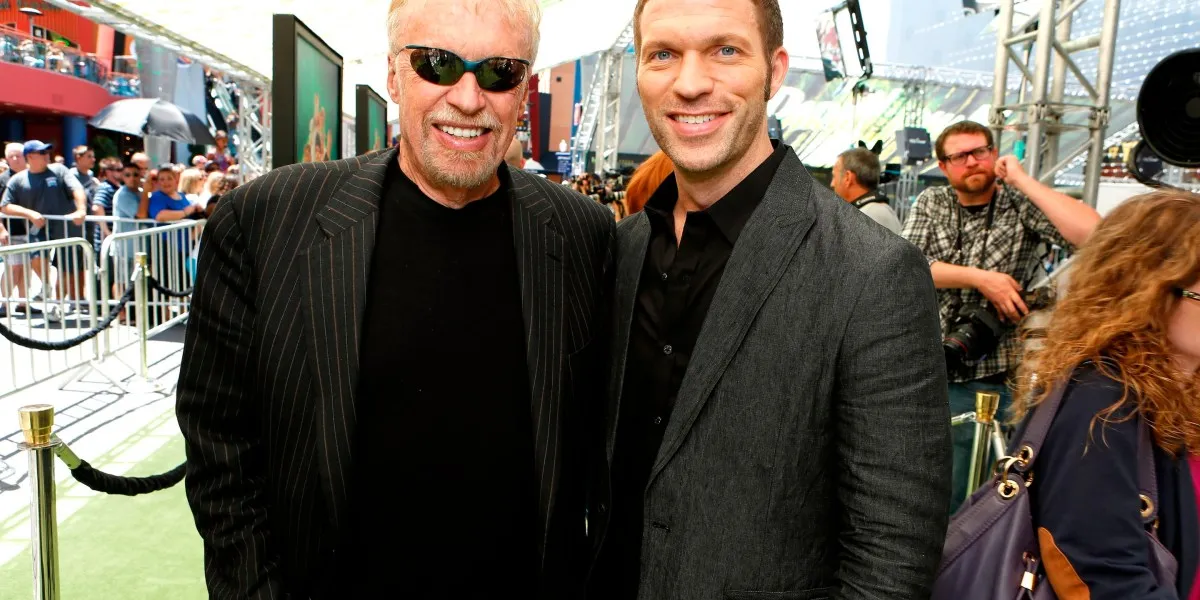
The relationship began in 1998, when Phil Knight invested in Will Vinton Studios around the time his son Travis joined as an animator. Phil became the majority owner in 2002; Vinton was removed the next year, a contentious chapter later explored in the documentary Claydream. The company took the Laika name in 2005 and recruited The Nightmare Before Christmas director Henry Selick, who went on to direct its adaptation of Neil Gaiman's Coraline.
Forbes' real-time estimate places the Knight family's wealth at roughly $26 billion. That support allows Laika to accept substantial creative and business risks with less immediate financial pressure. The studio remains in Hillsboro, Oregon, near Nike's Beaverton-area headquarters in the Portland suburbs and more than 800 miles from Hollywood. Travis Knight has also held a seat on Nike's board since 2015.
Travis has directed outside Laika as well, including Bumblebee in 2018 and this year's Masters of the Universe, which struggled commercially.
The gap between ticket sales and costs
Laika has not released a budget for Wildwood. The widely reported figure of about $100 million would put it above both Illumination's $85 million Minions & Monsters and DreamWorks' $80 million Forgotten Island. The latter, a well-reviewed original film, debuted to a comparable $13 million last month.
Wildwood also represents an unusually large undertaking for its medium. At 131 minutes, it is described by Comic Basics as the longest stop-motion animated feature ever made and Laika's largest production to date. Knight began developing the adaptation of Colin Meloy and Carson Ellis' novel soon after Coraline and has called its path to release a 16-year journey. Everything seen onscreen was constructed and moved by hand.
The studio's earlier domestic results show the challenge. According to Cartoon Brew, Coraline earned $75 million in 2009, followed by ParaNorman with $56 million in 2012, The Boxtrolls with $50.8 million in 2014 and Kubo and the Two Strings with $48 million in 2016. Missing Link then fell to $16.6 million.
Box office receipts are not studio revenue: theaters generally retain about half of ticket sales, while production budgets exclude marketing. International sales and home entertainment contribute, but a commonly used theatrical break-even estimate is roughly 2.5 times the production budget. On that basis, Coraline may be Laika's only film to have crossed the threshold, helped by its successful 2024 rerelease. The privately held company does not publish its finances.
Coraline's repeat engagements have also changed the medium's box office rankings. The Hollywood Reporter reported that its cumulative worldwide earnings recently overtook Aardman's Chicken Run, whose $230 million total from 2000 had long been the stop-motion record.
Aardman, which continues to accept advertising work, faces its own financial pressures. Animation Magazine reported that the British studio increased 2025 revenue by 8% to £20.4 million but lost £1.1 million, missing its goal of returning to profit after two loss-making years. From 2024 to 2025, its total workforce fell from 297 to 230, including a decline in permanent employees from 128 to 110.
Creative freedom without a blockbuster mandate
Wildwood reaches theaters through Fathom Entertainment, a smaller distributor associated with event screenings and rereleases. Fathom also handled Coraline's 2024 anniversary engagement, its highest-grossing U.S. release. Laika previously worked with Focus Features on its first four movies and United Artists Releasing on Missing Link.
The new film takes Laika into PG-13 territory for the first time. The MPA's content description includes strong fantasy violence, bloody images and suicide-related material. Other animated releases took a different route this year: Netflix and Skydance Animation's Ray Gunn and DreamWorks' Forgotten Island were trimmed to secure PG ratings.
The Knight arrangement is one example of a wealthy father financing his son's Hollywood ambitions. Another operates on a vastly larger scale: Oracle co-founder Larry Ellison personally guaranteed $40.4 billion for David Ellison's pursuit of Warner Bros. Discovery. The transaction closed Oct. 6, combining Paramount and Warner Bros. in a company now called Skydance.
Both arrangements raise the question of family advantage, but the businesses they support differ sharply. Skydance is a media giant built around franchise blockbusters and technology. At Laika, the Knight family's money sustains original storytelling in a painstaking, increasingly uncommon medium. Its handmade approach also contrasts with the wider industry's push toward generative AI.
Expansion beyond stop-motion
Laika's ambitions now extend beyond its animation workshop. In 2023, it brought in former Netflix executive Matt Levin to lead a live-action division. It is also developing its first series, an adaptation of Emily St. John Mandel's Exit Party, with Emma Stone and Dave McCary's Fruit Tree.
According to Wikipedia's Laika entry, the live-action projects in development include Audition, acquired in September 2025, with Lulu Wang directing and Lucy Liu and Charles Melton starring. The slate also includes an adaptation of Taylor Jenkins Reid's Atmosphere with Anna Boden and Ryan Fleck, and Crumble, written and directed by Brian Duffield with Lord Miller producing.
Other live-action projects are Seventeen, adapted from John Brownlow's novel, and an untitled science-fiction thriller from Dune screenwriter Jon Spaihts. In animation, Knight is set to direct Susanna Clarke's Piranesi, while The Night Gardener draws on an original idea from Ozark creator Bill Dubuque.
All five Laika features before Wildwood received Best Animated Feature Oscar nominations without a win. Wildwood's strong reviews give the studio another chance at its first victory in the category.