Major indexes post historic post-election gains
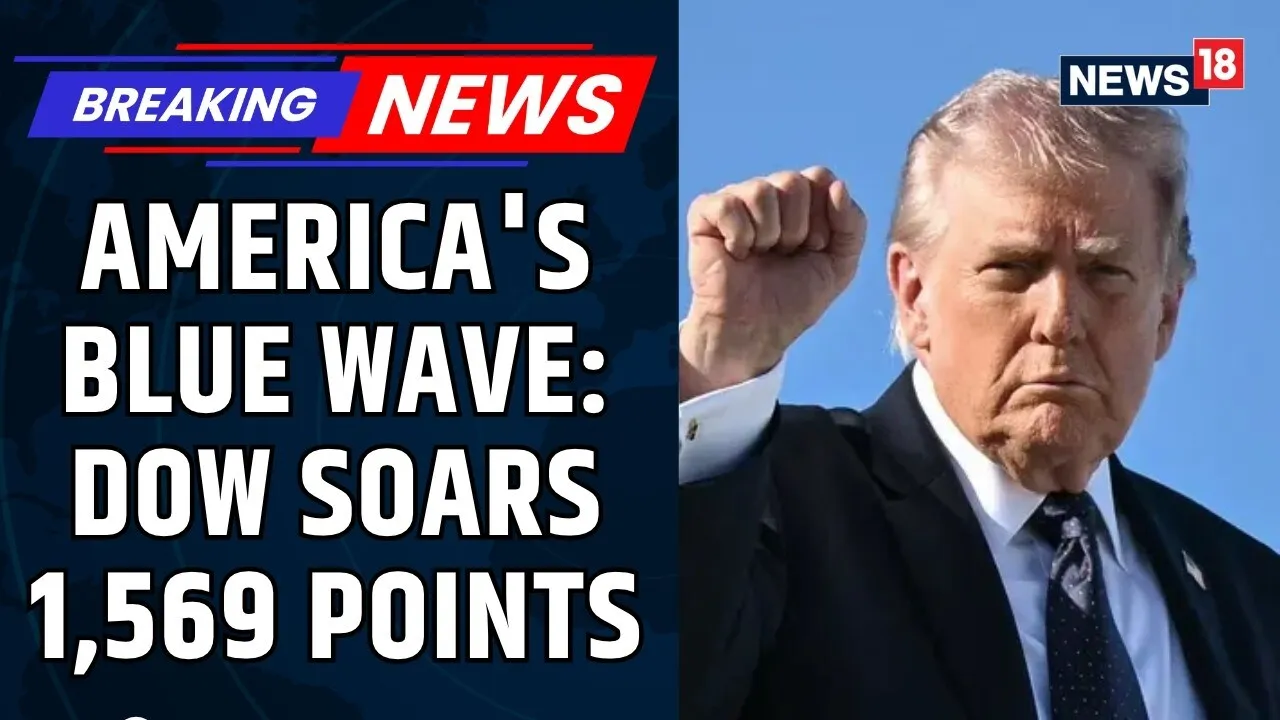
The election ended Republican control of both chambers. Investors appeared reassured by a clearer political outlook and the prospect that a Democratic Congress could limit parts of President Donald Trump's legislative agenda. CNN reported that the Dow also recorded its strongest trading day since April 2025.
The S&P 500 advanced 1.58%, while the Nasdaq Composite added 1.44%. According to CNN, only the rally after the 2018 midterms exceeded the S&P 500's post-midterm gain in the period since 1982. For the Nasdaq, it was the largest such one-day increase since 2018.
Kiplinger put the S&P 500's closing level at 7,688 and the Nasdaq's at 25,736, with their percentage gains rounded to 1.6% and 1.4%, respectively. The small-cap Russell 2000 rose 1.6% to 2,856. Kiplinger's rounded Dow close was 53,356.
The gains followed a history of positive returns after midterms. Before the vote, Yahoo Finance, citing CNBC and CFRA, reported that the S&P 500 finished higher a year after each of the 11 midterm elections since 1982, averaging a 13.7% gain. CFRA senior investment strategist Arun Sundaram described a separate measure: Markets had not declined during any 12-month period starting in October of a midterm year since World War II, with average gains of about 16%.
Oil prices, Treasury yields and volatility retreat
Lower oil prices and Treasury yields also supported market sentiment as investors weighed what the election could mean for the Iran conflict, energy costs, inflation and government spending.
Brent crude settled at $94.62 a barrel after falling almost 8.7%, marking its lowest settlement since August 31, CNN reported. According to Kiplinger, the front-month West Texas Intermediate contract dropped 7.7% to $88.67 a barrel.
Treasury yields declined across maturities, Kiplinger reported. The 10-year yield fell 6.2 basis points to 4.888%; the 2-year lost 3.5 basis points to 4.579%; and the 30-year dropped 4.7 basis points to 5.277%.
The CBOE Volatility Index, or VIX, which measures expected market volatility, fell almost 20%. CNN attributed the retreat to investors welcoming less policy uncertainty after the election.
AI-linked shares fall despite the broader rally
Election-related uncertainty weighed on some stocks even as the major indexes climbed. CNN linked declines in AI- and data-center-related shares to questions about data-center regulation and Texas politics.
Nvidia lost 3%, while an exchange-traded fund tracking AI infrastructure shares dropped 9%. CoreWeave and Nebius fell about 10% and 6.7%, respectively. Tesla declined about 3.3%, and SpaceX lost about 3.9%, CNN reported.
Republicans assess losses as Jeffries seeks speakership
Trump acknowledged the Iran war's role in the Republican defeat. According to the BBC, he said it was "largely true" that the war was behind his party's midterm losses, but that he would "do it again" if needed. Vice President JD Vance had earlier called the war "the reason we lost".
House Minority Leader Hakeem Jeffries announced his bid for House Speaker on November 4, the BBC reported. He is expected to win, which would make him the first Black Speaker in US history. The office is second in the presidential line of succession.