Investment needs exceed budget resources
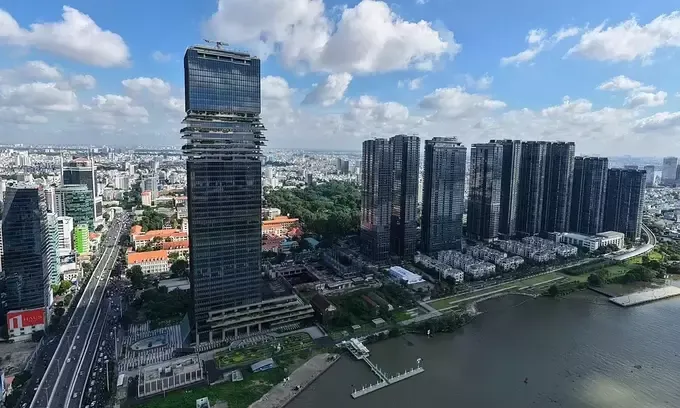
The financing measures come as the city faces public investment needs of about VND3.1 quadrillion (roughly US$120 billion) for 2026-2030. Budget resources are expected to meet only around 31% of that demand, according to the municipal Department of Construction, as reported by Vietnam News Agency (VNA) on Oct. 30.
VNA reported that the city had 98 major transport and technical infrastructure projects as of late October, with preliminary investments exceeding VND1.5 quadrillion. Separately, its 2026-2031 priority list for public-private partnerships contains 90 projects worth an estimated VND1.27 quadrillion. Those projects span transport, urban railways, urban redevelopment, environmental protection, flood control, digital transformation, energy, logistics and social infrastructure.
The city's development targets include double-digit average annual growth in gross regional domestic product (GRDP) and total social investment equivalent to 35-40% of GRDP during 2026-2030, according to VNA. Population projections put the city at about 18 million residents in 2030 and more than 27 million in 2050.
The two financing channels are expected to widen the city's choice of instruments, markets and maturities and lessen its dependence on budget allocations and bank credit. Green bonds could support environmental work, emissions reductions and climate adaptation.
How bonds through the financial center would work
The People's Committee's proposal allows municipal and project bonds issued through the VIFC to be denominated and settled either in Vietnamese dong or in freely convertible foreign currencies. Foreign-currency issuance requires consultation with the State Bank of Vietnam and other relevant authorities on cash flow management, accounts, settlement, registration, reporting and risk management.
The mechanism permits foreign investors to purchase the bonds and foreign-affiliated organizations to offer underwriting, advisory and other financial services. Public and private offerings are both allowed, using auctions, underwriting, agents or direct sales. The VIFC's infrastructure will support registration and custody, as well as settlement, transfers, listing and trading.
Money raised must be managed centrally and directed to designated projects in the city's medium-term public investment plan. Those projects must first complete the required investment procedures. The municipal budget will guarantee that principal, interest and other legally incurred expenses are paid on time.
Access to foreign investors does not make these bonds overseas borrowing. Investify reported that Vietnam's Foreign Investment Agency, under the Ministry of Finance, regards them in substance as domestically issued local government bonds because issuance takes place at the financial center, not abroad. Current rules do not permit local governments to borrow overseas, the publication noted.
According to VNA, the mechanisms rest on Politburo Resolution No. 09-NQ/TW of May 19, 2026, on the city's development, and the Law on Urban Development No. 18/2026/QH16. The law took effect Oct. 1, 2026, establishing for the first time a legal framework for city governments to issue municipal and project bonds at the financial center.
Domestic borrowing and debt plans
Beyond issuance through the VIFC, the council authorized five types of bonds for raising domestic capital: local government, project, infrastructure construction, municipal and green bonds. The city may also take loans from domestic financial institutions.
Local government bonds must be issued in dong for terms of at least one year. Auctions and underwriting are permitted, while interest rates must reflect the Ministry of Finance's framework and market conditions. Investify reported that the approved mechanism provides for a face value of VND100,000 and issuance by auction, followed by registration and custody at the Vietnam Securities Depository and listing and trading on the stock exchange.
These domestic financing proceeds will enter the municipal budget. The People's Committee is responsible for allocating debt-service funds and reporting to the People's Council and the Ministry of Finance on bond issuance, spending of proceeds and repayments.
For 2026-2030, the city expects to borrow up to VND49.291 trillion (US$1.9 billion) to cover its budget deficit. Of that, VND31.732 trillion is expected to come from domestic borrowing, mainly local government bonds. Loans on-lent by the central government would supply the balance.
The five-year financial plan projects local government debt of about VND74,909 billion by 2030, or roughly 3.5% of budget revenue, Investify reported. That figure is a planning projection, not a legal debt ceiling.
The city has borrowed through bonds before, but did not use its most recent domestic borrowing allowance. Citing the People's Committee, Investify reported that local government bond issuance totaled VND30,112 billion over the 18 years from 2003 to 2020. The city then left its VND24,606.4 billion domestic borrowing ceiling for 2021-2025 unused because budget revenue exceeded the plan while public investment disbursement fell short.
Pilot projects and the first offering
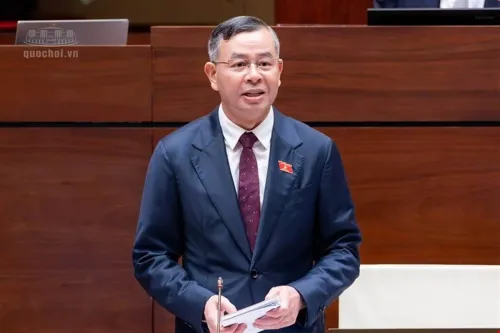
Nguyen Huu Huan, vice chairman of the executive agency of VIFC-HCMC, said raising capital internationally takes coordinated planning, financial discipline, prepared projects and a functioning legal framework. It cannot depend solely on individual transactions or the work of a single agency, he said.
Huan said the newly adopted resolution gives the city a legal basis to prepare its first VIFC bond offering. While that initial sale could encounter difficulties, he said it would be important for building the city's credibility in international capital markets and enabling later offerings. A successful debut could also encourage businesses to seek financing through the center.
The People's Committee has proposed establishing the issuance mechanism early enough to raise money for 2027 investment needs, according to Investify. Plans for each tranche would specify its volume, maturity, interest rate, currency and offering method.
The city intends to begin with several pilot projects. The VIFC and relevant municipal agencies are identifying which projects are suitable for bond financing through the center.