
Unfunded work draws scrutiny
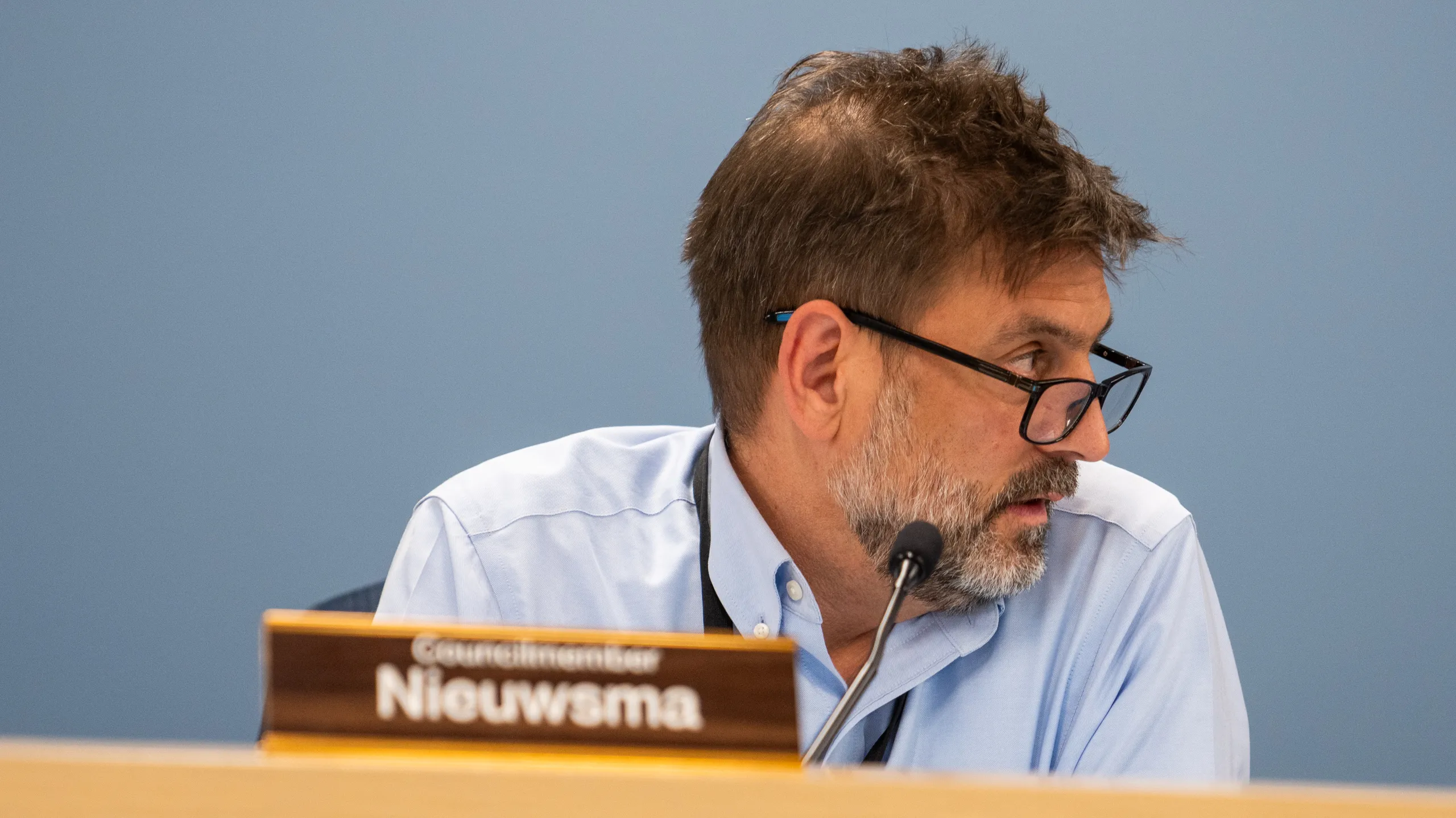
The three council members at the meeting—Clare Kelly of the 1st Ward, acting Mayor Jonathan Nieuwsma of the 4th Ward and Matt Rodgers of the 8th Ward—appeared willing to reduce the plan before next month's expected budget votes.
"We can ask all the questions we want about how things are counted and how things are tracked, but the fundamental job here, if we want to spend less money, is to look at that list and figure out what to cut," Nieuwsma said.
Committee member Candance Chow urged the city to begin by removing at least $2.3 million in projects that have no identified funding source. She called that a minimum step toward budget discipline.
That unfunded work includes $1.5 million for consulting on a new police/fire headquarters and about $800,000 for consulting on heating, ventilation, air conditioning and electrical improvements at the city service center, 2020 Asbury Ave., according to Evanston Now's Oct. 11 report.
The headquarters proposal carries much larger costs beyond the immediate consulting work. City planning documents list $80 million for construction across 2027-2029, financed through general obligation bonds: $15 million in 2027, $40 million in 2028 and $25 million in 2029. Another $5 million is projected for consulting during those years.
The current headquarters, at 909 Lake St./1454 Elmwood Ave., dates to 1949, when it was built for Fire Station 1, a municipal courthouse and the police station. Biggs told the Evanston RoundTable that the 58,000-square-foot building now serves 220 people rather than the 87 it was designed for, and does not meet ADA or building-code standards.
Lower-ranked projects and public input
City Engineer Lara Biggs brought the committee a staff-scored project list intended to help identify spending that would be easiest to cut. The lowest-ranked items included $2 million for Fountain Square repairs, $1 million in construction spending for participatory budgeting projects and $200,000 for public vehicle charging construction. Several other projects near the bottom together accounted for more than $1 million.
Federal American Rescue Plan Act money previously paid for participatory budgeting projects. Biggs warned that reducing those expenses would require limits on the process, potentially undermining its community-led approach. The city is not supposed to become involved until participants have selected projects.
"The purpose of participatory budgeting is that the city does not define the border with which they work," Biggs said.
Kelly suggested that the group running the process could begin with ideas already discussed by officials. She said she believed its members would be "very amendable to take a list of items that we've discussed as suggestions," adding, "I think it's great to have the public involved."
The size of the capital plan does not necessarily reflect what the city will spend in a single year. According to the Evanston RoundTable, Biggs previously told the council that even with a fully staffed team, annual capital spending typically reaches only about 80% of the budgeted amount. She called the CIP "our roadmap, but it doesn't necessarily have to be the final budget."
Borrowing costs and proposed tax increases
Financing costs are also shaping the capital debate. City financial analyst Brandon Kowalke said interest on bonds issued in 2026 will add 40% to the cost of the money borrowed, Evanston Now reported. For 2027, he said the city could be "looking at paying upwards of 50-60% of the principal" in interest. Those costs have prompted a push to pay for more projects with cash or user fees.
The capital plan is part of a proposed fiscal year 2027 budget totaling $348,977,295 in spending, excluding operating transfers. That is 2% above the adopted 2026 budget, according to the city's Oct. 6 budget release.
The proposal would raise the combined City and Library property tax levy by 8.9%, with increases of $5.14 million for the city and $316,000 for the library. The city estimates an annual increase of about $180 for a median-value home assessed at $481,200. The City and Library share accounts for about 19% of the overall property tax bill.
Recommendations due before budget votes
Rodgers asked Thursday that every alder receive the project list and the criteria staff used to score it, so council members can recommend cuts. The full list was released that night.
Further discussion is expected at ward meetings in the coming week and at the Nov. 9 City Council meeting. City Manager Luke Stowe said the council would likely receive "additional information" on his staffing review on Nov. 9, as alders press for consideration of deeper staff reductions than initially proposed.
The city's target schedule calls for initial budget approval on Nov. 9 and final adoption on Nov. 23. If those dates slip, the council has until the end of 2026 to complete the budget.