Agreement follows dispute over staffing and pay
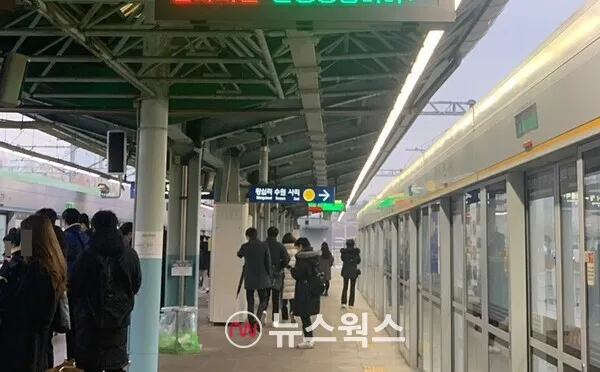
The settlement followed final negotiations scheduled for Nov. 24, as Seoul prepared for disruptions on subway Lines 1 through 8. A similar last-minute agreement the previous year had allowed trains to run normally after a deal was reached in the early hours of the planned strike day.
Staffing was a central issue in the 2026 wage and collective bargaining talks. According to Yonhap's Nov. 24 report, the unions sought a 3.5 percent increase in the total wage bill, withdrawal of the plan to cut 2,212 jobs between 2021 and 2026, and the hiring of 1,313 on-site safety workers by year's end. The Korea Herald reported that they had reduced their initial wage demand from 5.2 percent to make room for negotiations over staffing.
The restructuring plan was already partly implemented: The Korea Herald reported on Nov. 24 that 684 positions had been eliminated, while the remaining 1,528 cuts were on hold.
The unions also wanted a minimum of two workers on every team. They said only 20 percent of teams had at least two members, leaving most workers to patrol railway facilities alone, according to The Korea Herald.
The bargaining involved the Seoul Metro Union, affiliated with the Korean Confederation of Trade Unions; the Seoul Metro Integrated Union, affiliated with the Federation of Korean Trade Unions; and the Right Union. Yonhap reported their respective memberships as 9,100, 2,560 and 2,220.
Since Nov. 20, the unions had been conducting a work-to-rule action, continuing operations while strictly following essential safe-driving regulations.
Deficits underpin management's restructuring position
Management had argued that accumulated deficits and the need to improve efficiency made restructuring unavoidable. Seoul Metro's 2025 operating deficit was 826.8 billion won, about $614 million, a 14.2 percent increase from the previous year. Its cumulative deficit reached 19.7 trillion won, The Korea Herald reported on Nov. 24.
Borrowing had also increased. According to The Asia Business Daily's Nov. 12 report, debt stood at 8.2501 trillion won at the end of August 2026, compared with 7.756 trillion won at the end of 2025, an increase of about 500 billion won. Interest payments amounted to about 370 million won a day, or roughly 140 billion won annually.
The same report put losses from free rides in 2025 at 448.8 billion won, representing 55 percent of Seoul Metro's public-service costs. For Lines 1 through 8, the cost of carrying a passenger averaged 1,817 won that year, against an average fare of 1,036 won, leaving a loss of 781 won per passenger.
Seoul had prepared reduced-service schedules
Before the agreement, Seoul had drawn up a plan to operate the subway with approximately 13,000 workers, about 80 percent of its usual workforce. That staffing pool included employees who would not join the strike and workers from partner companies. As an essential public service, the subway must maintain essential operations during a strike.
The initial plan called for normal service on Lines 1 through 8 during the morning commute, from 7 to 9 a.m. For the evening rush, from 6 to 8 p.m., service would remain normal on Lines 2 and 5 through 8. Lines 1, 3 and 4 would operate at more than 88 percent of their usual frequency, counting Korail trains.
Across the full day, Seoul planned to maintain about 81 percent of normal subway service. Line 9 was outside the scope of the planned strike.
For a strike lasting more than eight days, the city aimed to maintain morning rush-hour service above 90 percent of normal capacity and evening rush-hour service at 80 percent, The Korea Herald reported. The contingency measures also included 1,873 additional morning bus trips, 1,646 additional evening trips and the deployment of 124 city employees to 31 major subway stations.
Additional buses planned in Seoul and Gyeonggi
Seoul's bus measures were scheduled to begin on the morning of Nov. 25 if the strike went ahead. On 344 regular city routes, the periods of increased rush-hour service would each be extended by an hour: the morning window would expand from 7-9 a.m. to 6-9 a.m., and the evening window from 5-7 p.m. to 5-8 p.m. The plan called for 3,519 more buses than usual during those periods.
Gyeonggi Province, home to many people who commute to Seoul, prepared its own measures. It planned to deploy 38 reserve buses on city and intercity routes expected to become congested, adding 56 trips. Officials would consider chartering more buses if congestion persisted.
Village bus services would run more frequently during rush hours, and final departures would be pushed back by one hour. The province planned to use six reserve vehicles and add another six vehicles to existing routes.
Gyeonggi also planned 93 additional intercity bus trips on 28 routes across five regions. It asked four taxi organizations in the province to cooperate in making 38,321 taxis available.