Election losses put the war under scrutiny
Democrats secured control of both the House and Senate in Tuesday's midterms, winning in Republican strongholds as well. Reuters attributed the results to voter frustration over Trump's economic management and the higher gas prices brought on by the war. Democrats had made the conflict's cost to Americans a focus of their campaign.
Iranian Parliament Speaker Mohammad Baqer Qalibaf, who is also Tehran's chief negotiator, presented the outcome as an antiwar message. "Conscience or the cost of living, Americans said NO TO WAR, and we endorse this message," he wrote on X, warning Washington against disregarding voters by attacking Iran again.
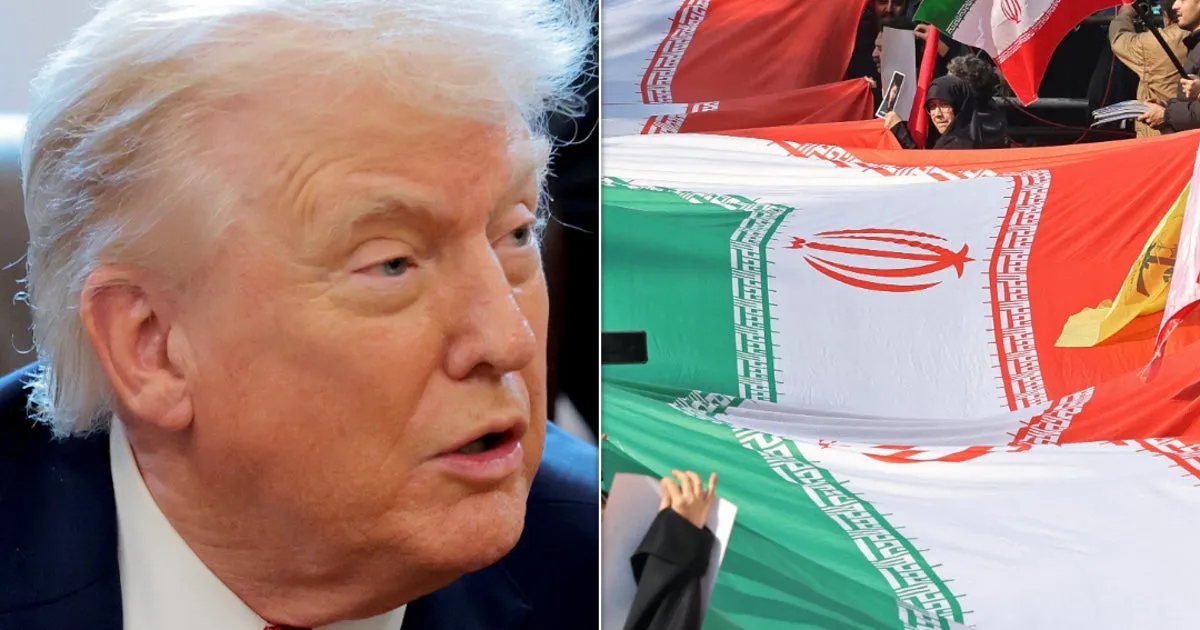
Trump conceded in two media interviews that the US-Israeli war contributed to Republican losses, while continuing to defend it. "I think a part of it was Iran, but at the same time people understood the importance of what I've done with Iran," he told Fox News. Speaking to POLITICO late on Nov. 3, he called the decision to go to war "an absolutely correct one."
The change in congressional control could give Democrats another opportunity to seek a binding War Powers Resolution, CNBC reported. Such a measure would direct Trump to end the Iran conflict unless Congress authorizes it. Earlier efforts to pass a binding resolution failed; in June 2026, the Republican-controlled House and Senate instead approved a concurrent resolution calling for an end to the conflict, without the force of law.
Tehran warns of wider retaliation
The two senior Iranian sources told Reuters that leaders welcomed the Democratic victory but worried Trump might try to offset his political defeat with military action. Mediators have stepped up efforts to end the war amid concern that fighting could resume after the election. Iran, meanwhile, is preparing a broader response if that happens.
Trump left renewed combat operations open as an option on Tuesday. POLITICO reported that he offered no assurance against an all-out assault after the vote and suggested he would "finish the job." The conflict is now in its ninth month, during which Trump has repeatedly changed his stated objectives and timelines, according to Reuters.
Supreme Leader Mojtaba Khamenei warned in a written statement that a change in the party holding power would not end US hostility toward Iran. He cautioned against "even the slightest inclination towards submission" to Washington and said, "The US sees the end of its hegemony as distant; we see it as near."
On Wednesday, Nov. 4, Khamenei also warned that renewed US and Israeli aggression would mean "the war's scope will become much wider," according to Agence France-Presse, carried by Vanguard. That followed his Oct. 31 call for Iran's armed forces to answer "any level or type of threat" with "an immediate, impactful, and geographically unrestricted response," as reported by CNBC.
Khamenei, 57, took power in March 2026 after US-Israeli strikes at the outset of the war killed his father, Ayatollah Ali Khamenei. He has delivered written messages but has not appeared publicly since becoming supreme leader.
Other senior officials also combined celebration with threats. Judiciary chief Gholamhossein Mohseni Ejei said Trump had been "defeated both militarily and politically," adding, "We will certainly inflict further defeats on him," AFP reported. Qalibaf warned that if the US government "betrays their public will to serve international paymasters and blackmailers, it will learn our NO comes with a Nightmare." POLITICO described his statement as a threat to retaliate if Washington resumes all-out war.
Iran had also sought to influence Trump's political position before the election. Senior Iranian officials told Reuters ahead of the vote that Tehran was intentionally drawing out negotiations with Washington to weaken him.
A regional conflict and an energy shock
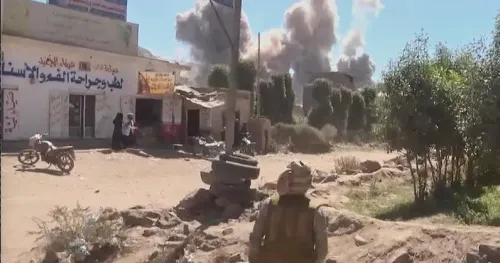
The war began with US and Israeli attacks on Iran on Feb. 28. Iran retaliated against Israel and Gulf countries hosting US bases. Fighting also broke out between Israel and Iran-backed Hezbollah in Lebanon, then more recently extended to Yemen. From there, the Iran-aligned Houthis have attacked Saudi energy facilities, airports and other targets.
Energy prices surged as Tehran's declared closure of the Strait of Hormuz severely disrupted shipping. Before the war, the waterway carried about 25% of global seaborne oil trade and 20% of the world's liquefied natural gas, according to Wikipedia's account of the 2026 Strait of Hormuz crisis.
That account records Brent crude rising above $100 a barrel on March 8 for the first time in four years and reaching a peak of $126. It describes March 2026 as the largest monthly oil-price increase on record and the strait's closure as the biggest disruption to global energy supply since the 1970s energy crisis.
US forces blockaded Iranian ports from April 13 through May 29, 2026. Trump and Iranian President Masoud Pezeshkian signed a memorandum of understanding on June 17 intended to end the war and the blockades, but that agreement later broke down. Reuters reports that a US naval blockade is hitting Iran's economy hard.
Iranian media celebrate the result
Iranian outlets cast the Republican defeats as evidence of the war's political cost. The Islamic Revolutionary Guard Corps-affiliated Tasnim News Agency published the headline "War on Iran Emerges As Major Factor in Republicans' Midterm Defeat." State-run IRNA announced a "heavy defeat for Trump and his supporters," citing "an unprecedented level of dissatisfaction with US President Donald Trump," according to POLITICO.
The conservative newspaper Jam-e Jam labeled the outcome "The twilight of Trumpism." A news outlet operated by Iran's judiciary repeated a joke from X: "Trump failed at regime change in Iran but he succeeded in Texas." The joke referred to a Democrat's Senate victory in Texas, the party's first there in decades.
Hamshahri connected the election to the anniversary of the 1979 US Embassy seizure in Tehran, using a front-page image of a blindfolded Trump with his head lowered beneath the headline "Iran's shadow over US elections." Radical students seized the embassy after the fall of the US-backed shah and held 52 Americans for 444 days.