
Scholarships and an annual academic prize
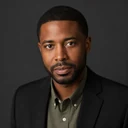
Jalloh announced the commitment on Monday, November 16, 2026, at Trenchard Hall during the second convocation lecture of the University of Ibadan's 2026 Convocation and 78th Foundation Day ceremonies.
Administration of the scholarship program would be shared by the University of Ibadan (UI) and Fourah Bay College, both of which Jalloh attended. Sierra Leone's Ministry of Technical and Higher Education would coordinate the arrangement.
He also pledged a permanent endowment for an annual award to the top graduating student in the UI Department of Political Science's Master of Science program. The prize would be expressed in naira or the equivalent in Sierra Leonean leones, with opportunities for academic or professional engagement in Sierra Leone attached where possible.
Fourah Bay College dates to February 1827 and is described as Africa's oldest university and West Africa's first Western-style university. The college was the reason Freetown became historically known as "the Athens of West Africa."
An alumnus returns to Ibadan
The News Agency of Nigeria (NAN) reported that Jalloh earned his UI Master of Science degree in Political Science in 1997. His other qualifications include a bachelor's degree in political science from Fourah Bay College and a doctorate from the University of Bordeaux in France. He has served as Sierra Leone's vice president since April 4, 2018.
According to NAN, Jalloh said returning as vice president gave him an opportunity to recognize UI's role in his personal and professional development.
He reached Lagos on November 14 ahead of the lecture. Those welcoming him at Murtala Muhammed International Airport included Sierra Leone's Deputy Commissioner to Nigeria, retired Major General Dauda Fred Alpha, Lagos State Government Secretary Bimbola Salu-Hundeyin and other Nigerian officials.
UI Vice-Chancellor Professor Peter Olapegba said Jalloh's attendance reflected the friendship, solidarity and aspirations shared by Nigeria and Sierra Leone. He emphasized African partnerships as a way to address development challenges and support economic, scientific and technological progress. Universities, he said, must also help drive national development, encourage international cooperation and bring evidence-based ideas into policymaking, alongside their teaching and research.
Professor Idowu Olayinka, UI's 12th vice-chancellor, represented Pro-Chancellor and Council Chairman Chief Bisi Akande. Welcoming Jalloh as a returning alumnus, Olayinka expressed pleasure at his rise to the vice presidency. He pointed to the countries' historical and educational ties and urged closer cooperation between their institutions and economies.
Cooperation beyond the scholarship program
Jalloh's lecture, "The Enduring Promise of Nigeria-Sierra Leone Relations: From Shared Origins to Shared Prosperity," advocated closer cooperation across education, agriculture, trade, investment, technology and infrastructure.
He outlined three routes toward shared prosperity: developing people's potential across generations, producing what both countries need, and improving links between their populations and markets.
For universities, he proposed collaborative research, laboratories shared across institutions, exchanges for students and faculty, and work with governments and businesses. "Our relationship was built because earlier generations opened institutions, classrooms and opportunities to one another," he said.
Jalloh also urged African governments to follow agreements with policies and initiatives that deliver practical benefits to citizens.
A proposed Lagos-Freetown coastal corridor
Turning to transport and commerce, Jalloh proposed a Lagos-Freetown coastal corridor to strengthen connectivity, trade and investment between the two countries. He cited Nigeria's Lagos-Calabar Coastal Highway project as his inspiration and called for ports to operate more efficiently, alongside viable coastal shipping and simpler customs procedures.
To illustrate the need for closer West African commercial integration, he said trade within ECOWAS represented about 11% of the region's total trade. That compared with roughly 20% for the East African Community and 19% for the Southern African Development Community.
He also drew attention to the West Africa Integration and Investment Summit then underway in Sierra Leone. President Julius Maada Bio and other officials were hosting business leaders, investors, entrepreneurs and young people from Africa and elsewhere. Its agenda covered energy trade and industrial development, strategic minerals, agribusiness and food systems, and digital transformation.