

China's LandSpace achieves first land-based rocket recovery, joining global reusable rocket race
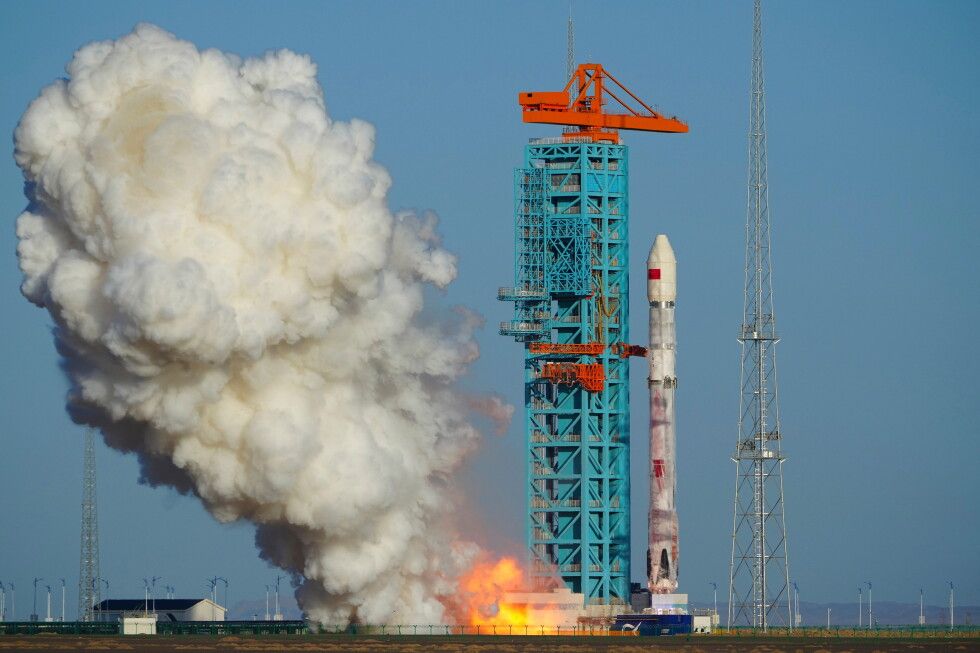
China achieved a significant milestone in reusable rocket technology Wednesday when private aerospace company LandSpace successfully recovered the first stage of its Zhuque-3 rocket on land, state media reported. The achievement marks China's first land-based rocket recovery and establishes LandSpace as the first private Chinese company to recover an orbital-class booster.
The 66.1-meter (216-foot) tall rocket launched Wednesday morning from the Dongfeng commercial space innovation pilot zone in northwestern China. Nearly eight minutes after liftoff, the booster descended to a landing site in Minqin County, Gansu Province, approximately 240 miles from the launch pad, touching down vertically using deployable landing legs.
State news agency Xinhua described the recovery as a major breakthrough in the country's reusable rocket technology.
The successful landing places LandSpace alongside SpaceX and Blue Origin as the only private companies to have propulsively landed the booster of an orbital-class rocket.
Second attempt proves successful
Wednesday's achievement came after a previous setback. During the Zhuque-3's maiden flight in December 2025, the rocket successfully reached orbit, but the first-stage recovery attempt ended in failure during the final landing burn. The successful recovery on the second attempt demonstrates the company's technical persistence and improvement.
The Zhuque-3 is constructed from stainless steel, which LandSpace claims makes the rocket cheaper to build and more durable on reentry compared to competitors like SpaceX's Falcon 9. The Beijing-based company, established in 2015, had previously conducted a successful vertical takeoff and vertical landing test in January 2024, when a test vehicle powered by a single Tianque-12 engine reached approximately 350 meters altitude.
LandSpace plans to inspect and potentially reuse the recovered booster within about six months, moving toward the ultimate goal of rocket recovery: reducing launch costs through hardware reuse.
China's second rocket recovery
While this marks China's first successful recovery on land, it is the country's second rocket stage recovery overall. On July 10, the first stage of a Long March-10B rocket separated from the second stage after liftoff and was recovered on a sea platform using a net-capture system aboard the Linghang Zhe vessel. That recovery marked the world's first network-based recovery of a carrier rocket, demonstrating China's exploration of different recovery technologies.
The achievements follow in the footsteps of American companies that pioneered reusable rocket technology. Blue Origin first landed its New Shepard suborbital rocket in November 2015, while SpaceX achieved its first orbital-class rocket booster recovery with Falcon 9 in December 2015. Since then, both companies have successfully recovered and reused rockets multiple times, helping drive down launch costs by reusing hardware that would otherwise be discarded after carrying satellites and other payloads toward space.
Regional competition intensifies
The day after China's sea-based recovery in July, Japan conducted the first test flight of its RV-X experimental reusable rocket. The test vehicle lifted off, hovered, and moved horizontally before landing during a flight lasting less than one minute, reaching a height of approximately 11 meters at the Japan Aerospace Exploration Agency's facility.
Japan is working to develop the technology needed to cut launch costs and compete in the global space market, though its experimental test represents an earlier stage of development compared to China's orbital-class rocket recoveries.
The competition reflects the growing importance of reusable rocket technology in the commercial space industry, where reducing launch costs through hardware reuse has become a key competitive advantage.