A cleanup deadline and a coordinated plan
The government expects the 43 projects to benefit about 15 million people. Officials put the value of the 10 commissioned projects at ₹2,827.11 crore and the 33 projects for which foundations were laid at ₹6,114.11 crore.
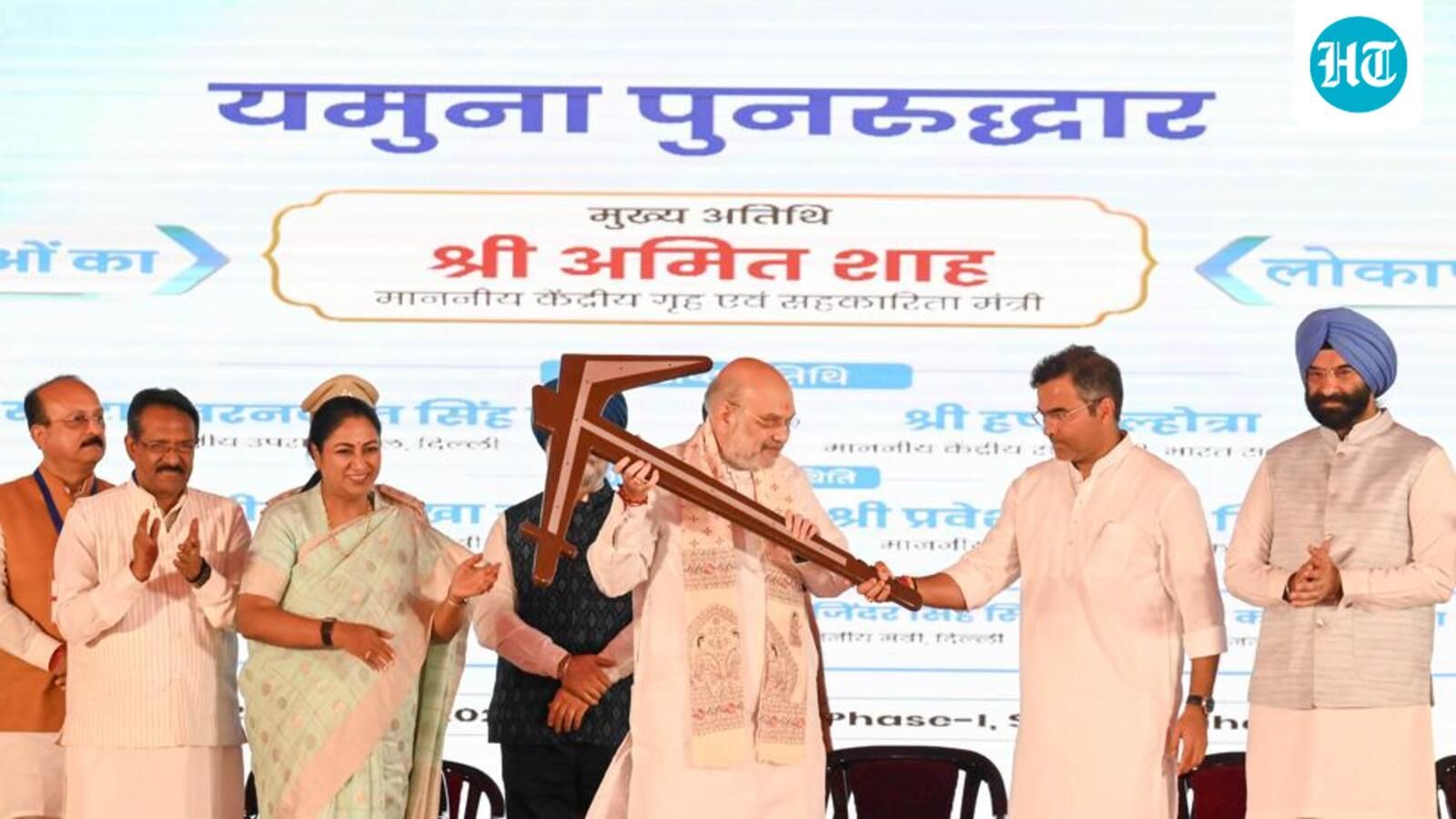
At the Thursday event, Shah said the BJP governments in Delhi, Uttar Pradesh and Haryana had agreed on a coordinated, time-bound cleanup roadmap, with a goal of restoring the Yamuna's purity by May 2029. He called the central government and the three state governments "four engines" working together.
Shah presented the package as a continuation of work already underway. "I am pleased that we have completed more than 40 per cent of the work to curb pollution in such a short time," he said.
Delhi Chief Minister Rekha Gupta, who attended the launch, outlined an approach that combines intercepting drains with building and modernizing sewage treatment plants, laying sewer lines and linking those lines to treatment facilities. Water Minister Parvesh Verma said the package spans sewage treatment plants, decentralized facilities, pumping stations, drains and water treatment plants. He criticized the previous government's handling of projects: "Under the previous government, tenders were floated, cancelled and floated again. Files kept moving, but the work never started."
Redirecting sewage and expanding treatment
The work includes intercepting sewage in the Barapullah and Maharani Bagh drains, which previously discharged directly into the Yamuna. A new pumping station at Batla House, with a capacity of 35 million gallons per day (mgd), will send that sewage to the Okhla sewage treatment plant.
Verma said roughly ₹1,161 crore covers the 124 mgd Okhla project and upgrades at Rithala and Kondli. Delhi Jal Board officials describe the new Okhla facility as the country's largest sewage treatment plant. Developed jointly by the National Mission for Clean Ganga and the Delhi Jal Board, it was sanctioned in 2017 and built under the Yamuna Action Plan-III. About 7 million people in the Okhla area are expected to benefit.
Another ₹1,041 crore will go toward upgrading eight existing sewage treatment plants, Verma said. Their combined capacity will rise from 78.2 mgd to 140.8 mgd, serving approximately 7.85 million people.
For areas farther from the main treatment network, the package provides 29 decentralized sewage treatment plants and sewage pumping stations costing ₹3,113.67 crore. They will serve 358 unauthorized colonies and 113 villages, home to around 3.63 million people, across Narela, Bawana, Kanjhawala, Bijwasan, Tikri Kalan and neighboring areas. Verma said treating sewage near its source would keep it from entering drains.
The minister also outlined ₹1,691 crore in spending on 1,034 km of sewer lines to serve about 2.582 million people. A separate component is a 4.5-km trunk drain in Mundka costing approximately ₹225 crore, according to Verma and the government's project list.
Reusing treated water and replacing older plants
The package also addresses freshwater demand through water reuse. A recycling plant in Bawana will have a capacity of 2 mgd, while a pipeline will carry 4 mgd of treated water from the Kapashera sewage treatment plant to Bijwasan. That water is intended for horticulture and other uses that do not require drinking-quality water.
At Chandrawal, a new water treatment plant built for ₹298.3 crore replaces facilities dating to 1935 and 1955, a government official said. The plant can treat 477 million liters per day and will serve about 2.2 million people in Sadar Bazar, Chandni Chowk, Matia Mahal, Ballimaran, Karol Bagh, Patel Nagar, Rajinder Nagar and New Delhi.
Launch followed a river cleanup drive
Four days before the project launch, the October 18 "Chalo Yamuna" campaign brought more than 35,000 people to 70 locations along the river. Participants removed 76,755 kg of municipal solid waste in one morning.
The campaign drew about 20,000 citizens and RWA members, 10,500 party workers, 2,500 students and 2,000 NGO volunteers. Equipment included 26 JCB machines, 24 boats, seven weed harvesters and trash skimmers.