
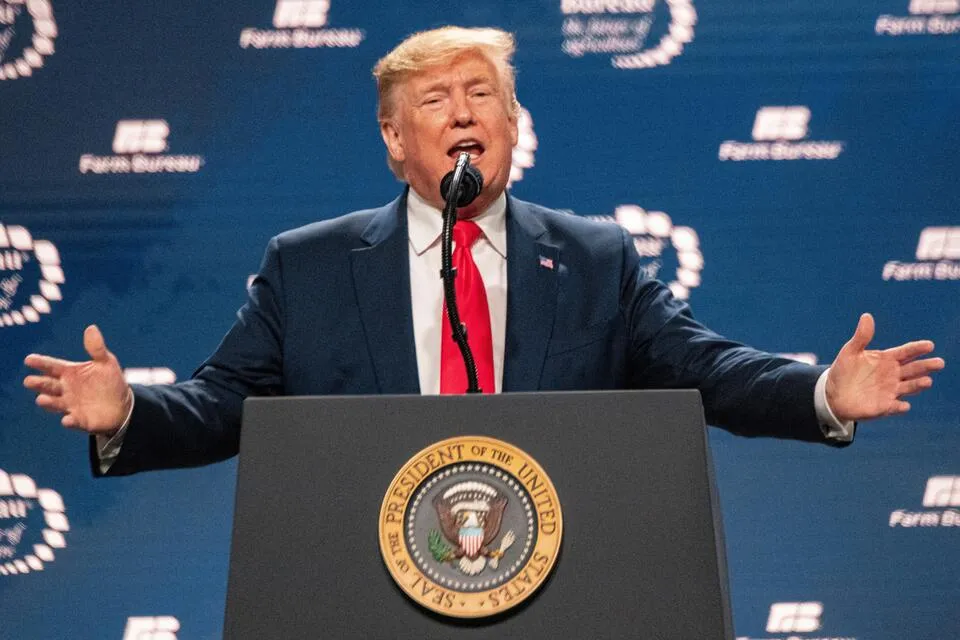
Trump's response and the travel disruption
"The Biden Administration was an FAA disaster," Trump wrote on Truth Social. He accused his predecessor's administration of wasting money and setting modernization efforts back by years. Urging Congress to fund replacement technology, he said some components of the current system are about 50 years old. People reported his comments on November 15.
Trump's statement followed more than a day and a half without public comment on the disruption. During that period, he posted about other subjects, including renovations in Washington, D.C., and his efforts to strengthen the American entertainment industry.
Transportation Secretary Sean Duffy told CNN on Sunday that Trump had stayed in regular contact with administration officials and was involved throughout the crisis. Homeland Security Secretary Markwayne Mullin also defended the president, suggesting he had left the public response to Cabinet officials.
The Federal Aviation Administration halted departures nationwide on Friday, November 13. The ground stop remained in effect for more than four hours before being lifted that evening, leaving travelers stranded and schedules disrupted through the weekend.
The FAA put Friday's cancellations at approximately 12,462 flights, including 9,082 operated by major airlines. By Sunday, disruptions had stretched into a third consecutive day: FlightAware recorded more than 11,500 canceled or delayed U.S. flights that day. Duffy said he expected normal airline operations to resume by Monday.
It was the second nationwide grounding of U.S. flights since the September 11, 2001 attacks. A roughly two-hour FAA grounding in January 2023 was the first, according to a September 2026 Government Accountability Office report cited by Roll Call and reporting by the Northwest Arkansas Democrat-Gazette.
Investigators examine equipment in Texas and Arkansas
The FAA's initial account described communications failures at multiple air traffic control centers. Investigators subsequently focused on network equipment at a radar facility in Amarillo, Texas, and a radio communications facility in El Dorado, Arkansas.
According to the FAA, a flood of data reached its FTI network at a rate of about 1,000 connection attempts every 4 to 5 seconds. Older equipment became unstable, disrupting aircraft communications and radar feeds. The instability affected 17 of the agency's 22 Air Route Traffic Control Centers.
L3Harris, the FAA's network provider, had installed a new router at the El Dorado site. Transportation officials said a contractor's replacement of older telecommunications infrastructure appeared to have triggered the instability, though the cause remained under investigation. Authorities said the incident did not appear to be a cyberattack.
Congress faces a larger funding request
The administration is seeking up to $50 billion for air traffic control and airport infrastructure modernization. That exceeds the $30 billion request Duffy and White House budget chief Russ Vought presented to lawmakers on November 12, the day before the ground stop. House Speaker Mike Johnson said Congress would consider the request during the lame-duck session.
Democrats have challenged the need for additional funding, pointing to money Congress has already approved. Lawmakers provided $12.5 billion for FAA modernization in 2025, while the Biden administration's infrastructure legislation also funded airport and aviation improvements.
On November 15, House Appropriations Democrats Rosa DeLauro and James Clyburn said $9 billion of the $14.4 billion appropriated for air traffic control upgrades since July remained unspent. They also cited an Office of Management and Budget apportionment that holds more than $5 billion from the 2025 reconciliation funding until October 1, 2027.
The modernization effort had drawn scrutiny before the shutdown. In a September 14, 2026 report, the Government Accountability Office warned that the FAA "is buying delivery speed at the risk of cost uncertainty and potential disruptions." The report said the result could leave controllers dependent on outdated, failure-prone systems.