New capabilities may still require investment
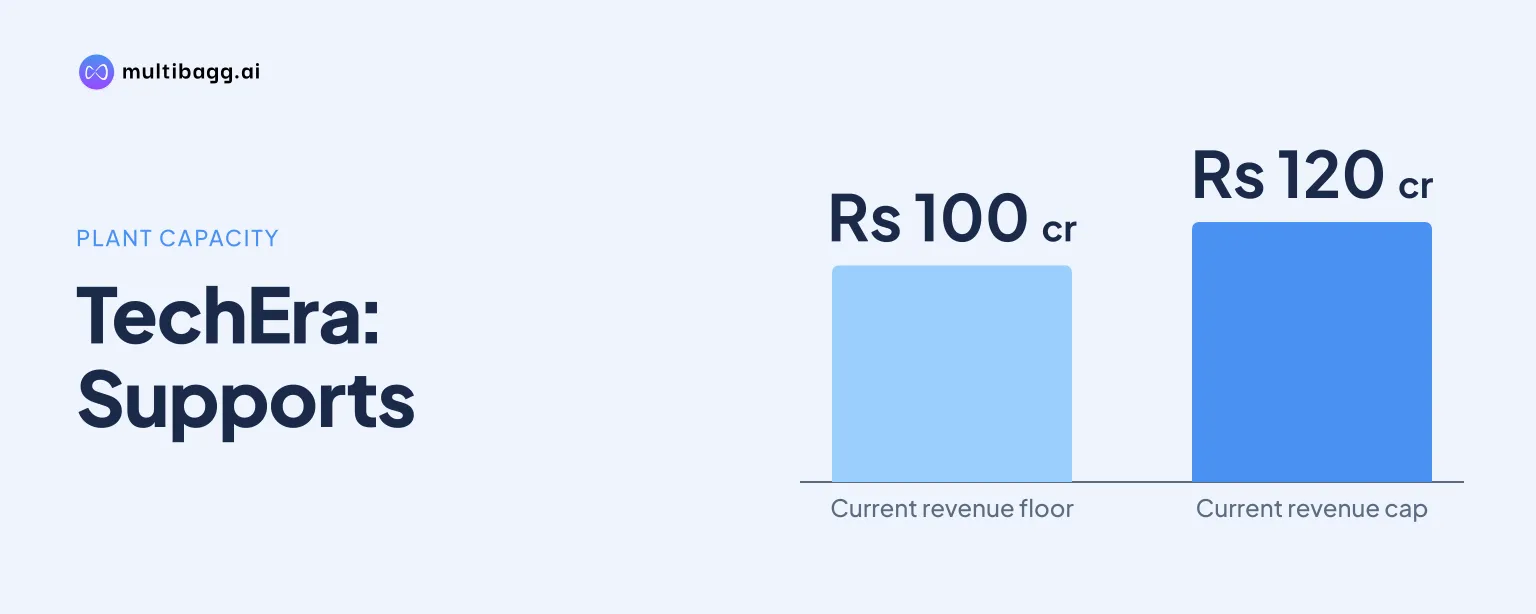
The capacity estimate covers products TechEra already makes, not every prospective aerospace assignment. Management said pursuing a different flying part, a larger customer or an additional manufacturing capability could require machinery upgrades roughly every six months.
Borrowings climbed to about Rs 39 crore from about Rs 32 crore as the company expanded its flying-parts capabilities. Asked about approximately Rs 6.5 crore in property, plant and equipment spending cited by an investor, management said the expenditure included machines, upgrades, fixturing equipment, machine foundations and related tooling for flying-parts work. It did not match specific loans to specific purchases.
Management explained that equipment has to be installed before components reach regular production. Using a set of 10 machines as an example, it said a manufacturer needs broadly the same equipment whether producing a single component or making it repeatedly. The company described a four-to-seven-month proving cycle for each component.
Profitability could help address the balance sheet over two to three years, management said, without promising a rapid move to debt-free status.
H1 results and a more cautious growth outlook
For H1 FY27, which ended September 30, 2026, TechEra reported about Rs 22 crore in revenue. Its order book was approximately Rs 55 crore to Rs 57 crore, all in aerospace and defense, spanning tooling and fixtures, flying parts and insourcing.
Management said the half-year results did not fully capture work in hand or the order book. It attributed elevated inventory to project timing: work expected to take six or seven months can run a couple of months longer if part proving is unfinished, delaying revenue recognition and the conversion of working capital.
The company expected inventory to convert in H2 FY27 and results to turn positive before March 2027. Those comments expressed management's expectations rather than a quantified revenue target or earnings forecast.
According to Perivis and Sahyadri Startups, management also moderated its full-year growth expectations on the call. It described 30% growth as a "steep task" and discussed possible outcomes of 15%, 20% or potentially 30%, below the earlier 30–40% guidance cited by an investor.
Management projected a long-term EBITDA margin of 17–20%, with the outcome dependent on the mix of work and subject to periodic review. Employee costs increased 38% in H1 FY27 as TechEra hired ahead of anticipated orders; management expected the headcount to stabilize in about six months.
Flying-parts production and defense orders
TechEra said roughly 150 to 160 flying-part components had entered regular production. Its longer-term discussion covered proving 500, 600 or 700 component types and bringing them into regular production. Management expected the number of proven components to rise every six months but set no numerical goal for the next interval.
The company also reported manufacturing more than 250 component varieties in one area and holding orders for parts associated with 15 aircraft. Management said registration of a component as made by TechEra can give it the first right of refusal on subsequent requirements, subject to capacity, pricing and other conditions.
On the November 18 call, management said TechEra had received two Indian Air Force orders, one involving a development-cum-production opportunity. It also described a five-year licensing arrangement. Management specified that the IAF award was not from HAL but provided neither an order value nor a revenue schedule.
A new space-sector contract
After the investor call, TechEra secured a November 24, 2026 contract to make and supply ground support equipment (GSE) structures for a launch vehicle program, according to Sahyadri Startups.
The contract is worth Rs 86,258,000, or Rs 8.63 crore including GST, and is scheduled for execution within three to four months. The customer is a domestic private company in the space and satellite sector; TechEra did not disclose its name or identify the launch vehicle program.
Company background and the stalled international contract
Established in Pune in October 2018, TechEra works in aerospace tooling and assembly systems, flying parts, and in-plant insourcing for a national aerospace manufacturer. Its 2024 IPO on NSE Emerge raised approximately Rs 35.90 crore.
TechEra recorded total income of Rs 48.81 crore and net profit of Rs 3.08 crore in FY26. Profit was slightly below the Rs 3.17 crore reported for FY25.
In its FY26 annual report, the company partly attributed broadly flat revenue to an international supply contract that had not begun. The agreement was valued at approximately Rs 110 crore over five years. TechEra said the customer stopped communicating following geopolitical developments in May 2025; it did not name the customer or country.